
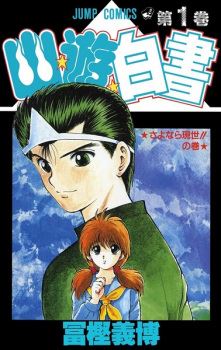
Yuu☆Yuu☆Hakusho
- Genre: action award winning comedy drama supernatural
- Author: togashi yoshihiro
- Artist(s):
- Year: Nov 20, 1990 to Jul 12, 1994
- Original Publisher:
- Status: Finished
...
Show More
Rating(4.2 / 5.0, 24 votes)
5 stars
10(42%)
4 stars
8(33%)
3 stars
6(25%)
2 stars
0(0%)
1 stars
0(0%)
Popular Reviews
STORY: 4
The plot feels outdated, clichéd, and inconsistent, ranging from high school delinquents to martial arts tournaments to demons from hell. It's evident that editorial pressure has influenced the introduction and alteration of characters and story arcs, leading to a lack of coherence in the series. The storytelling pace is chaotic, with some events dragging on unnecessarily while major developments appear abruptly without warning.
ART: 5
The artwork comes across as a weak imitation of Dragon Ball.
POLITICAL POTENTIAL: 4
It’s an ultra-generic shonen series.
FEMINISM: 4
The female characters are typically relegated to roles such as love interests or damsels in distress, complete with casual rape attempts, which are unfortunately standard fare in sexist shonen narratives.
CONCLUSION: 4
It's clear that the popularity of this series stems mainly from the anime capitalizing on the success of Dragon Ball. If you're looking for something worthwhile, just read Dragon Ball instead. If you've already done that, consider exploring more contemporary shonen titles.
Yu Yu Hakusho is one of those manga series that struggled to gain recognition during its release, mainly due to competing against the behemoth shonen series, Dragon Ball. Years after its debut, it remains relatively obscure, but the anime is still considered a milestone in shonen battle series. However, how does the manga hold up on its own? By now, you should have some idea about the story. It begins with our hero Yusuke Urameshi getting killed while trying to save a child from an oncoming car. He then meets Botan, a messenger from the underworld, who tells him that by completing various missions, he can earn a second chance at life. The beginning of the series, honestly, is quite poor. Its episodic structure makes it a chore to get through. I only continued because I knew there was something better ahead. And I was glad I stuck with it. In the 4th volume, we meet some cool new characters and witness some amazing fights with inventive techniques (cough DBZ cough). As the series progresses, the fights start off exciting but become repetitive over time. Togashi tries to add more depth to the villains, which is a nice touch, and it's refreshing to see antagonists who are more ruthless than usual. Add in a cast of heroes who actually kill, and you've got the makings of a solid martial arts shonen series. Unfortunately, the art is often terrible and sometimes looks like rough sketches, which detracts from the experience. Furthermore, the ending is the biggest letdown I've ever encountered in a manga (and I've read Berserk). This might be due to the series being cancelled (just my guess). All in all, Yu Yu Hakusho is a decent series if you're willing to be patient with it.
Overall, Yu Yu Hakusho is quite good for what it is—a 90s shonen series. Many of the story beats found in Yu Yu Hakusho are generic, but not to an insulting degree as seen in more recent anime and manga, where they make that generic concept the driving force of the narrative. Instead, Yu Yu Hakusho takes self-loathing concepts of humanity, such as "Would anybody care if I died" and "Humanity deserves to die," and transforms them into fighting motifs for the protagonist, making it feel like these were silly concepts to even think about.
Each character also feels interesting, especially towards the end when Togashi's writing style noticeably improves with characters like Mukuro and their motives. Give Yu Yu Hakusho a read when you can; it's a much better storytelling experience compared to the anime. Its story still holds up to today's standards, even with Yusuke's no-brains-all-brawn mindset.
Overview:
Today, we delve into a comic that has its share of significant flaws, yet I adore it nonetheless. Many people recall watching Yu Yu Hakusho on Cartoon Network, both on Adult Swim and a sanitized version for Toonami. While it never achieved the same level of popularity as Dragon Ball Z, older anime fans still hold the series in high regard. This makes it intriguing that so few individuals outside Japan have read the original manga. Upon opening the manga, one quickly realizes why this is the case, leading me to the first flaw in Yu Yu Hakusho.
The first minor blemish on an otherwise commendable title is the subpar artwork in this manga. I mean truly BAD! The anime appears so much more refined that reading the manga after watching the animated version becomes almost challenging.
Art: 4/10
Another aspect that might deter readers is how surprisingly slow-paced Yu Yu Hakusho starts for a shonen comic. Typically, the anime is laden with excessive filler content, but in this case, it's the manga that contains more padding. For instance, Yusuke saves Kuwabara's cat as a ghost in both versions. Did we really need the chapter featuring the little kid and the ghost dog? It was heartwarming, sure, but quite an unusual choice to kick off an action series. However, I don't mind this slow start due to another flaw in Yu Yu Hakusho that I will discuss next. As the manga progresses, it increasingly relies on fighting tournaments and essentially becomes a carbon copy of Dragon Ball. Both ran concurrently in the early '90s, with Yu Yu Hakusho clearly aiming to emulate Toriyama's success to boost sales. By the end, I found myself longing to return to chapters like the ghost dog story from volume 1! At least back then, it wasn’t shamelessly copying DBZ! Finally, following the Three Kings arc, it ends abruptly with an unfinished storyline where the Spirit World turns villainous. This concept had potential, but it was underdeveloped and lasted only about five chapters before stopping abruptly. It seems Togashi envisioned a grand final arc that was never realized, possibly due to low sales or his own fatigue with drawing Yu Yu Hakusho. Despite these aforementioned flaws, it boasts cool characters like Hiei and Kurama, along with some of the best fight scenes of the '90s. Yu Yu Hakusho excels at creating its own world and mythology. Besides memorable and often complex characters, it aimed to showcase moral ambiguity and complexity more ambitiously than its peers. If Dragon Ball was Harry Potter, Yu Yu Hakusho would be akin to The Golden Compass in that respect.
Story and Characters: 9/10
Overall: 8/10
Yu Yu Hakusho easily stands out as one of the better shonen action comics of the 1990s and is well worth your time. If you're a younger fan who loves Hunter X Hunter, note that it’s by the same author. Yu Yu Hakusho was Togashi’s breakthrough work and many consider it his magnum opus. For older fans who missed out on Yu Yu Hakusho, I recommend giving it a try. There are plenty of free sites to read it, so it won’t cost you anything. I would highly recommend this series to anyone who enjoys action, thrilling fights, and conflicts that aren’t just black and white or good versus evil.
Yoshiro Togashi's ability to craft an emotional narrative and depict character development is unparalleled. This quality shines brightest in Yu Yu Hakusho, making it one of the most outstanding coming-of-age shonen stories ever. While some might critique the pacing in later manga arcs, this series remains a classic among legends. There's little I can add to reviews that haven't been said more eloquently by others. Yet, what often goes unnoticed is Togashi's unique approach in Yu Yu Hakusho, setting it apart from its peers. The story isn't about demons or battles but how characters confront life-threatening situations with deeply human reactions. Comparisons are inevitable, but Yu Yu Hakusho stands alone. Goku, Jojo, Luffy, Naruto, Ichigo, Kenshiro, Natsu, Inuyasha, even modern heroes—these figures follow a "DC comics" archetype, struggling with their superhuman abilities. Goku is flawless, Joseph focuses on strategies, Jotaro lacks emotional growth, and Ichigo battles inner demons. These heroes rarely face emotional flaws hindering their heroism. Yusuke, Kuwabara, Hiei, and Kurama differ as their emotional struggles define them. Yusuke doesn't struggle much in combat; his challenges lie in mastering himself to unlock hidden potential. Unlike other shonen protagonists, Yu Yu Hakusho delves into Yusuke’s personal issues, including his absent father and his mother's profession. Yusuke seldom fights to save others. Kuwabara embodies the typical shonen lead, while Yusuke mirrors Vegeta, craving strong opponents. Yusuke's half-demon nature mirrors Inuyasha's, but Yu Yu Hakusho explores the human-demon dynamic more profoundly. Characters like Kuwabara, who can open the demon world portal, subvert shonen norms. Kurama and Hiei offer complex arcs, balancing good and evil dynamics better than many rivals. Togashi's intent to deconstruct shonen tropes shines through these characters. Kuwabara's role in opening the demon portal contrasts with typical hero roles. Sensui’s arc hints at Yusuke becoming a threat, reflecting deeper psychological battles. Villains like Toguro haunt Yusuke's psyche long after their confrontations. This emotional depth sets Yu Yu Hakusho apart from Dragon Ball or Jojo, where villains fade post-defeat. Yu Yu Hakusho's influence is undeniable. It paved the way for Hunter X Hunter's anti-shonen tendencies and countless successors. While Dragon Ball introduced tropes, Yu Yu Hakusho perfected them, effectively communicating critical life junctures and growth trajectories. Despite pacing issues during/after Sensui due to time constraints, Togashi's refusal to compromise quality influenced Shonen Jump's artist support policies. His artistic crisis led to refined pacing seen in Hunter X Hunter. Is there a perfect manga? No. But Yu Yu Hakusho is a timeless blueprint, influencing Bleach, Naruto, Demon Slayer, and Jujutsu Kaisen. Alongside Slam Dunk, its impact on shonen is unmatched, overshadowing even Jojo and Dragon Ball.
THIS IS A SPOILER-FREE REVIEW
Yoshihiro Togashi's "Hunter x Hunter" became one of my favorite manga and my top fighting-shounen series after I finished it. This led me to explore his earlier work, "Yuu Yuu Hakusho." Here is my take on this classic shounen adventure!
Story - 8/10
Firstly, it's clear that this is a quintessential shounen series. Everything about it screams shounen: entrance exams, training arcs, a group of protagonists, multiple villains per arc, and several tournament arcs. The world-building progresses nicely with each arc, which I appreciate. However, the first arc felt slow, and the last two were rushed due to Togashi's health issues during serialization in Weekly Shounen Jump. Despite this, the Dark Tournament arc stands out as the best tournament arc ever, featuring fascinating strategies and battles reminiscent of Hunter x Hunter's Chimera Ant Arc. Peak shounen indeed.
Characters - 8/10
Yusuke Urameshi is a commendable protagonist, especially given his development during the Dark Tournament arc. Kuwabara and Kurama are also favorites of mine. Hiei was a bit too edgy for my taste, but he still had his moments. Together, these four make a great team. The antagonists truly shine; both Toguro and Sensui are memorable for their designs and character depth. One drawback is the scarcity of female characters, which might deter some readers.
Art - 8/10
Togashi's character designs are exceptional. Fans of Hunter x Hunter will recognize his unique style, where no two characters look alike. Unfortunately, the overall drawing quality is inconsistent, with many panels lacking backgrounds and character designs deteriorating in later chapters. When Togashi gives his all, though, the results are stunning, rivaling the highest-quality shounen art like One Piece and Black Clover.
Enjoyment - 8/10
This is an excellent shounen series. If you've enjoyed any shounen before, you'll likely love Yuu Yuu Hakusho. While it has its inconsistencies, its best moments are incredibly enjoyable. I've heard the anime adaptation by Studio Pierrot is faithful to the manga without filler, so if you prefer watching, you're in luck!
- Marco_Yooo
FINAL SCORE - 8/10
Yu-Yu Hakusho. The once great, but forgotten series.
STORY: 7/10
The story isn't anything groundbreaking. The main character, Yusuke, dies, comes back to life, and becomes a spirit detective with special powers. With these special powers, Yusuke fights demons, monsters, and other guys with special abilities. I only have an issue with one of the special powers used, and that's Yusuke's. He shoots a ball of blue energy out of his finger which looks exactly like a mini Kamehameha from DBZ. It kind of annoyed me, but most of the other powers are pretty cool.
The story was broken down into three arcs. The first arc is definitely the best. It's a tournament, and all the characters fight the bad guys one on one, each showing off their own unique powers. The third arc had so much potential and looked like it was going to be the best, but then the mangaka was forced to end the manga right when it was getting awesome, so there were around 5 chapters of absolute CRAP to end the series. Yu-Yu Hakusho has got to have one of the worst endings in manga history. That brings the 'story' score down a lot.
ART: 6/10
There's not much to say about the art. It started off pretty good. It didn't make your jaw drop, but it was decent. It got the job done. Then, near the end, it just got worse and worse. The last few chapters of CRAP had maybe the worst art I've ever seen in a manga. I would have given a 7 or 8 if it wasn't for the ending of the series... seriously, it's really, really bad.
CHARACTER: 4/10
Not really unique. You had the tough guy main character who never gave up, the goofy friend, the super strong sensei, the emo guy, the girl who loves the main character, etc. If you're a shounen nut who loves everything shounen, then these characters will be your best friends.
ENJOYMENT: 8/10
I didn't enjoy the characters when they were just standing around talking to each other. But most of the time they were fighting demons and shooting energy balls at stuff. Watching the characters fight was very enjoyable. I just straight up had fun reading through the fight scenes. It's too bad the ending is like watching your cat die.
OVERALL: 6/10
It would be wrong to say this manga did a lot of things right, but it also didn't do a lot of things wrong (except for the ending. That was very, very wrong). I'm sort of torn on this. The one good thing it did was the fighting. The two bad things it did were the characters and the ending. The art started good, but then went bad. This manga screams AVERAGE.
So it gets a 6. I know you're thinking "wait! That's one better than average!". Good observation, you genius review reader. That's because all the manga that I read who have anime counterparts that I watched when I was a kid get 1 extra bonus point. The 6 still stands.
I adore Yuu☆Yuu☆Hakusho. Growing up surrounded by Shonen anime like One Piece and the 1999 version of Hunter x Hunter, Yuu☆Yuu☆Hakusho became a beloved series among my friends and family. Although I try not to review anime through nostalgic lenses, it's challenging to critically assess this Manga because it holds such a special place in my heart as a cult and childhood classic. Yuu☆Yuu☆Hakusho paved the way for Yoshihiro Togashi's other notable Shonen Manga, Hunter x Hunter. The Manga was serialized in Shonen Jump from December 1990 to July 1994.
~Story~
Yuu☆Yuu☆Hakusho follows a straightforward Shonen formula. It started with a monster-of-the-week format before evolving into an arc-based narrative with an overarching plot. This structure clearly inspired many later works, including Hunter x Hunter. While the story isn't the most innovative or worst aspect of the series, it serves its purpose well. Like many Shonen series, the story is primarily a vehicle for character growth and development.
~Art~
Togashi has always had somewhat rough artwork. This isn't to say his art is bad, but Yuu☆Yuu☆Hakusho highlights his weaker points as a Mangaka. Unlike contemporaries and successors who developed iconic art styles, such as JoJo’s Bizarre Adventure and Fist of the North Star, Togashi's drawing skills are less polished. Some panels can be cringe-inducing, but when he wants to, Togashi can produce some excellent work.
~Characters~
I've always appreciated how Togashi develops characters through interactions and storytelling. The main cast—Hiei, Kurama, Yusuke, and Kuwabara—are engaging in a classic Shonen way. Their dynamic is reminiscent of Leorio, Kurapika, Killua, and Gon. Yusuke undergoes one of the most solidly written character arcs in Shonen, delivering emotionally poignant moments that showcase Togashi's strength as a Mangaka. Every emotional beat in Yuu☆Yuu☆Hakusho resonates deeply and powerfully.
~Enjoyment and Overall Score~
I love Yuu☆Yuu☆Hakusho. Without realizing it, it became a familiar background noise in my daily life, something to discuss with friends and reminisce about with family. Yuu☆Yuu☆Hakusho will forever be a favorite and classic in my life.