

...
Show More
Orphaned on the harsh streets of Treasure Town, lost boys Black and White must resort to mugging, stealing, and fighting to survive. Surrounding them is a world filled with corruption and loneliness, populated by small-time criminals, neurotic police officers, and a band of sadistic yakuza with plans for their once-beautiful city. Can they rise above their environment? This surreal manga draws inspiration from European comics.
Tekkon Kinkreet was published in English as Black & White by VIZ Media from March 8, 1999, to November 20, 2000. VIZ Media later republished the series as Tekkonkinkreet: Black & White in a complete omnibus volume under the VIZ Signature imprint on September 25, 2007. The series was also released in Brazilian Portuguese by Conrad Editora from May 2001 to September 2001.
After watching the anime, I couldn't miss out on reading the manga. The result was something great but entirely different from my expectations.
Story: The story has multiple components. The primary narrative follows Kuro and Shiro (Black and White) as they struggle to defend their territory and adapt to a changing city. Another storyline focuses on the Rat, who also tries to fit into evolving times. There's Kimura, who seeks his own path. Add a few cops realizing the city is descending into chaos, along with alien assassins, and those are the main plots. Events push the characters into various situations, and they struggle to adapt. However, the manga isn’t structured around its plot; it centers on the characters and their reactions, so the story doesn’t have to be exceptional.
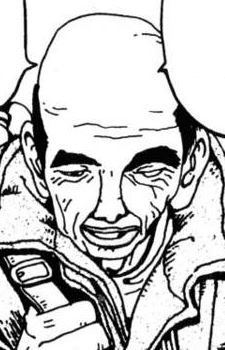
Art: This aspect of the manga was the biggest surprise. I anticipated a distinct Japanese drawing style, different from what I've seen before. Instead, I encountered something unexpected. Rather than adhering to traditional Japanese styles, Tekkon Kinkreet adopts the style of Western indie comics. The art disregards structure; buildings appear chaotic, distorted, and wobbly. The characters are... interesting. They seem loosely drawn, though that’s not quite the right term. The entire art style is very loose and works well with the manga. Minimal shading and almost no detail characterize this artwork, contrasting sharply with the highly detailed anime. Yet, the art truly works and is refreshing to view.
Character: The characters' evolution and interactions are the manga's highlight. Black's relationship with White is deep and complex, making it hard to discern who helps whom. Most characters maintain positive relationships despite being on opposite sides of the law. This dynamic adds a cozy, familiar feel to the manga. As the city changes, every character evolves, ensuring no static moments between them.
Enjoyment: Despite it being different from what I expected, I thoroughly enjoyed this manga. It's something many should read. Unique, well-written, and beautifully illustrated, there’s no downside. Perhaps the hardest thing to define is its genre. It’s not a light-hearted manga, lacking comedic relief, making it somewhat heavy. But it’s not depressingly dark either; there are certainly dark moments, yet they don’t overshadow the overall tone. In any case, it’s an amazing manga you should definitely check out.
Big fan of Taiyo Matsumoto here, but Tekkonkinkreet was somewhat disappointing for me.
The art style and drawings are still excellent, yet they appear too European, lacking a unique personal touch. The narrative was likely the manga's main shortcoming. I struggle to grasp what Matsumoto aims to convey. To clarify, I'm not referring to his storytelling ability, as he isn't someone who crafts grand narratives but rather evokes feelings, emotions, and beautiful moments—more akin to poetry than traditional narrative techniques. However, in this case, I don't sense that poetic essence or narrative depth, except perhaps in fleeting instances.
It feels reminiscent of childhood, viewing and thinking through the lens of that time. Perhaps a boy under 13 might appreciate something like this, and if he does, more power to him. Maybe I can no longer connect with that mindset.
I started reading Tekkon Kinkreet without much prior knowledge and finished it over the weekend. I'm writing this review mainly because there's currently only one other review here.
Story:
The story has a straightforward pace and doesn't involve overly elaborate or complex plotlines. Some of the mini-plotlines have a slice-of-life feel that I found mostly enjoyable. The unpredictability was surprising, though.
There are some absurd moments in the story, often tied to the "abilities" of the main characters. It's unclear whether these "supernatural abilities" are real or just products of the characters' imaginations. The way their fantasies are presented makes it hard to distinguish reality from fantasy, but this fits the atmosphere well. However, I'm not sure if this ambiguity is always intentional or due to some lackluster art and page construction, which brings me to my next point.
Art:
The art style isn't traditional manga and may not appeal to everyone. Its strongest points lie in the imaginative illustrations of the environment and background panels, showing the mangaka's passion and creativity. However, the drawings aren't the best. Movement isn't conveyed well, hurting fight and action scenes, and the panel layout can be odd, throwing off the reader. Page structure is a bit problematic overall.
A tip for readers: Despite being labeled as a manga, it's read from left to right like a Western comic. This threw me off at first.
Characters:
This aspect is the heart of the story. The two main characters are unique and drive the narrative. They present different views of their environment but work best together (hence the names Black & White).
The most important secondary character is the city itself, Treasure Town. Black claims it as his property, while White is considered its "soul," with his supernatural abilities linked to the city. It's a fascinating, weird town with an internal logic that makes even the strangest parts believable. It's my favorite part of the story and arguably the most fleshed-out "character." Everything revolves around the city's impact on the characters and how they react to it.
The supporting cast is small but well-grounded, appearing mainly to interact with Black & White or reference changes in the city.
Overall:
Tekkon Kinkreet isn't for everyone but can strongly resonate with some readers. It's character-driven, and I love the setting's presentation. The art is an acquired taste.
I haven't seen the animated movie yet but plan to. Since most of what lowered my rating relates to aspects animation can easily fix, I expect to enjoy that version more.
So don't mistake the rating as a non-recommendation; I definitely recommend giving this story a chance!