

After being ambushed by two eccentrically dressed individuals, high school student Yukari Hayasaka faints from shock. She soon wakes up in the basement studio of Paradise Kiss, surrounded by more oddly dressed people. Paradise Kiss is a fashion design club made up of four students from Yazawa School for the Arts. Although it initially seems like Yukari has been kidnapped, the older students explain that they approached her to see if she would model their collection for an upcoming fashion show.
As a senior with a packed schedule, Yukari angrily turns down their offer. However, in her haste to leave, she drops her student passbook, which George Koizumi, the leader of the group, picks up and uses to coerce her into considering their request. After hearing about the other members' fierce ambition, Yukari starts to rethink her own situation and eventually agrees to help them out.
Now as the model for Paradise Kiss, Yukari must juggle her new responsibilities with her already hectic personal life. The more time she spends with George and the rest of the team, the harder it becomes for her to resist getting swept up in the allure of the fashion world.
Paradise Kiss was originally published in English by Tokyopop from May 21, 2002, to March 9, 2004. Following Tokyopop's dissolution in 2011, Vertical Inc. acquired the publishing rights and republished the entire series in three volumes from September 25, 2012, to March 5, 2013.
The manga received a live-action film adaptation produced by Fox International, which premiered in Japan on June 4, 2011. Additionally, a mobile game based on the series was released by Hot Pod on June 6, 2011.
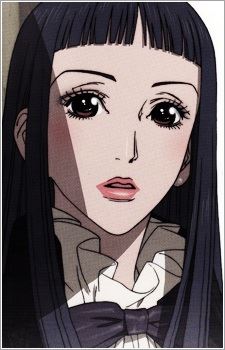
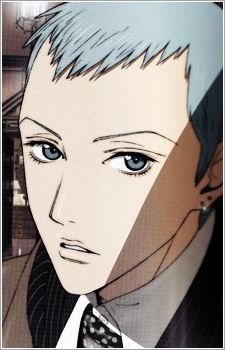
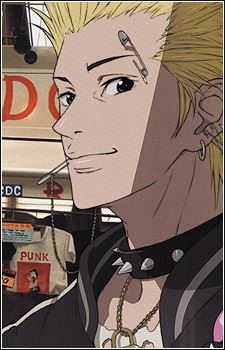
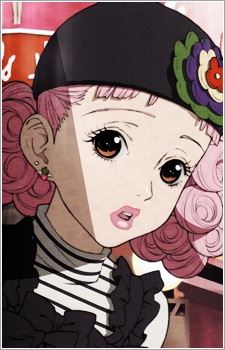
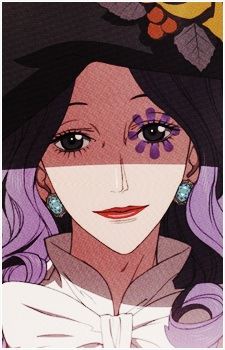
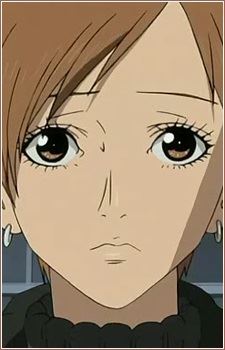


Paradise Kiss presents a realistic scenario where love stories for the main characters don't always have happy endings, but it hints that everything will eventually be okay in the future. I appreciate how they depict the main character, Yukari, who at the beginning is easily swayed by her feelings and influenced by others. As the story progresses, she becomes more resolute in her decisions. Such people truly do exist in real life. :3
This type of plot can also be found in one of the author's other famous mangas, NANA. For readers looking for something beyond the typical love story, this might be quite enjoyable. ^_^
In any case, Paradise Kiss is indeed a great manga.
"No one can be completely sure of their own will. Everyone is worried and confused and influenced by the ideas of people around them."
What if you stopped trying to meet your family's and society's expectations? Could you be sure you wouldn't end up just finding other impossible expectations to be met? That's what happens to Yukari Hayasaka in Paradise Kiss—she's unable to meet her family's expectations, and when that's too much for her and she finds an alternative life to live, she finds herself new expectations that she'll never be able to live up to, forcing her to change from within. She struggles to understand whether what she does is done of her own volition, or because it's what's expected of her.
I love this manga because it shows that there's so much potential in life. You really can just quit everything you're doing right now and find a new path. It's alarming how quickly Yukari's life changes, and it's scary to think about the repercussions of her leaving everything behind and gambling with her life. It's easy to get so caught up in everyday life that you don't even consider the richness of the world and the many choices in front of you. But there's this thing I've heard people say about solo travel or moving away from your hometown: no matter where you go, you're still you. She's still Yukari and still has to deal with the same identity problems she had before, even if she ran away from her past life and is in a different one now. She's still going to have problems, and she's still going to have to deal with them.
Yazawa's characterization of Yukari and those around her makes a rich, character-driven story. It's the characters that move this plot, and this plot moves at a startling pace. It's a short series that makes for a quick read, but the themes (self-actualization, familial and romantic relationships) will be staying with me.
I just finished this and I'm crying so much...
Ai Yazawa knows how to portray a real relationship. Sometimes love is not enough, and George and Yukari's ending is the perfect example of that.
But there's one thing that I hate the most, and that's Arashi! Ugh, such a toxic boy. Even though he seems to have changed a little, it doesn't change the fact that he raped Miwako and was transphobic towards Isabella.
The fashion scenery was so good; I was in love with everything. The ending was perfect because it was real.
Honestly, I wish Yukari and Miwako had left their boyfriends and lived together like Nana, being happy forever as best friends. And that's what it's about, and it's okay!
Art: I have to say, while there are plenty of close-up shots of beautiful characters in flashy outfits, everything else is rather awful. Some drawings, like chapter and volume covers, as well as occasional panels, have more or less realistic proportions. However, the rest of the manga is filled with what looks like skeletons trying to hide inside skin bags with varying degrees of success. It’s inconsistent but probably a stylistic choice, so your mileage may vary. I found it pretty bad because fashion, to me, is about using clothes to highlight the best features of the human physique and go beyond that. Stick figures don’t work for that.
Backgrounds are absolutely dreadful, no two ways about it. They’re better than something like Sailor Moon or BeruBara, which completely annihilate spatial awareness. Paradise Kiss has three types of backgrounds:
- Absolutely nothing – not uncommon for women’s manga, where they often focus on characters and their appearance to the point where backgrounds don’t seem to matter.
- Minimal outlines – the bare minimum of a background. At this point, you actually get an idea of where things take place. Better than a void of nothingness but lacking in detail and not particularly pretty to look at.
- PHOTOS – straight-up photos! No, even worse. Very badly filtered photos. This practice has existed in manga for a while, but this is the first time I’ve seen it done so poorly and lazily. Inio Asano and Makoto Shinkai sometimes get criticized for traced photos, but after seeing this, people would give them credit for at least putting effort into making their work look nice and fit their style.
Overall, the linework is clean but rough. Lines themselves are often not smooth, but there’s no excess either. Aside from close-up shots that have nice, smooth art with varying line weight, the rest is mostly flat-looking.Story: You might think Paradise Kiss is about fashion, and you’d be right. But it could just as easily have been about acting, making music, or drawing art. The fashion element is just a setting for a character-driven romance.
The romance in ParaKiss is rather well done. I expected another Cinderella-type story that little girls and teens could insert themselves into, and while there is a smidgen of that, it’s not the main point. The characters here are just believable enough to care about their attempts to build a relationship while dealing with their own and each other’s flaws. It captures well the storm that takes place in someone’s mind when they are high on love—making irrational or impulsive decisions or coming to far-off conclusions that are, however, easily understandable.
In the background, there’s a plot about all the characters finding their place in life, which I think made a compelling addition to the romance. While it doesn’t exactly go in-depth on all the themes it brings up, the part about growing up is decent. Our main heroine starts as an aimless student who goes wherever her mother points her, but along the way, she finds her true self. She discovers what she wants to do in life, and the happiness it brings gives her the courage to pursue her dreams. It’s a sweet message.
Funfactor: Given how much I hated most shoujo/josei manga I’ve read before, it’s worth noting that this was decently enjoyable. I wouldn’t recommend it to just anybody, but if you like more complex romances that delve into the psychology behind human relationships and don’t just ride on melodrama, I’d definitely recommend this.
First: YOU GOT TO LOVE E AND KNOW HOW AIZAWA WRITES, DRAWS, AND FEELS. Okay, so I'm an Aizawa fan, and just to clarify, I'm straight—no doubt about it, lol. This work is a masterpiece that I can't fully explain in precise words, but let's imagine this: - You have 5 volumes to create an entire world, characters, art, and story to bring something to life. Otherwise, the main thought would be how short the material is, and because of that, you wouldn't absorb much from it. - With only 5 volumes to introduce me to the concepts of fashion and love, she got me on my knees. - It's so sensitive; the dialogues are sweet and deep. I usually read romances and dramas not just in manga but also in books by notable writers, yet she still made me cry. - All the characters are deep, even those who appear for maybe 20 pages only. - I don't need to say anything about Aizawa's drawing technique—it's, by far, the most beautiful and delicate in the manga world. This fits perfectly with a work that talks about fashion; such beautiful dresses, hats, necklaces... Thanks, Aizawa, for bringing this to me. I'll always cry reading it. *Nana will still be on my top 5, and not Paradise Kiss, because shorter books are harder for me to connect with deeply, but we could say that it's there, hiding behind Nana. One more thing, I'm kind of like George with my ladies, if you know what I mean... By the way, I assure you guys that I'm straight—like, really straight. 10/10 FOR EVERYTHING AND DON'T BOTHER ME. -Vini, Brazil (sorry for my bad English ;'D)
Paradise Kiss is a josei manga by the creator of the popular Nana series. Interestingly, it’s a sequel to her earlier work, Gokinjo Monogatari, which I didn’t know until after I started reading—oops! This is only my second time diving into a josei manga, but I found this one quite enjoyable.
Yukari, a high school senior who has always focused on her studies, gets unexpectedly swept up by a group of fashion designers who think she’d be perfect for their next show. Initially hesitant, Yukari gradually becomes fascinated by the designers and particularly intrigued by their charismatic leader, George. She soon finds herself deeply immersed in the fashion world, wondering if this could be her true calling. Is it possible for her to balance both fashion and academics, or will she have to choose between them? And what kind of person is George, really?
The artwork in this manga is beautifully executed, adeptly capturing both comedic and mature moments when necessary. It also excels at depicting fashion details, which I appreciated immensely.
As for the characters, my feelings were somewhat mixed. I initially liked Yukari, but as the story progressed, I found her decision-making became increasingly impulsive, lacking the sense of responsibility I expected. Her feelings for George sometimes seemed overwhelming, making me wonder whether her passion for fashion was driven more by him than by genuine interest. George, meanwhile, remained an enigma, often keeping his thoughts to himself and offering little support when Yukari faced challenges. The supporting characters were more likable, though I wished they had been explored further.
Overall, Paradise Kiss was an engaging read. I always enjoy stories where the protagonist is on a journey of self-discovery. I’d recommend this manga to those who appreciate realistic romance and career-focused narratives, especially those centered around fashion. The ending was particularly outstanding, leaving a lasting impression.