
...
Show More
The Bible has its Genesis.
The Matrix has The Second Renaissance.
BLAME! has NOiSE.
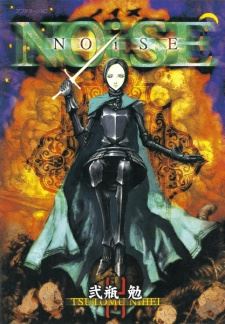
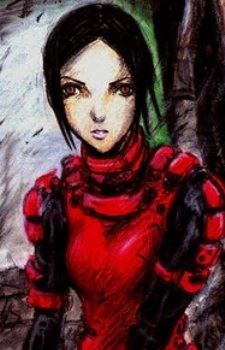
Through the eyes of police force member Susono Musubi, this one-volume prequel offers readers a glimpse into the world before the Netsphere spiraled out of control. Experience the events that plunged the technologically advanced society into chaos: the unchecked expansion of the Megastructure, the emergence of parasitic lifeforms known as Silicon Creatures, and the creation of the merciless killing machines called Safeguards.
Additionally, the compilation includes Tsutomu Nihei's debut work, BLAME, which served as the prototype for the critically acclaimed 10-volume series, BLAME!.
NOiSE was published digitally in English by Kodansha Comics USA on June 28, 2016. It was released in Italian by Panini Comics under the Planet Manga imprint on July 8, 2003, and in Spanish by Ediciones Glénat in November 2003. The book was also published in English by the now-defunct Tokyopop in December 2007.





I haven't explored any other works by Nihei, but I'm aware this is a prequel. Upon finishing it, everything clicks - it's setting the stage for you. Some reviews mentioned confusing panels or artwork, but I never encountered that issue while reading. I've come across far worse manga in that respect. The storyline is fairly straightforward, yet the atmosphere and art are outstanding. A lot was conveyed through various scenes with minimal exposition, and the underlying macabre elements were ever-present.
Overall, I would recommend it. I hope I enjoy Blame! just as much. It does seem like it could benefit from being longer, but considering its role as a prequel, that makes sense. If it didn't lead into another story, I'd rate it around a 6-7. However, knowing it sets the stage for a different narrative within this universe, its length and lack of a firm conclusion are forgivable, making an 8 seem appropriate.
Noise isn't a standalone piece; it serves as a prequel to Blame, offering glimpses into the backstory of that manga's universe. Spanning less than 150 pages across six chapters, with two additional side-story chapters, Noise is for those familiar with the author's style.
The artwork isn't flawless. It can be cluttered, occasionally unclear, and facial expressions may falter. Unlike most manga, which favor clean lines, this one embraces a messier aesthetic fitting its grimy, shadowy world — where sunlight seems non-existent. However, the backgrounds and certain character designs shine through brilliantly. The artist excels in crafting bleak urban landscapes and innovatively manipulating human forms, often distorting them in unsettling ways that I find intriguing.
The narrative mirrors the art's mixed quality. The storytelling is minimalist, lacking extensive narrations or dialogues to set the scene. Conversations are straightforward, devoid of lengthy internal monologues, focusing more on exploration via characters rather than deep dives into their personal histories or ambitions. Every revealed element raises more questions than it answers, bypassing the traditional who, what, when, where, and why framework. While this ambiguity appeals to me, particularly given the work's brevity, it might not suit everyone.
Despite its imperfections, I found Noise more enjoyable than my overall rating suggests. It offers a unique experience distinct from typical manga but falls short of deserving high scores due to its flaws. If you're considering Noise, ensure you've read Blame first to understand the author's style. Should you decide to start with Noise, the initial chapter (under 40 pages) will give you a taste of what to expect. Your curiosity won't be fully sated, but another 110 pages might offer slightly more insight into this mysterious setting.
Question: How do you classify a work as being “the bottom of the barrel”? For most people, it’s quite simple; their most hated work is also the one they consider the worst they’ve seen. I, on the other hand, try to separate my personal feelings about a work from any critical judgment of it. This isn’t an attempt to achieve some illusion of objectivity, but rather because I feel it would be dishonest not to. That’s why I’m simultaneously repelled and fascinated by a work like NOiSE, one of the few I’ve classified as an absolute failure. For those who usually find my reviews too lengthy, rest assured this one won’t be as long as the others. I doubt there’s anything positive I can say about the work anyway.
Story and Characters
When crafting a story, you’d think that "Where to start?" would be among the first questions an author considers, both in terms of setting and timeframe. Whether it’s an anime or manga, the job of the first episode or chapter is to establish characters and setting and offer a decent hook to grab the audience’s interest. The immediate issue with NOiSE is that the series starts directly with a hook that has no setting or characters to support it. We’re introduced to two characters, the protagonist, Susono Musubi, and Clawsa, investigating a place where missing children were found dead. The chapter jumps straight into the plot, with the most basic and confusing characterization possible: there’s no establishment of what kind of people these characters are, outside the fact that they’re police officers, no comprehensive explanation about the setting, and no proper notion of how these two elements relate to each other.
You might see here and there someone criticize a work by saying that the characters have no personality, but believe me, I’m not exaggerating by claiming that the characters here have little to no dimension whatsoever. Musubi has her job as a police officer as her only trait and behaves predictably for that role, Clawsa is nothing more than cannon fodder, and the antagonists, two organizations called The Order and the Safeguards, have objectives and actions that are vague to the point of being nonsensical. From the bad works I’ve read or seen over the years that gave me enough of an impression to award them a score, one characteristic the majority seemed to have, at the very least, is that they were followable, something that NOiSE barely manages to be occasionally. That is one of the traits that can lead me to call a work an absolute failure, when even following the narrative is a struggle, not due to a specific writing style, but due to sheer incompetence. The details laid out by the plot don’t properly connect with each other, the information given by the characters has no ground to stand on within the line of events or the setting, and I still have no idea what the title means, for Christ’s sake!
I appreciate subtlety and the ability some works exhibit to convey meaningful information or emotion concisely, which is why my favorites include series like Toradora!, Shiki, and Ergo Proxy. However, there is a difference between being subtle and having no distinguishable worthwhile substance, and this is a work that crosses the line from subtlety to emptiness. I understand that NOiSE is a prequel to BLAME!, another work by Tsutomu Nihei, but there’s no excuse for why it couldn’t work as a standalone story. A prequel should flesh out the world and events prior to another story and needs to be well-crafted and capable of being appreciated on its own merits. The Star Wars prequels, for instance, receive particular hatred for being a bad chapter of a beloved franchise, but they didn’t fail simply because they were part of a larger series; they failed because they were bad movies in the first place.
Presentation
Good Lord, it seems that nothing here is salvageable! The first thing to notice about NOiSE’s presentation is its particularly poor use of framing. Complementing the fact that the narrative is a clusterfuck, the transition between panels is confusing, to the point I had to read some pages three times to understand how characters went from one place to another. This is, of course, not helped by the art. It has a very schizophrenic use of gradience, with it being entirely absent from some chapters while others are all in varying shades of gray. Most of the panels have stark distinctions of black and white, which could convey a gritty, hopeless cyberpunk setting, but loses its effect due to the many problems of the work and the poor quality of the drawings. If there are recurring set pieces, they are barely recognizable, and weirdly, the art style seems remarkably afraid of straight lines, for some reason. This could be simply the result of the overall poor quality or a form of conveying the crapsack nature of the world, but it generally contributes to the damage already done to the presentation.
Personal Ramblings
I haven’t seen much of Tsutomu Nihei’s works. Aside from NOiSE, I’ve read the first two chapters of Biomega, which were bad enough to make me drop it right there, and watched an ONA based on BLAME!. All of them displayed the same issues and gave me, overall, very little faith in anything else coming from that same author. I can’t say I’m not curious, though! As I said at the beginning, a work like NOiSE fascinates me to a degree. Sometimes a movie, manga, or anime can be bad, but also very intriguing on its own merits, compelling us to try to grasp what thought process led to such embarrassing results. Recently, another work from Tsutomu Nihei garnered some attention: Knights of Sidonia, a 15-volume manga adapted into a two-season anime series. I’m very skeptical of its quality, but still very curious about how it fares. Whether this author has evolved and learned to do characterization and setting right or if he still has no idea how to differentiate between subtlety and vacuity, I’ll have to find out for myself.
What can one say about "Noise"... without sounding like a cult member trying to bring in a new recruit... Fascinating.
"Noise" was my proper introduction to Tsutomu Nihei, even though I had heard of Blame! before diving into it. I've revisited it multiple times, which surprises even me. I'm not typically a horror fan, but this meshes beautifully with sci-fi. It's like the perfect pairing of bourbon and a cigar.
Nihei's style seems like the imagined outcome if Clive Barker and H.R. Giger were drinking buddies, minus the fetishistic sexual undertones. There's an eerie, shadowy, unnatural vibe to the worlds he crafts, something far beyond dystopian that I'm unsure there's even a word for it. It feels so ominous and unique that it just feels WRONG, yet at the same time, it piques your sense of adventure, making you want to grab your pack and explore.
A definite must-read.
"NOiSE" is genuinely unnecessary.
Being a prequel to "BLAME!", it only offers a glimpse into the world before everything fell apart eternally. The storytelling is more straightforward, yet I'm unsure if I can even consider it as such. Tsutomu Nihei's works are complex and tend to confuse me when he presents a more direct narrative. I feel like I understand it, but then, what's there to appreciate? Just the art, I think.
The story could have been expanded much further. We encounter a very sympathetic character, someone who clearly desires the best for everyone, but she is pitted against nightmarish concepts like brainwashing, consciousness transfer, purposeless existence, and body modifications—all within a short span. If we had at least double the time with her, to flesh out those other characters and the concepts, we might have gotten one of Nihei's most understandable stories. But alas, we're stuck in his minimalist explorations.
In terms of characters, there's missed potential. Sure, you can tell me all about how that's not the point of Nihei's work. However, the seeds of a good, character-driven story are present; it's just that the issues with his writing got in the way of deeper exploration. There's a struggle between what to focus on, and the world seems to have won over the characters. In a way, the lesson of the story feels less depressing because I couldn't connect that much. "The failure of the few led to the end of the world for the many."
In terms of art, holy mother of God, I always love Nihei's art. The impact, the dirty, gritty nature of the story—it's all there in full throttle as always. You see unfathomable structures, massive kilometer-sized chaos, overpowered weapons that are essentially the only things allowing people to exist, all shown with enough distance to give an impactful impression but not enough to really grasp the whole picture. Purposeful, incredible, massive, unique—I'm never disappointed by that aspect. Great stuff.
I wish everything had the same level of quality. The story is clear, sure, but it doesn't delve deeply into the characters' psyches, even though it seems like it tries to. The characters have a great foundation, but they don't get enough time to shine. All that with godly art.
5.2/10. If you want more clarity on "BLAME!", give it a shot, but don't expect it to stand alone.
This manga was quite fascinating. The storyline is deeply dark, set in a dystopian future with secrets lurking beneath the surface. Even though this narrative style might seem somewhat typical, the subtle nuances within the story are executed remarkably well. However, the most crucial element of this manga is undoubtedly its art. Without it, the story wouldn't convey its message as effectively as it does here. The artwork employs a dreary shade of black, enveloped by a melancholic and heavy grey throughout the piece.
Despite these color schemes, the art becomes intriguing as one reads, possessing an "otherworldly" quality, primarily due to the consistently applied blurry effect. This almost mirrors the main character's feelings in the story, constantly racing against time to uncover the mystery surrounding the "order" and the fate of her friend Clawsa. Consequently, it brilliantly showcases the protagonist's muddled mindset, immersing you entirely into the narrative without offering any respite. It also creates a claustrophobic sensation, giving the impression that something is always closing in, inching ever closer.
Enough about my admiration for the art and story; the main character, Musobi Susano, deserves considerable praise too. As you read, you'll notice there's minimal dialogue, which I believe places the reader directly into Susano's perspective, effectively conveying her sense of loss and confusion as she wanders through the desolate city streets. Essentially, the character's actions speak volumes, making this approach far more impactful than adding more dialogue. Less dialogue encourages subjective interpretations from the reader rather than merely following what the character says. This invites greater immersion and enjoyment.
In conclusion, I thoroughly enjoyed this manga and am eagerly awaiting BLAME! On a side note, this was my first review here, so I hope you found it enjoyable.
Cheers.