

Tatsuhiro Satou is a 22-year-old hikikomori who has been unemployed for four years after dropping out of college. To escape his reality, he uses hallucinogenic drugs, which lead him to develop various conspiracy theories. One such theory involves the Nihon Hikikomori Kyoukai (NHK), an alleged secret organization that he believes is responsible for his reclusive lifestyle and the growing number of hikikomori in Japan.
In an effort to fight against NHK, Tatsuhiro vows to overcome his social ineptitude. However, he quickly discovers that even basic social interactions are daunting challenges for him. With the help of Misaki Nakahara, a mysterious girl who claims she can cure him of his hikikomori lifestyle, Tatsuhiro embarks on a journey to transform his life.
NHK ni Youkoso! is the manga adaptation of Tatsuhiko Takimoto's novel, first published on January 28, 2002. The manga was released in English as Welcome to the N.H.K. by Tokyopop from October 10, 2006, to September 16, 2008. VIZ Media later republished the series digitally under their VIZ Select imprint from June 16 to December 9, 2015. The series was also made available in Brazilian Portuguese by Panini Comics from November 2010 to February 2012.
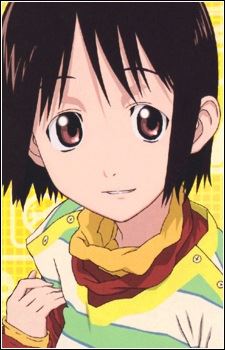
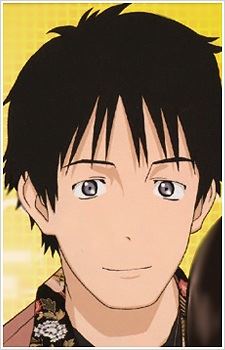
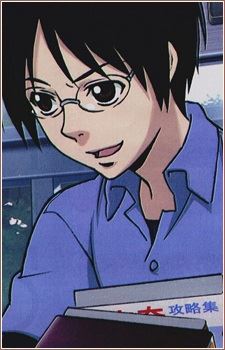
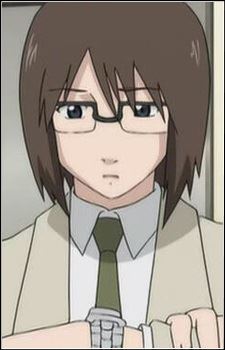
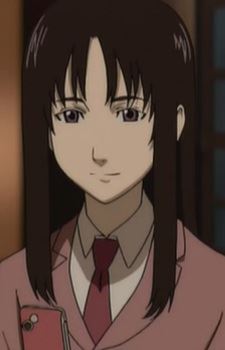
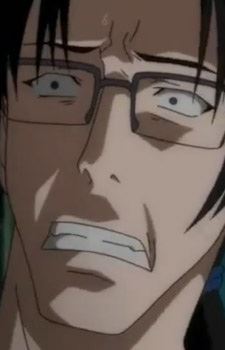

This is one of my all-time favorite manga, and since it doesn't have many reviews, I decided to add some more information for those who are on the fence about reading it.
The story revolves around a hikikomori who believes an organization called NHK is out to get him. (Really?!) xD The protagonist suffers from psychological issues like paranoia, leading him to think his life is controlled by NHK, attributing all his misfortunes to their actions.
One day, he encounters a girl named Misaki, who tells him he's been chosen for her "project" and that she can help him live a normal life. Just hearing this makes the plot sound sweet, right? Well, don't be deceived; this manga isn't cute or lighthearted at all. Despite being categorized under Comedy and Romance, its storyline and character dynamics are unlike anything you've ever encountered. To sum it up in one word: "bizarre" (or perhaps less intense) "unusual" would fit best.
It does contain humor, but the author's style is extremely sarcastic and cynical, sometimes making me feel slightly uncomfortable.
The characters are another strong point. Their personalities and problems are so well-crafted and realistic that you might think they could be real people with similar issues, acting just as the characters do. (Which was probably the author's intention, lol.)
If you're looking for an amazing manga that breaks the mold, this is a must-read.
I can't decide whether this series is aiming for seriousness or just going over the top. There's a chaotic mix of random events unfolding at an alarming pace, with unexpected encounters, new characters popping up, and plot developments happening in rapid succession. Ultimately, there are plenty of unrealistic scenarios, and I don't think you should view this series as a serious exploration of someone like Satou's psyche.
In the end, the story features a cast of misfit characters, each with their own flaws, all struggling to keep themselves together. These characters use each other as companions on a quest towards something they don't even understand themselves. Satou is perpetually socially and mentally unstable, and to some extent, it's a tale about a guy who can't do anything right and his interactions with people who have problems. Misaki needs someone to act as her "project," Yamazaki fears change and uses various forms of escapism to avoid taking that step forward. Hitomi is dissatisfied with her married life.
For Satou to save them is impossible; after all, he can't even pull himself together. It's a story about people wanting change, struggling to do something, and also standing in despair when they can't make that change. But it's also a story filled with wacky humor, random attempts at doing something stupid, like some kind of "political revolution," and an overall bizarreness to everyone's goals.
I can't say I really liked this series a lot. There might be an element of truthfulness to the characters, but it's more of an elaborate fabrication of "misfit individuals" that doesn't delve too deeply into anyone's psychological state. It tries to be deep, edgy, and ultimately hopeful, but all I see is a failed story about the ramblings and silly events revolving around Satou. Rather than empathizing with Satou or any of the other characters, I find myself thinking, "Oh, that just happened." This is because there's a disconnect between how the characters behave and their actual personalities, which makes for a wacky comedy that doesn't take itself too seriously. I never really felt like I understood anyone's thought process. There's a lack of focus on the characters' emotions, and all you get is nonsensical plot and dialogue, self-deprecation, or motivation towards whatever new weird thing Satou or his friends are doing.
Honestly, this manga, unlike its anime adaptation by Gonzo, leaves much to be desired. Here, I will provide a review.
1 - Story: The main protagonist is Tatsuhiro Satou, a former university student entering his 4th year of unemployment. He lives an entirely secluded life as a hikikomori and eventually concludes that what is happening is part of a conspiracy. On a day when nothing seemed to change in his life, he meets Misaki Nakahara, a mysterious girl who wants to try to cure his reclusive problem. Misaki presents Tatsuhiro with a contract, which basically says that every day he should be at the park at night, where Misaki will read books, proposals, methods, etc., to help Tatsuhiro give up his lifestyle. During these outings, many issues are discussed, mostly related to psychology or psychoanalysis. This is where the plot begins to evolve. The story is very good for me, but it's somewhat less than the anime, and now I'll tell you why.
2 - Development: The manga has 8 volumes with 5 chapters each, totaling 40 chapters. Regarding the development of the manga, it falls short compared to the anime in many ways. The progression was very fast and unsatisfactory. Many events, like those on the island, felt unresolved, whereas in the anime, similar events made more sense. Additionally, Satou's evolution in the manga is better compared to the anime, where he manages to get a job.
3 - Art: In terms of art, it's much higher quality compared to the anime. The character designs look great, and the backgrounds are well-detailed and worked on.
4 - Characters: The characters are genuinely good, most even endearing to me. Misaki, for instance, is the best female character and my favorite. Throughout the chapters, she helps Satou become more social and stop being a hikikomori. Satou, the protagonist, is a good character who goes through various situations to become more social and also helps his friend Yamazaki with a game. However, the characters don't have a satisfactory outcome compared to the anime.
As a curiosity before moving to my conclusion and scores, NHK stands for "Nihon Hikikomori Kyokai," which is frequently seen in the manga and anime. It also comes from the name of a Japanese TV channel called NHK, "Nippon Hōsō Kyōkai" or "Japan Broadcasting."
Now, let's move on to the scores:
Story: 8, the story remains very good despite its rushed development.
Development: 6, many things resolved out of nowhere, leaving me unconvinced.
Art: 8, the character designs are superior to the anime and well-made, plus the backgrounds are very well done.
Characters: 7, the characters are very good but lack the strong development seen in the anime.
Final Score: 7/10
The manga is good, but honestly, it didn't appeal to me much. Initially, I would rate it 8/10, but it drops a point due to the aforementioned reasons. In conclusion, I wouldn't highly recommend it, but it's still worthwhile. Therefore, I recommend the anime more as it is better developed and has a better ending.
Shutting yourself in your room can be incredibly tempting. No one talks to you, no one harasses you, and most importantly, no one judges you. Finally, peace and quiet amidst the chaos we call our mind. But like many things, this is only temporary.
Welcome to life! Prepare for the best and biggest journey you'll ever have. Meet Satou Tatsuhiro. He will accompany you on your trip, or rather, you will be accompanying him. Satou is 22 years old, an amusing character with idiotic quirks. You might want to know that Satou has shut himself in his room for the past three years, nearing the fourth. He lives in a one-room apartment, doing everything alone: cooking, watching TV, and being lonely. He also enjoys playing erotic video games and uses drugs.
Would you still like to accompany Satou? It's okay if you don't. It's understandable if you find his actions disgusting and unacceptable for a functioning human being. So let me ask: What IS normal?
Welcome to the NHK! This question is at its core. Undoubtedly, you and everyone around you have wondered what is acceptable and normal so that no one thinks you're weird. That's human nature. No one wants to appear odd or unable to function in society. No one wants to constantly need help from others. But simultaneously, we all need help. Even something small like feeling lonely can become a vast problem.
Satou doesn't understand this. When things get complicated, he does what many would do: shuts himself in. Physically and mentally. This is what the manga is about. Either conform to societal rules or be an outsider. For Satou, it's not a choice; he's forced to live alone. Not because someone told him to, but because he told himself he had to. He can't function by society's rules. Problems like struggling to talk to strangers when job hunting are huge obstacles in his life. He didn't choose to be an outsider with these problems. He wanted a normal life, with a normal job and normal people around him. And it didn't happen. Getting something so ordinary, which many people have, is unbelievably difficult for a shut-in like Satou. Now he's stuck in his apartment, getting addicted to isolation and rotting away.
Then comes an angel. A savior, someone who cares and believes you deserve a normal life. Her name is Nakahara Misaki, an 18-year-old girl strangely interested in outcasts like Satou. They meet when she and her grandmother knocked on his door to talk about religion. She sensed something was wrong and wanted to help through counseling. Why would a young stranger help someone isolated from society? The answer is simple: self-worth.
Misaki isn't different from Satou; she just realizes her problems and tries to solve them, albeit dubiously. She helps Satou because it makes her feel better. Her feelings of defeat, hatred, and resentment flow through Satou, giving her new strength. In a way, she uses Satou to feel better. But is that normal? Satou is already low, so any help is appreciated. If it means the other party feels better too, it's a bonus. The action matters, not the thought behind it. Or does it?
The series makes you wonder about Misaki's actions. She's another human with problems trying to solve them. The interaction between Satou and Misaki is remarkable. Satou's problems are common, making it easy to relate. You see Misaki's actions through Satou's eyes, forming your own opinion. The manga doesn't tell you what's right or wrong; you see through Satou's perspective. Since Satou lacks a solid opinion due to his low position, you interpret the story freely.
Unfortunately, the story itself isn't special. Great characters create great stories, but here, they don't. Don't expect deep psychological exploration of social isolation. The characters are open, some funny, some sad, but never do they delve into the depths of the human mind. The story is almost slice-of-life. There's no common thread; events just happen. No goal, no ending mark. Just characters with problems, events occurring. Not too deep, not too shallow. The story doesn't impress overall. You wait to see how the characters develop and interact, seeking a playground for those things. Events seem random, maybe intentional, probably not.
Welcome to the NHK! is unique. Classified as romance with humor, its true label would be 'fun psychological problems.' It won't explore deep aspects of isolation but discusses their global impact, with humor. Characters will make you fall in love instantly. Satou is the nice guy next door with issues, Misaki isn't complex but makes you think. They mix well in a manga with an okay story and solid art.
Desperate times call for desperate measures. These times may not come often, but when they do, they reveal which choices truly matter.
After revisiting volumes 1-6 before diving into the final installments of Welcome to the NHK, I finally completed reading the manga. My emotions are quite mixed: while I did enjoy the read, I also felt there was an excessive amount of padding—much more than in the anime. This unnecessary content significantly reduced my enjoyment after the first two excellent volumes.
Volume eight stood out as the most disappointing in the series. It felt pointless and less entertaining compared to earlier volumes. There was a lot of dialogue, but I never found myself caring about what was being said or even following most of it. The story ended up going in circles with Misaki pushing her love contract, Satou tagging along because he had nothing else, and Yamazaki rambling about starting a revolution. All I saw were hard-to-follow conversations of somewhat unstable characters inserted merely to extend the story to 40 chapters.
While discussing the negatives, I must add that I wasn't pleased with how the original story was altered in the manga. Many small yet important changes were made, some seemingly on-the-fly as the manga progressed. For instance, Satou initially claimed he wasn’t a virgin (in the novel and anime, he slept with his senpai while still in school) and then later said he was. The most troubling change was Misaki lying only about having a bad childhood in the manga, making her already difficult-to-like character outright unlikable for no reason. Too many silly changes were made just to stretch a short story.
On the positive side, I greatly enjoyed the first two chapters of volume seven. These events didn’t occur in either the novel or anime and worked well because Satou remained a virgin in the manga. Kashiwa is easily my favorite character in NHK, and the 'so near yet so far' romance between her and Satou is the most emotional part of the story for me. So, a few chapters giving them more time together were very welcome. It was nice seeing Satou confess his feelings here…even if he later backtracked because he lacked what it would have taken to move their relationship forward. Life truly does suck.
In general, I dislike how open-ended every aspect of the NHK story is left, but I’ve always found the relationship between Satou and Kashiwa moving. I nearly cried during episode 14 of the anime simply because, despite understanding why Satou doesn’t follow his heart, it’s painful to watch knowing they could have been happy together. If only he had gathered the courage to put his arm around her when he wasn’t a recluse and she wasn’t married now—his future might have turned out slightly happier. What makes it agonizing is that Satou is a better match for her than the guy she ended up marrying...
...In summary, my thoughts are that, although still very good, the manga is definitely the weakest of the three versions of NHK’s story. It has some nice additions, but most new content adds little value. We didn’t need to see Satou spend time at his parents’ house coming up with masturbation plans while supposed to be job hunting, nor wandering homeless. The novel was a bit too short, the anime got the length just right, and the manga dragged on too long. I don’t regret spending over £40 on the manga, but I feel I should have spent the money on the anime instead. OH WELL!
Welcome to the NHK, often abbreviated as NHK, stands out as one of the most cathartic manga ever created, maintaining a substantial level of realism. Despite its popularity and success, it never succumbed to becoming a superficial cash cow. The narrative revolves around characters grappling with mental instability as they seek solutions to their myriad problems. However, these solutions frequently serve as mere excuses to escape reality or even life itself. This aspect is precisely what makes the series so compelling; it’s a portrayal of deeply troubled individuals attempting to solve their issues incorrectly. Adding to its allure is the fact that these problems are rooted in real-life Japan, not some fictional realm. Drugs, erotic games, pyramid schemes, suicide groups – all are genuine concerns in contemporary Japan, particularly among NEETs and hikikomoris. Reading this manga feels akin to gaining insight into the struggles many face in Japan and beyond.
Another standout feature of this work is how it doesn’t merely scratch the surface of these issues but delves deep into them. For instance, consider Kamisama Memo-chu, which features a NEET hikikomori loli detective (quite bizarre). There’s also Boku Wa Tomotachi, focusing on anti-social individuals striving to make friends. In both cases, the premises are used primarily as shallow hooks to attract male NEETs and hikikomoris. Sayonara Zetsubo Sensei has a hikikomori character, where everyone embodies a mental disorder, yet they remain static comedic caricatures lacking depth. While I appreciate the social critique in that show, I admire NHK more for its ongoing plot and immersive character development.
The characters themselves are fascinating because they’re constantly seeking solutions, albeit often incorrectly. You witness the full trajectory of individuals entangled in dubious activities and see how they either fall apart or find redemption. Interestingly, the mangaka was once deeply involved in similar circumstances, making this series a personal account of his experiences, including ways to overcome such challenges. Thus, you not only see characters based on real-life issues depicted by someone who truly understood them but also observe their gradual transformation and eventual catharsis.
This lends an intensely personal touch to the work, showcasing art imitating life and the artist expressing himself rather than pandering to fans. I hold this in high regard. The inclusion of real-life issues also facilitates viewer empathy and identification, especially if they’ve faced similar situations. Admittedly, the characters address their issues somewhat lightly and resolve them easily, and the lead isn't strictly a hikikomori since he leaves home and interacts with others. Realism only goes so far, but it still surpasses Kamisama Memo-chu or Boku Wa Tomotachi. NHK tackles these topics closer to reality than any other show, earning its place as the best in this niche until proven otherwise.
Beyond content, the artwork is commendable too. The protagonist's hallucinations bring household appliances to life, discussing conspiracies, offering insights into his thought process. The characters' struggles are portrayed realistically, showing how deeply troubled individuals act erratically, integrating the artwork seamlessly into the story rather than using it purely for stylistic flair.
In summary, this manga does everything right. It addresses a fascinating, real-world topic, develops its themes, features relevant characters, includes trippy artwork at times, boasts engaging dialogues, offers catharsis, remains personal, and avoids fan service. It’s a recipe for success.
So go ahead, read this manga, cherish it, and be cautious about your eroge collection lest your fridge warns you of impending doom from the Men In Black.
What happens when a series about social issues fails to enlighten on those issues yet garners praise merely for addressing them?
Welcome to NHK, in my opinion, is one of the "untouchable" series in an era I call the generation of fantastic hypocrites.
This isn't to say manga has never been experimental or fantastic, nor am I claiming that many fans of this series are unintelligent.
If anything, it's quite the opposite. We've reached a point where intellectual laziness is so pervasive that we now have a culture sophisticated enough to mock the moral clichés of underdog stories, harems, and fighters shouting out their moves—elements once criticized solely by Western anti-manga critics who couldn't appreciate such romanticized storytelling.
You'd think this would be positive, but the downside is that the same intellectual otaku community can be forgiving, if not apologetic, towards these kinds of... let's not call them poorly presented because they do entertain... rather, inaccurate pseudo-social commentaries going overboard.
Perhaps it's due to my ignorance of Japanese culture and language, but since I perceive myself as a hikikomori, things like a woman falling into the protagonist's lap seem just as bad as the fantastical portrayal of hikikomoris living in dark, cave-like rooms.
It's not that these portrayals lack a realistic connection to how hikikomoris live; it's more about wrongly demystifying the turmoil of their lives. But again, I'm basing this mostly on my own experiences and thoughts.
That said, it's challenging to criticize this type of series, which is why I consider it untouchable, especially from someone lacking the communication skills to highlight its flaws.
Still, even with the right tools, it's tough because it's about a series where you "excuse" the flaws and praise the social clues it gives, even if those clues are mostly hollow and make characters cheap.
The easiest example is the inclusion of the love interest. Even treating it merely as a manga character, you can easily see shades of Mary Sue super qualities.
Without delving into spoilers, the series can't sustain itself as character-oriented despite what some reviewers claim. Instead, it relies on bizarre illusions, a cheap, non-descriptive "conspiracy" to create a similarly cheap "passing the buck" attribute in the protagonist—a character who faces almost no difficulty in gaining talents and is a hikikomori "because" the plot demands it.
It's complex to explain without pointing to specific scenarios, but even in average-quality harem series, there tends to be character study between each scenario. Welcome to NHK largely replaces this with "time skips" and then immediately provides an "eye-dazzling" iconic image (like the naked-in-front-of-the-computer pic seen on imageboards).
While these scenarios might seem humorous ways to present problems, they don't. If you look at comments on this series, fans don't gain much insight beyond feeling analogues to their own problems—which, controversially, is akin to saying Christianity solved your problems even though you joined for the community rather than doctrine and followed priests' teachings instead of the Bible's.
It's feel-good, but where's the substance? Where's the highly praised representation of social issues? There's mostly none.
Rather, it's not about the series failing to address social issues but giving off a vague Barnum effect rather than any meaningful stance, except in the shallowest ways.
These types of series resemble Hollywood films. A reviewer might mention Tyler Durden from Fight Club—an equally shallow movie about a shallow subject that gives enough "Barnum effect" for fans to think it offers in-depth social commentary, even if they haven't grown as people or better understood their problems because of it.
Justifying this isn't easy. I keep circling around this point, unsure how to pinpoint the flaw with one effective example.
Another analogy: In Slam Dunk, a character doing a between-the-legs dunk would be fantastic but would lose the soul of "inspirational basketball" in favor of "eye-dazzling," even though each character has unique "Genius" skills.
It all comes back to fantastic hypocrites.
I'm not immune to this. I've overlooked fantastic elements in manga and anime before (like Dragon Ball's liberties with Son Goku), but it's about "ridiculousness."
It's one thing to be anti-ridiculous, pro-ridiculous, or somewhere in between. It's another when this attitude spreads so widely that such series are highly praised.
On one end, there's extreme "ridiculous apologism" (shallow examples being Naruto's lame cloning power or people excusing the new Karate Kid) to "ridiculous praising" (fans claiming this series accurately portrays issues, ignoring the unrealistic love interest).
In the end, I'm not sharing this review to convince readers to avoid the series. The premise begs checking it out regardless of quality. Rather, I post this as a warning to those finding the series special—to look beyond surface quality or feelings. Ideally, I'd communicate areas not to settle on better, but I'm not best equipped. In a site full of positive reviews, it feels like a duty to share a negative one, hoping it inspires better criticism elsewhere, preventing us from losing ourselves in "Manga becoming Air."
Note: English is not my native language, I apologize for possible mistakes.
For those who think the manga is identical or follows the same storyline as the anime of Welcome to NHK and therefore prefer not to read the manga, let me clarify that this is not the case. Although they start from the same story and base, many different situations occur, and even the personality and history of certain characters are quite different and noteworthy.
The story follows our protagonist Satou, who begins at 22 years old and ends up over 23. He's a former university student who abandoned his studies due to social weaknesses and lack of self-confidence, as well as having problems adapting to society and harboring a fear of it. This led him to become a hikikomori for four years (withdrawing from society, being in social seclusion). After all that time, one day he meets Misaki, "The Angel Misaki" or "The Goddess Misaki," as he calls her—a pretty young girl who, against all odds and reality for the protagonist, seeks to help him out of his hikikomori problem without any apparent reason or motive. Is this really the case? And his neighbor Yamazaki, an old acquaintance from school, an otaku, and a lover of eroges and pornography, also does not live a good life but serves as significant support. All three embark on a fun and interesting story where we can see the emotional and mental weaknesses and problems of them and other characters develop throughout the story, which is full of various psychological situations, melancholies, depressions, overcoming, and interesting twists.
Personally, between its animated adaptation and the manga, I think the manga affected me more and not entirely positively. There are many situations I would have loved to see animated, but overall, I prefer how things remained as they are.
The most complicated character to understand and know is Misaki, who suffers from a personality disorder, becoming very evident as the story progresses. She is not nearly as benevolent as Satou might believe initially, possessing a personality quite different from Misaki's animated version. Without a doubt, the protagonist trio has their problems; Satou is the worst off and needs to get out of his predicament the most. However, all the main characters who come close to him are not in good situations either—when I say all, I mean almost all.
Undoubtedly a manga worth reading, perhaps it felt elongated towards the end, but all those humorous situations with a dark touch, those situations that even touch upon suicide multiple times, make it one of the best stories I think every manga and anime fan should read and watch. Be warned, though, not to expect a conclusive ending for almost any character presented to us—it’s an ending that I personally felt was more open-ended and not as good as its animated version, although the anime didn't leave it "closed" either.
But that doesn’t stop it from being good. My rating is 8.7/10, approximately 9.
And remember, we live in a conspiracy, and if by chance you feel referenced or see yourself in the story, remember, it's only the fault of the evil organization N.H.K!!!