
...
Show More
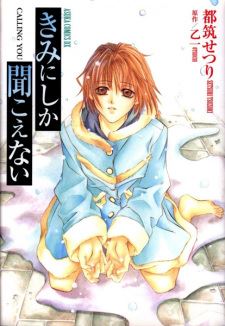
A volume featuring two short stories: "Calling You" and "Kids."
In "Calling You," a pair of lonely high school students begin to psychically communicate through the "cell phones in their heads." Their connection deepens, and they discover that they are not only separated by distance but also by time.
"Kids" is a story about high school bullying and abuse.
Note: Kiyohara Hiro also created a manga based on the same story.
Kimi ni shika Kikoenai is a manga adaptation of the light novel of the same name. While the original light novel contains three short stories, this manga only adapts the first two stories.
The series was published in English as Calling You by Tokyopop on January 9, 2007. VIZ Media digitally rereleased the manga under the VIZ Select imprint on March 10, 2015.




I think this manga is a prime example of how a poor storyboard can spoil a narrative.
The manga consists of two stories:
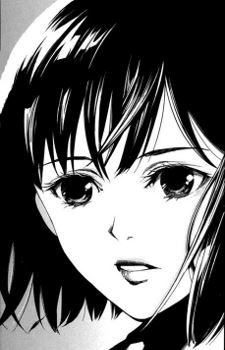
Kimi ni Shika Kikoenai (Calling you), a one-shot about two high school students who communicate psychically through cellphones they imagined in their minds.
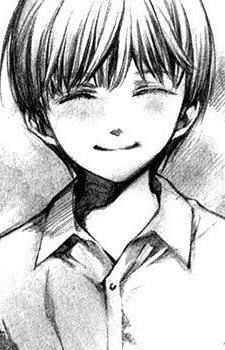
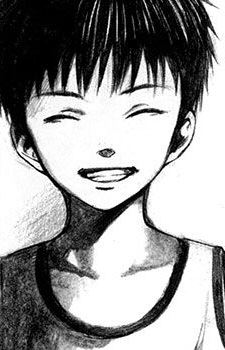
Kizu (Kids), a tale split into two chapters, focusing on a boy who can absorb other people's wounds.
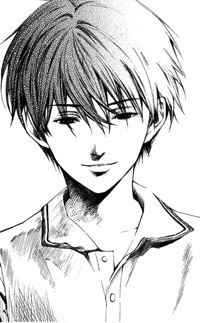
I have no issue with one-shots or short mangas. I've enjoyed many excellent ones, and some even rank among my favorites. Additionally, I believe works should be evaluated within their genre and type. Comparing a short story to a lengthy manga would be akin to comparing a short story with a novel—pointless. However, in this specific case, there was too much information crammed into limited space. At times, the plot becomes unclear, overly rushed, filled with gaps, and chaotic. The artwork didn't help either; it felt too "girly" and excessively adorned. Overall, the impression I got was that it handled a profound and touching subject matter superficially.
To be honest, my feelings might stem from already knowing these stories before reading the manga. When analyzing it, I can't help but compare it to another version of these tales, both illustrated by Kiyohara Hiro, which are vastly superior. They are separate mangas with identical titles: Kimi ni Shika Kikoenai and Kizu. The first has five chapters, the second four. These versions have a slower pace, deeper character development, simpler art, and a more mature feel that suits the plot better.
This version is merely average. The story itself remains good. Otsu-Ichi's narrative is unchanged, so I can't rate it as "bad." The problem lies in the adaptation. I highly recommend reading Kiyohara Hiro's version.
They also adapted Kizu in a shoujo style, and I have to say, after reading both manga versions of the two stories, I prefer the shounen one. Maybe it's because I read the shounen version first, but there were some glaring differences when I compared the two. One of the most notable ones was their pacing. The shoujo adaptations felt like they were two long one-shot mangas with all the story content crammed into the pages, resulting in a composition that can only be described as messy—though this is something repeatedly used in shoujo mangas. The shounen version paced each story within five chapters, making them feel more like short series than quick tales.
Another aspect was the choice of art styles. The shoujo adaptation employed a common style from the late 90s and early 2000s, featuring extremely deformed facial structures, thin lines, super-deformed character designs, and heavy reliance on tones. This was a poor choice, as both stories' strongest elements were the mood created by the supernatural connection between two characters set in a normal, mundane world. The shounen version captured this better with a slightly more realistic art style and darker toning overall. Additionally, the shoujo style of that era was best suited for light-hearted or fluffy series in the comedy and romance genres, which didn't require readers to focus too much on settings or scenarios but more on the feelings conveyed through internal monologues and parting images. They treated the stories more like fantasies of heart-beating romances between two individuals, which doesn't complement the realistic and psychological nature of these stories.
The stories of the two mangas, in my opinion, were interesting but not extremely so. They allowed the reader to find interest in situations where two individuals form a bond through their connection with supernatural power, but nothing greater ever seems to occur. Given that both stories are short, there isn't much character development beyond what the plot demands. In Kimi ni Shika Kikoenai, the girl was able to face her flaws, and in Kazu, the boy was able to overcome his emotional baggage, but nothing evolves beyond that. You could call those significant developments for them, but it's not enough for us to become truly attached to the characters, mainly due to the fact that both series were too short to give us anything else. The small plot twist in Kimi is also quite predictable from the beginning, as the possibility is directly given to the audience with abundant hints.
Overall, I did enjoy the two series, but they will probably become forgettable reads over time as they don't leave much of an emotional impact compared to Otsu-Ichi's other works like GOTH or Shissou Holiday.