

...
Show More
It's the present day, and Archangel Michael is frustrated with the lackluster development of the human species. The angels, residing in their world high above ours, have been given a choice: to destroy or preserve humanity. This decision will be made through a system where "Plus Checkers" look for good points and "Minus Checkers" search for bad points. Whichever side reaches 10,000 points first will determine humanity's fate. Chihaya and Kagetsuya are angels who have known each other since their days at military school in Eden. They find themselves on opposing sides of this "good vs. bad points" checking system and are paired together during their stay on Earth.
However, Chihaya is unusual even by angelic standards—he has black hair, eyes, and wings. He's one-of-a-kind, unusually powerful despite his naive demeanor (much to Kagetsuya's dismay), but set apart from his angel kin... until the Black Cancer strikes the heavenly population, darkening the wings and hair of its victims before spiraling them into painful death. Tension builds among the angels and between Chihaya and Kagetsuya in particular, and it seems that the secrets to the salvation or destruction of both Earth and Eden may lie with Chihaya himself.
Earthian was published in English by Tokyopop's Blu Manga imprint from October 30, 2005, to August 8, 2006. This edition consists of only 4 volumes, similar to the Japanese bunko edition, while the Japanese non-bunko edition has 5 volumes.

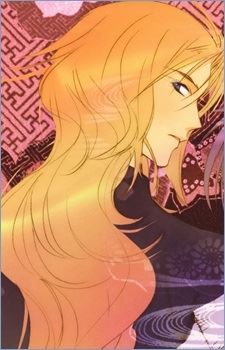
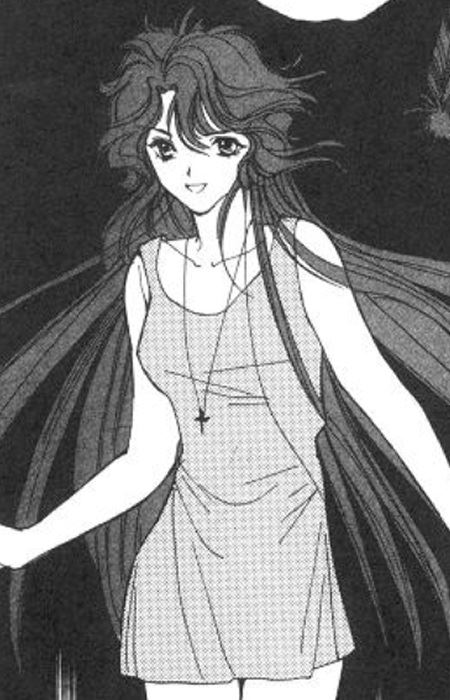
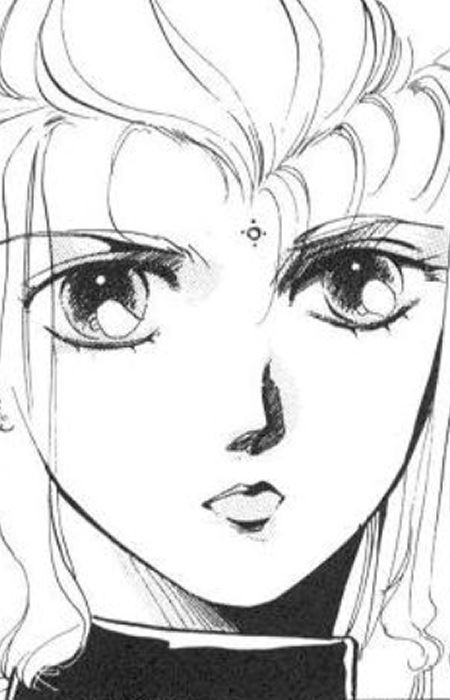

I revisited this incredible manga once more and felt compelled to share my thoughts. Earthian is a boys' love tale centered around angels tasked with observing humans as minus and plus checkers. At first glance, it might appear as a straightforward episodic narrative, but it delves much deeper and becomes significantly more serious. This manga tackles numerous sensitive subjects like prejudice, incest, sins, androids, and of course, homosexual love considered a forbidden act punishable by death. I found that all these topics were handled exceptionally well.
There are two gay couples in this story: Chihaya and Kagetsuya, and Michael and Raphael. In a way, I feel that Chihaya and Kagetsuya serve as foils to Michael and Raphael because they choose to break Eden's rules and openly love each other instead of hiding it. Meanwhile, Michael and Raphael keep their love a secret to avoid "sinning." Raphael even marries a woman he isn't sexually attracted to, and it's revealed she was also attracted to a woman in the past. The difficulty of having children in Eden due to a lack of genuine love and sexual attraction among angels is one of the central themes of the story.
The main characters in this manga are quite deep, each with their own flaws and admirable qualities. Personally, my favorite is Chihaya; I absolutely adore his character. Despite facing immense prejudice, he remains kind-hearted and cheerful. You'll witness him maturing as the story progresses. The artwork is splendid, with beautifully drawn characters. I highly recommend this classic to all BL fans. It's an excellent boys' love story for those who seek a plot and romance-focused narrative rather than one solely centered on sex.
This might seem like a simple tale of angels and plus-minus checks, but in reality, it holds an incredible depth within its narrative. Homosexual love is just one theme; extinction of animals, global warming, prejudice, racism—they are all explored with remarkable sensitivity. Yun Kouga clearly demonstrates her passion for these themes and delivers them poignantly.
This story serves both as a dreamer’s tale and a rude awakening to those who choose to ignore reality. It's no ordinary manga, which is precisely why it stands out and remains one of my all-time favorites. Chihaya matures throughout the work, paralleling the manga's deeper dive into challenging themes such as human experiences, androids, sin, incest, and death.
Chihaya and Kagetsuya are beautifully flawed characters, and their gradual descent into love that transcends their restraint is riveting and emotional. Their intimate scenes are depicted as ethereal and beyond this world, handled delicately with gorgeous transitions and panels.
I love this era of her artwork before she shifted to more deformed styles seen in Loveless. The art shows its age and tells a bold story. When Chihaya tries to atone for his "sin," as perceived by Eden, to protect Kagetsuya, it's heart-wrenching. I don't have enough words to express my feelings for him and Kagetsuya. This also highlights Chihaya's beautiful, caring soul, as he continues to help his fellow angels from the Black Cancer.
Earthian doesn’t focus solely on Chihaya and Kagetsuya; the cast is extensive. Taki’s tale, in particular, is poignant and carries an essential message about what defines humanity—our capacity for hatred, evil, disregard, or perhaps our capacity for love, affection, passion, and tears?
You'll also learn why Michael and Raphael appear frequently throughout the story and the true purpose behind the angels’ plus-minus checking. Earthian achieves in four volumes what many series with over 100 chapters fail to accomplish. It’s about impact, approach, and the creator's hand. Yun Kouga’s sensibility shines through, ensuring every story within the series is relevant, interesting, and poignant.
The climax revolves around war, justice, right and wrong, and who has the authority to decide the fate of entire species. Who granted us, or any creature, such power or right? Don't be misled; this isn't a male-dominated story. In fact, the strongest characters are females, and there are many of them. None are portrayed as purely evil or overly bitchy, nor do they fall into typical romantic tropes.
If you aren’t moved emotionally by the end of Earthian, then its message of love may not resonate with you. The series conveys love for family, mankind, animals, the planet, and the universe. Though it might sound cliché, the execution is masterful.
The second half gets angsty due to the darker, harder subjects it addresses. I highly recommend reading Earthian if this sounds appealing. It’s unique and thought-provoking, offering a subversive perspective we need more of in literature.
No review for this classic manga? What a travesty! I'll try to address that here. Be warned, however, that this won't be your typical review discussing art style and plot. For one thing, when Earthian was originally published in Japan, it took a long time: over 15 years from start to finish! Many aspects of the manga, including the art style and the author's willingness to tackle subtextual themes head-on, changed from beginning to end.
My feelings on the beginning of the manga are mixed. The first volume (collected in English) is very episodic, which is cool, but a lot of the episodes are clichéd, which isn’t. Yun Kouga has a very strong design sense, which is cool, but there are almost no backgrounds, which isn’t (this reminds me of Clover, although Earthian is not as overdesigned as Clover).
What’s really notable about this volume, though, is the sense of mounting dread. Starting from the very first chapter, and definitely by the second, you get the feeling that something is VERY VERY WRONG here. The plot is that Angels, who come from a planet called Eden, are sent down to Earth in pairs. One member marks down everything good that humans do (plusses), and the other marks down everything bad (minuses), and if the score ever reaches -10,000, the earth will be destroyed. And this has been going on for five billion years.
The whole set-up is fishy. The first thing you wonder is why the Earth hasn’t been destroyed already — with purposeful acts of genocide stacked against policemen helping little old ladies cross the street, isn’t it obvious where the advantage lies? The next and more significant thing you wonder is, what gives Angels the right to judge humanity?
There are a lot of clues that they don’t have the right. Both checkers, plus and minus, are flawed. They’re far from impartial. Chihaya is too willing to see good and overlook evil, and he makes a lot of mistakes; Kagetsuya claims to hate Earthians (although whether he really does is unclear) and allows his feelings for Chihaya to influence his work. The system itself is questionable because it’s not clear what standard is being employed to decide “good” or “bad” — there’s no rubric or anything, so everything in the Checker’s reports is a subjective value judgment. Most importantly, it isn’t clear that Angel society is inherently any better than human society. It has problems, I won’t go into them, but they’re obvious — and “homosexuality is evil and a sin” is one of them.
In the second and third volumes, these themes become much more explicit. The Angel characters argue the morality of their actions and discuss whether their society is just - including, in one memorable scene, an impassioned defense of homosexual and other "deviant" types of love in court. Other Angel plus/minus pairs, as well as other Angel homosexual pairs, enter the story and are compared to Chihaya and Kagetsuya. Their backgrounds, personalities, motivations, and roles in society are all discussed, in a quite original and thought-provoking way.
If Earthian has one really strong point, it is that the entire manga is designed to be subversive. It's designed to make you question the rules of society, as well as traditional notions of masculine/feminine, dominant/submissive, and strong/weak. The characters are all very strong, and quite complex: relationship dynamics are rarely what they seem to be on the surface. In fact, one of the most enjoyable things about this manga is seeing your original views of who the characters are and what they value totally upended.
This is a manga for people who enjoy thinking about things. Oh, and while its science fiction plot doesn’t quite make sense (can Angels really have been monitoring humanity for 5 billion years, when humanity has only been around for 2 million years?), it does have a lot of cool elements: special powers, teleportation, killer robots, space ships, rapid aging, mysterious diseases, etc. Although somewhat dated by this point, Earthian is well worth reading, especially in the four-volume collected English version.