

"Herein lie the Clow Cards—if their seal is broken, disaster shall befall this world..."
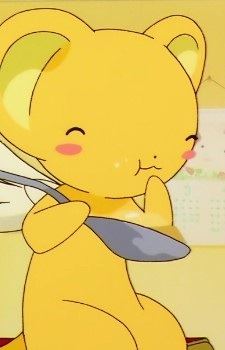
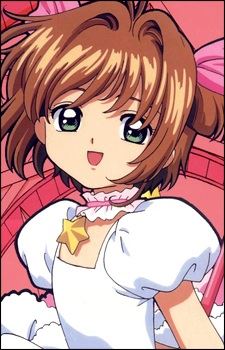
Sakura Kinomoto is a cheerful and energetic 10-year-old attending Tomoeda Elementary School. Shortly after starting fourth grade, Sakura discovers a mysterious book called The Clow hidden in her father's bookshelf. Upon opening it, a small, winged creature with an Osakan accent emerges from the book and introduces itself as Keroberos, the Guardian of the Seal tasked with protecting magical cards known as the Clow Cards.
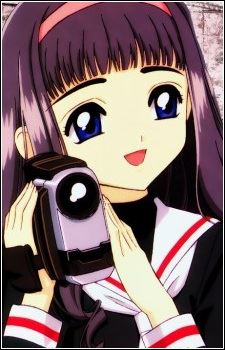
Unfortunately for Keroberos, it seems that the Clow Cards have already escaped. Now, Sakura must capture them before they unleash chaos throughout Tomoeda. With the help of her new tiny guardian, whom she nicknames "Kero," and her best friend, Tomoyo Daidouji, Sakura wields a magical bird-shaped key and uses her newfound powers as the Cardcaptor to restore peace and ensure everything is alright.
Cardcaptor Sakura won the 32nd Seiun Award for Best Manga in 2001.
The series was published in English by Tokyopop from March 1, 2001, to August 5, 2003, and later in 3-in-1 omnibus volumes by Dark Horse Comics from October 20, 2010, to September 19, 2012. Tokyopop’s release split the manga into two six-volume series, the second titled Cardcaptor Sakura: Master of the Clow. The series has also been published in Spain by Ediciones Glénat, in France by Pika Édition, in Italy by Edizioni Star Comics, in Germany by Egmont Manga, and in Brazil by Editora JBC.
The series has been adapted into multiple video games, audio CDs, and artbooks.






One of the greatest shoujo manga out there!
It has magic, adorable relationships (even among kids, they're so sweet), and just a touch of yaoi hints. But that's perfectly fine.
The story revolves around young fourth-grader Sakura Kinomoto, who discovers a book of cards in her basement. She accidentally releases them with her powers and begins her quest to recapture them, guided by Kero-chan, the guardian, who tells her only she can do it!
The illustrations are incredibly cute, especially Tomoyo's handcrafted costumes for Sakura's battles against the cards. It's a heartwarming, delightful manga that you'll finish before you even realize it!
Sakura Cardcaptor's manga essentially retells the anime story in a slightly altered manner. Unlike its animated counterpart, it avoids filler content, gets straight to the point, progresses more swiftly, and elaborates on certain details that the anime production chose to omit or alter. Here, there are 19 Clow cards instead of the anime's 52; Meilin is also absent.
This work shares strengths and weaknesses similar to those found in the anime. Its greatest strength lies in its characters: sympathetic, adorable, and human. Through them, various forms of affection arising in human experience are explored: love between people of different ages, unrequited love, true love, etc. The interactions among characters and the development of their relationships form one of the most engaging and enjoyable aspects of the entire narrative.
Beautifully illustrated, CCS features fine and delicate art with thin lines that give the drawings a clean and sweet appearance. The detailed expressions of the characters are enhanced by highlights and background drawings (mainly flowers), which effectively convey their emotional states—a crucial element for a story primarily centered around feelings.
The plot follows a standard magical girl framework but incorporates elements that make the formula feel fresh. For example, Sakura wears a different costume in each chapter, and spells are cast using a set of cards that must be captured. The design of the cards and costumes showcases talent and imagination from the authors.
However, like the anime, the plot suffers from certain flaws. I consistently find fault with the lazy resolution during Yue's judgment. Additionally, the series fails to delve deeply into the Clow Cards, despite being central to the plot. The method of capturing most cards is overly simplistic, lacking strategy or depth.
The reliance on plot conveniences is even more pronounced here than in the anime, especially during the Sakura Cards arc, which I consider quite unnecessary. Nevertheless, the manga offers a significantly different ending compared to the anime, providing more details about relationships and the plot. It's worth reading if you enjoyed the anime.
In conclusion, CCS is a beautiful story focusing on human relationships and the myriad ways love manifests in human experience. However, it could have been executed better and has significant flaws that prevent me from considering it more than an average piece. All in all, it serves as a genuine coming-of-age tale for young girls, offering valuable lessons and excelling in handling emotions and the human heart compared to many similar works.
Unlike most anime fans I know, I never grew up watching Cardcaptor Sakura. The English dubbed version called Cardcaptors did air when I was younger, but I avoided it like the plague. Why? Because after seeing one of the commercials, I dismissed it as a childish girly show where characters would talk about nothing but fashion and boys, be petty and nasty over trivial matters, and seemed like a Bratz knockoff. Admittedly, I was quite judgmental as a kid. Back then, nothing could beat Pokemon and Digimon in my eyes. Over the years, however, I started to appreciate the series more as I learned about it, eventually watching the entire anime during college. I even saw the movies before that and bought Tokyopop's manga release from my local bookstore. In fact, those manga volumes are still on my shelf today, even with newer, better prints available from other companies. Cardcaptor Sakura is considered one of the best children’s anime ever and one of many works that put CLAMP on the map in the anime world. It's easy to see why, and now, as an adult, I appreciate it much more than I did when I was younger. But how does it hold up today in my eyes?
Sakura Kinomoto is a typical ten-year-old girl living a pretty easy life. One day, she discovers a mysterious book in her basement and upon opening it, magical tarot cards fly out, spreading across the city. She also accidentally awakens Cerberus, aka Kero-chan, one of the guardians of the book. It turns out the released cards are called Clow Cards, created by a famous magician named Clow Reed. Kero tells Sakura that since she released the cards, she must capture them to prevent chaos. Thus, Sakura becomes a cardcaptor, determined to collect all the Clow Cards with her loyal friends by her side.
What can be said about CLAMP's art that hasn't already been said? It's lush and beautiful, and in this case, they manage to make the kids look cute without being overly saccharine. The linework is clean and sharp, the backgrounds are detailed, the character designs are great, and the fight scenes are packed with action and effects that really make them pop. However, sometimes the billowy costumes can be a bit over the top, making some panels and frames look busier than necessary. Having read Magic Knight Rayearth, which came out before CCS and had thicker lines, sharper eyes for the characters, and noodle-like limbs, CCS is a noticeable improvement with more realistic character designs and nicer-looking eyes.
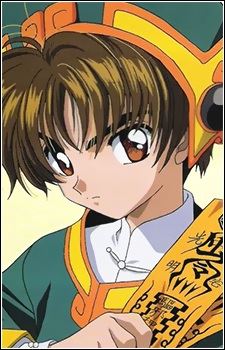
There's no denying that CLAMP excels at creating diverse, versatile, and likable characters that immediately win you over with their charm. Every character, from the main leads to minor ones such as Sakura’s school friends, gets time in the limelight, development, and depth, bringing the series' world to life. One problem I had with Magic Knight Rayearth’s manga was its fast pace, leaving little room to explore the characters outside saving the world. CCS remedies this flaw perfectly, with 12 volumes allowing CLAMP to balance action-packed chapters with those where characters just hang out and have fun. My favorite chapters were those where Sakura goes to the festival and gets the Glow card and another where she meets a nice old man. That said, the manga is rather vague regarding Kaho Mizuki’s role, and I wish more had been done with her. Anime fans might wonder, "Where's Meiling?" Syaoran’s cousin in the anime doesn’t exist in the manga; she’s a completely original character made solely for the anime.
Being a children's series, CLAMP obviously can't indulge in some of their favorite tropes, like ending with unanswered questions or using detailed violence found in their teen-oriented works. They’re self-aware enough not to dumb down the story for CCS. The premise is child-friendly, yet there’s enough intrigue and depth to Sakura’s quest to keep it engaging, offering plenty of worldbuilding and backstory seamlessly fitting into the narrative. However, CCS isn’t perfect. Like I said earlier, the manga should have done more with Kaho Mizuki. Plus, there’s one element that might turn off many readers: CLAMP has an accepting view of age-gap romances, including creepy and unethical ones, like Sakura’s mother marrying her high school teacher at sixteen (Japan considers sixteen the legal marriage age) or Sakura’s friend, a ten-year-old, crushing on a thirty-something teacher who reciprocates. Granted, nothing explicit happens, and the anime changed it to a one-sided crush, but anyone uncomfortable with this will struggle. Luckily, CLAMP realized this was problematic and removed the teacher character in the sequel Clear Card while having Sakura’s friend go to another school, downplaying her role.
Overall, this is my more objective analysis of Cardcaptor Sakura as a manga series. One factor deciding whether something becomes one of my all-time favorites is if it resonates with me deeply. So, did Cardcaptor Sakura resonate with me enough to become a favorite? Sadly, no. This isn’t saying CCS is a bad manga. It’s very good, and I understand its impact on magical girl anime and anime as a whole. I like it, but I don’t necessarily LOVE it. It didn’t add extra spices to its storytelling or take on magical girl tropes uniquely. There are plenty of other anime and manga I love more. Maybe I’d have appreciated it more as a kid or seen the uncut version earlier, but who knows? Still, Cardcaptor Sakura is a great manga I wholly recommend for anyone looking for something sweet and heartwarming without being too saccharine. It absolutely earned its beloved classic status, as it should.
I truly enjoyed this manga. The artwork is quite impressive, and the characters are generally well-developed. Sakura stands out as a fantastic main character, and the story itself is engaging, even if it drags a bit after the sixth volume. Despite that, it remains an enjoyable read.
The romantic subplot between Sakura and Syaoran feels somewhat unrealistic, and I don't particularly like them as a couple. However, what disturbs me more is the presence of several pedophilic relationships within the story, which is both disgusting and unsettling. I counted at least four such couples, but there might be more. Unfortunately, these inappropriate relationships are romanticized and portrayed as "sweet," which is typical in shoujo stories. The most disturbing example involves one of Sakura's classmates, who is around ten years old, and a teacher. So, if you plan to read this, be warned. Although there is no explicit action shown between any of the couples (not even kisses), the implication of solid relationships is still present. I am unsure how these relationships are depicted in the anime since I haven't watched it.
On a positive note, there are numerous pansexual, bisexual, and homosexual characters, all of whom are well-crafted, which I find commendable. This series likely has the highest number of LGBTQ characters I've encountered in any manga or anime, though it lacks transgender representation, and non-human characters fill the roles for those without a defined gender or who identify as queer.
In summary, while the series is generally good, it does contain idealized pedophilia, which is a significant issue as previously mentioned.
Cardcaptor Sakura is undoubtedly one of my all-time favorite series. The narrative revolves around a young girl who accidentally unleashes magical cards, created by a powerful sorcerer, and must gather them with the assistance of the book's guardian to prevent a global catastrophe.
Story 9/10: The plot is intricately woven, showcasing significant growth in Sakura as the story unfolds. Despite the protagonist being an elementary school student, the storyline carries a mature undertone that appeals to a broader audience.
Art 9/10: The artistic representation is exceptional, featuring expressive characters and meticulously detailed backgrounds. CLAMP, the creators, excel at capturing the emotions of each character and their environment with remarkable finesse.
Character 9/10: The character development is outstanding! Each character is well-defined, and their emotions are portrayed beautifully. Spoiler*** I am particularly fond of Sakura and Syaoran as a couple; indeed, they rank among my favorite pairings across any series I've encountered!
Enjoyment 10/10: This storyline captivates me deeply. It is charming, thrilling, and heartwarming.
Overall 9/10: I highly recommend this series to anyone with an affinity for shoujo manga.
This is an incredible and timeless manga suitable for readers of all ages.
Story: The plot is coherent, albeit somewhat cliché, but not overly so. It remains engaging and delightful most of the time.
Art: The artwork is intricate and stunning. Every tiny detail shows a tremendous amount of effort. Unlike some anime from its era that look hastily done, almost like storyboards, this one stands out.
Characters: Each character is richly developed and thoughtfully crafted, even the minor ones.
This serves as an excellent gateway into the Shojo (Magical girl) genre. Honestly, it was my introduction to Shojo as well. I have thoroughly enjoyed it and am eagerly looking forward to starting on Clear Card.
There is only one word that comes to mind when I think of Cardcaptor Sakura: Beautiful. Everything about it epitomizes beauty - the story, the characters, and the art. It's a CLAMP cult classic, perhaps one of the most renowned manga ever created.
Think you know magical girl manga? Well, until you've read Cardcaptor Sakura, you haven't seen anything. As far as you're concerned, this is the ultimate magical girl manga. This is what inspired hundreds of other artists to emulate the idea. (And as I always say, the Cardcaptor Sakura manga is way better than the anime. So don't even think about skipping the manga series if you've already watched the show.)
Let's get started, shall we?
Story:
Sakura Kinomoto is a well-meaning 10-year-old who discovers a mysterious book in her father's library called "The Clow." Upon opening it, Sakura finds out that The Clow is not just a book but a container for 19 magical beings originally sealed within "Clow Cards." By releasing the cards, she also frees the guardian of The Clow, a winged plush-like animal she nicknames "Kero." Sensing her latent magical abilities, Kero tricks Sakura into becoming the next "Cardcaptor." Thus begins the adventure of Cardcaptor Sakura, where collecting the cards is just the beginning.
Art:
CLAMP's art is breathtakingly beautiful, and it's no exaggeration when I say I've never seen anything more stunning than the art in Cardcaptor Sakura. Some of the designs for the outfits Sakura wears while "cardcapturing" are so original that you can't help but wonder, "Where did they come up with this stuff?" CLAMP truly stands at the pinnacle of the industry, the cream of the crop.
Characters:
Throughout the manga, one can't help but fall in love with Sakura and her optimistic outlook on life. Her character development is superb, and with each volume, she becomes more captivating. The Clow Card designs are equally delightful, keeping readers eagerly anticipating the next card's appearance.
Enjoyment & Overall:
If this manga were a person, I would marry it. So yes, to answer the question, "If you love it so much, why don't you marry it?" - I would. Without any hesitation, I absolutely would. Cardcaptor Sakura is like a fresh batch of cookies, but for your eyes. What really gets me is that it's not just the art that makes this manga great; it's the fact that it maintains a well-thought-out plot filled with questions and mysteries to keep readers engaged.
I wholeheartedly, from the deepest part of my heart, suggest you give this manga a try.
Thanks for reading.
The manga rendition of CCS edges out the anime slightly, though I hold both adaptations in high regard. In my view, CLAMP's artwork for the CCS manga is unparalleled; it strikes a perfect balance with its fluidity and charming aesthetics, avoiding any overly sweet sentiment.