

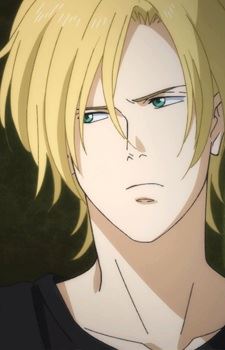
Ash Lynx is a strikingly beautiful young man, a prodigy, and a cold-blooded killer. Raised under the wing of Dino "Papa" Golzine, a powerful mafia boss, Ash was molded into the lethal enforcer he is today. Initially, Ash served as Golzine's plaything, but now at 17, he has distanced himself from his former mentor and leads his own gang with an iron grip.
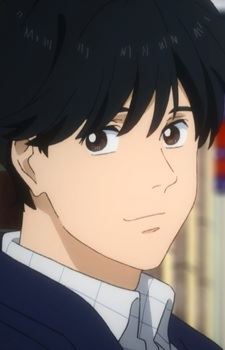
Eiji Okumura is a young Japanese photographer who arrives in New York as an assistant. His assignment involves documenting the lives of street kids, leading him to cross paths with Ash, the teenage gang leader. Eiji is captivated by Ash, who in turn becomes intrigued by Eiji’s contrasting way of life.
However, beneath the surface of New York City, a series of mysterious murders has been unfolding, all linked by the cryptic phrase "Banana Fish." With their personal stakes in this dangerous game, Ash, Eiji, and their allies must uncover the truth behind "Banana Fish"—its origins, its purpose, and how to stop it—before the world they know spirals into chaos.
The first seven volumes of Banana Fish were initially released in English by VIZ Media under the Pulp Graphic Novel imprint with mirrored pages from January 8, 1999, to November 13, 2002. The series was later fully published under the VIZ Shojo label from March 3, 2004, to April 10, 2007. For several years, the manga also appeared in both of VIZ’s now-defunct manga magazines, Pulp and Animerica Extra. Additionally, the manga was published in Brazilian Portuguese by Panini Comics in 10 omnibus volumes from July 17, 2020, to January 7, 2022.




I was motivated to read this after hearing about MAPPA's plans to adapt it earlier this year. I'm glad I did because it was an incredible journey. While the art has aged somewhat, the story and characters remain timeless in their beauty.
[Story - 8]
Though it starts with the pursuit of what 'Banana Fish' actually is, it's really a tale centered around the push-and-pull between teenage hoodlums and their overbearing adult counterparts on both sides of the law. Set in 80s NYC, this setting lends itself to plenty of pulpy action and social commentary regarding racial profiling, child sexual abuse, crime journalism struggles, and more.
The pacing is solid: the story gets moving quickly but takes a break in the second act. This allows characters to get a breather from grim realities and undergo believable development thanks to rational melodrama. Thrill-seekers will be pleased that the second act isn't long, leading swiftly into the third. When it does, expect more twists and turns, along with copious amounts of action and angst. The denouement pays off splendidly, offering a fitting conclusion for such a tale.
By itself, the manga is strong, though it has typical genre drawbacks. It holds up well in some areas, but not all; some slang terms are stereotypical or callous, and discussions/depictions of rape can be awkward despite its universal portrayal as vile and inhumane. Characterization helps salvage these moments. Overall, the title sticks with you thanks to its interesting themes, good pacing, and a splendid blend of crime action, mystery, and romance.
[Art - 7]
The art distinctly shows Banana Fish's age. Yoshida's style develops over time, especially in character design and shading, but the minimalist aesthetic remains.
The action is generally fine (you can tell who's who and what they're doing, and it moves fluidly), but certain pages could benefit from redrawing for clarity. The same goes for some settings, particularly those outside NYC. While I enjoy minimal representation, Yoshida's approach sometimes makes it hard to discern what's happening.
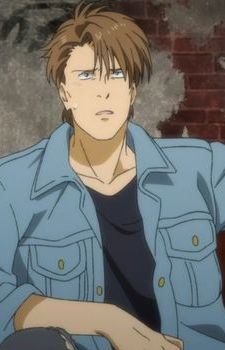
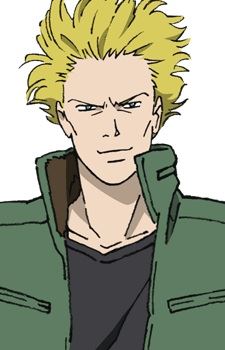
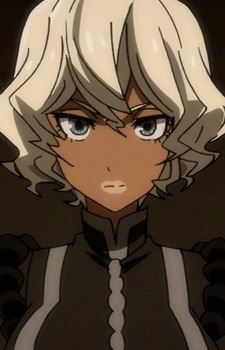
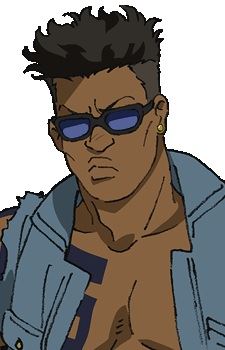
However, character design shines. From teenage beauties like Yau-Si and Eiji to hardened looks of Max and Dino, Yoshida nails their designs, conveying core traits effectively. Ash's look is most vital; his unmatched beauty contrasts with his character forged from consequences. Timeless fashion boosts this further, perfect for conveying core traits and inspiring part of my wardrobe.
[Character - 9]
Characterization suits this genre and demographic. The melodrama is perfectly melodramatic within reason. The angst is heartbreakingly convincing and occasionally universal. The humor, while crude at times, lightens the mood.
Ash Lynx is one of the more compelling protagonists I've seen recently. His arc of emotional opening and trauma recovery is beautifully realized through a mix of rage, grief, and fear as his relationship with Eiji Okumura develops. By the end, Ash is a completely different person, both better and for good reason. Eiji's arc of overcoming anxiety and becoming a fine young man warrants praise. Initially inactive, he rivals Ash as an Action Hero by the end. His actions in Volume 19's short story are heart-wrenching in their frank portrayal of loss and consequences.
The antagonists are hit-or-miss. Colonel Fox and Arthur are glorified henchmen, Golzine is irredeemable yet charismatic. Yau-Si stands out with sympathetic monologues inspired by his tragic past and cool nature, making him a genuine match for Ash.
The supporting cast is mostly alright. Max Lobo helps Ash stay on track, and Ibe provides comic relief. Shorter Wong and Sing Su-Lin are great foils for Ash. My favorite is Blanca: a KGB defector embodying calm, Ash's aspiration. Though his time is short, it's sweet for readers and those around him.
[Enjoyment/Overall - 9/8]
This was a genuinely great read. Not perfect, but blemishes are mostly due to its initial publication era. Highly recommended for anyone looking to try older titles prioritizing amazing characterization.
"Don't give me your stupid advice...! Just leave me alone... I'm happy, goddammit! I know there's at least one person in this world who cares about me. Who doesn't want anything from me. Do you have any idea what that's like? I never did... not once in my entire life—until now. And that's worth more to me than anything else."
I would easily have rated this series a 10, but why did I rate it 9, you ask?
This is my answer: because this series didn't give Ash a freaking break!!
*SPOILERS AHEAD*
Don't get me wrong. I loved this series so much it actually made it onto my favorite list. This series was by no means bad. Far from it, honestly. It was absolutely great! It always gave me the anxiety about Ash's life it was supposed to deliver. But the pain and heartbreak I personally went through reading this series, witnessing every suffering Ash had to endure, cost me a single point in my rating.
How can I begin to understand how Ash managed to survive all the crap thrown his way? Trouble after trouble, where he always put his very life on the line each time. When I thought he escaped one life-threatening situation, another pulled him back. Every. Single. Time. I was like "GIVE HIM A GODDAMN BREAK ALREADY! LET HIM BREATHE FOR A MINUTE!! LET HIM REST!!" He had no time to let his guard down.
Eiji was the only one who could calm Ash down. He looked and acted his age when with Eiji, even felt human around him. He could relax, if only for a bit, because of Eiji. But that's just it! It was just A BIT OF TIME! Personally, I don't think it compensated for all the pain Ash endured. I know Ash said meeting Eiji was worth more than anything else. That he was willing to risk his life to protect Eiji. Even showed us plenty of foreshadowing, including asking God to take his life instead of Eiji's. I know that, but damn, I still can't accept his fate. If only after all the crap in his life, he got the happiness he deserved at the end, or even if he met his end, he still somehow got decent breaks throughout the series despite his sufferings, I could live with it. Yeah, Ash did terrible things to survive, but who could blame him? He was the actual victim here. I hate how Ash only got a tiny bit of happiness through Eiji, and it didn't even last long enough. Thinking showing us a smiling, almost fulfilling face of Ash clutching Eiji's letter with bloody hands makes up for his early demise is wrong! It actually made it worse for my heart! Goddamn! And seeing Eiji still couldn't let go of Ash even after 7 years was pretty depressing and tragic.
I know this review ended up as a rant. But still, it's impossible to rate this series less than 9. This is still absolutely one of the best!
PS: I don't like the old art of this series. Honestly, I don't see why Ash was called a pretty boy in the manga because the old art ruined it. But then, when the art style improved, around volume 6 or 7, damn! Ash was indeed a beautiful life force! Knowing his final character design was inspired by the late River Phoenix, I can't think of any other way to portray his appearance.
EDIT: Okay, after a month of not getting over this series, I decided to change my rating from 9 to 10. After gathering my thoughts, the ending was sad and devastating but fitting for this series. I realized this kind of series couldn't have the happy ending we all wanted for Ash and Eiji. Now, I believe the ending, as depressing as it was, was still suitable for this masterpiece.
The following review is exclusively in English and does not require translation into Chinese.
The read version is the Spanish translation by Deco Woo and Lyrica-chan of “Heart of Gold”
While it's quickly assumed, the viewer should contemplate more about the intriguing decision to set the story in New York. Author Akimi Yoshida did an excellent job depicting the location, making it feel natural rather than foreign or exotic to the reader. Beyond reflecting a Japanese fascination with the United States typical of that era, evident in her earlier work (California History), this choice highlights the work across multiple streams.
This review won't delve into how it defined and evolved shojo into shonen or Boys Love; instead, I emphasize the historical importance of setting the story in the world's capital because it allowed for elements otherwise absent, particularly the strong gang presence.
Gangs form the narrative backbone, each ethnically distinct, marking clear differentiations fostering relationships of declared conflict or tense peace—an ideal backdrop to explore core values like loyalty, duty, and tolerance.
The "street" aspect of the city is constructed as merely the foundation of a broad framework involving police, special forces, mafia, and press, with ambiguous relationships among them. New York emerges not just through tourist spots but also through forces striving to control the city in their unique ways, embodying real, dangerous, and invisible aspects for ordinary citizens.
Mirroring this dark presentation, related situations arise from moral corruption—drug distribution, child trafficking, murder, blackmail—an atmosphere requiring characters fitting what’s being narrated. Yoshida excelled in defining characters ruling or seeking to control the city, making them complexly evil, not just despicable.
In highlighting character conceptualization, we can't omit the main duo, Ash and Eiji. Ash's character development alone is admirable, showcasing a dichotomy between his apparent and true self. Multiple adjectives and praises could be written, but it's more valuable for readers to discover his facets, much like Eiji does.
Eiji initially seems the viewer's observer but evolves inversely. The chemistry between Ash and Eiji is an unconditional platonic complement, coexisting weakness and strength resonating with themes of forgiveness, acceptance of the past, and love.
A central lesson encapsulates its reflections: the past doesn’t dictate your future; you have the freedom to decide who you want to be and act. Escaping your confinement requires courage to love and accept others' love—a warm message amid the dark presentation of corruption, power, and subjugation.
The primary negative aspect relates to the story's pacing and a drawn-out last quarter, repeatedly featuring "X rescuing Y" dynamics. This introduces new characters serving as mere obstacles, contributing little thematically compared to others.
The ambition sometimes works against itself, mentioning numerous dynamics and nested conspiracies. Important initial facts are barely mentioned later, becoming mere formalities leading to other developments or revelations.
The distinctive artwork, emphasizing dynamic action-focused style over similar works by other authors, stands out. Most panels are positioned for action or conversations, with occasional exceptions dedicated to reflecting characters' emotions through expressions or positioning.
I must highlight character design, reinforcing New York's ethnic diversity crucial to the story. Ash’s physical characterization is vital for his conceptualization, especially contrasted with Eiji’s common, integral appearance.
Banana Fish deserves historical recognition. It’s a solid story with engaging settings and uniquely motivated secondary characters. Despite its length causing redundant events and reflections, reaching the final panel leaves a memorable impression. The lesson that only you should dictate your future will resonate deeply.
Banana Fish is a uniquely compelling manga for me. The synopsis alone might deter many readers due to its intense and heavy themes, which are indeed very weighty. I entered the story without prior knowledge, thankfully. Despite this, I found it incredibly engaging. The narrative, though dark and intense, features an intriguing mystery surrounding "Banana Fish," leaving readers in suspense. The lack of filler content keeps the manga's atmosphere consistently intense, with barely any breaks between arcs.
The characters on the protagonist’s side are endearing and likable, while his enemies are some of the most repulsive and detestable figures I've encountered in any manga. As for the art, it didn’t bother me, even though others have criticized it. The ending, however, was something I despised, which is why I didn't give it a perfect score. While I praise the work, I wouldn't recommend it to most people. The story's heaviness could be triggering for many, given the topics it addresses.
Describing the genre is challenging. It’s categorized as SHOUJO, but I disagree; it’s hard to pinpoint. Women might not appreciate it because it deviates from typical shoujo, and men might dislike the homosexual themes (yes, there are such elements, and generally, men don’t read stories with these themes). However, it isn’t BL to me. For the general audience, the excessive sexual violence towards teens makes it difficult to recommend.
I absolutely love this manga, but it’s not for everyone. It’s outdated, having been published in the mid-80s. To me, it's a masterpiece until the ending, earning a 9/10. It’s something only a select few would enjoy.
Banana Fish is a manga that might appeal more to those who typically stick to shoujo genres. While it stands out in its category, its uniqueness fades when compared to a broader range of works.
The artwork immediately distinguishes itself from typical shoujo manga. It’s not adorned with frills and sparkles; instead, it's clean and easy to read, giving off a more "mature" vibe. However, this maturity can also make it resemble certain BL (Boys' Love) works. Despite being an improvement over the standard, both then and now, the art does become somewhat stale and uninteresting. There are some nice panels, but nothing that will truly amaze you. Given its dialogue-heavy nature, fewer resources are devoted to illustrations, which is a shame.
Regarding the story, I didn't find any part particularly engaging. At its core, it's a basic plot about taking something important from a mafia, leading to becoming an outlaw as they seek revenge. The twist here is that most of the characters are gay, though this is mostly alluded to through dialogue rather than explicitly shown. The narrative drags on for too long with minimal points of interest. If I weren’t committed to finishing what I start, I would have dropped it before reaching halfway. Sure, it includes themes like drugs, prostitution/sex trafficking, and murders, rarely seen in shoujo manga, but merely including these themes doesn’t make it good. How these themes are handled is crucial. Just having these elements doesn’t make it mature either. Initially, I appreciated that it didn’t fetishize rape, but scenes like “I just got gangbanged, come here my ex-husband, let’s make out” ruined that impression. Additionally, the deus ex machina ending felt anticlimactic.
A significant reason why the story isn't engaging is due to the protagonist lacking depth. Yes, he has childhood trauma, but beyond being raped, he’s essentially a Gary Stu. He’s stunningly handsome, charismatic, highly skilled in combat, and a literal genius with an IQ over 180. Does this intelligence impact the story? Not really. It feels like the author showing off without integrating it meaningfully into Ash’s character. Ash doesn’t come across as a genius in the narrative. He’s not dumb, sure, and maybe clever at times, but he’s not written as a genius. And no, saying his personality balances it out isn’t a valid explanation.
In summary, I’d recommend watching the anime adaptation instead. It has better pacing, cuts out some parts (which actually improves it), and MAPPA’s animation enhances its watchability.
Sexual assault, child photography/rape, sex trafficking, trauma, violence, death, murder, guns, firearms, gang warfare, drugs, and racism are just a few of the heavy topics that Banana Fish tackles. I always want to discuss Banana Fish, but I’m unsure where to start without having a nervous breakdown. From child prostitution and pornography to sexual assault, drug abuse, and gang warfare, Akimi Yoshida doesn't shy away from mature and controversial issues. It also delves into the aftermath of sexual violence, like the lasting impact of Ash's abuse on him and his relationships. Each chapter takes you on an emotional and disturbing journey that is both impactful and deeply moving.
Ash is amazing, intelligent, and attractive. He excels in subjects such as math, science, and economics. It was heartbreaking to learn about all that had happened to Ash. His father, responsible for Ash’s safety, failed to protect him. At seven years old, he was raped. His father's response? "Listen, if any weirdo catches you and tries anything funny, you just keep quiet and let him do what he wants, but when it's over, you make sure the bastard pays you." These were excessively harsh words to instill in a seven-year-old. By age eight, he was repeatedly sexually abused and then killed someone for the first time. He was scared, terrified, and hurt, but his father’s negligence caused Ash to develop a toxic mindset. Later, he was kidnapped, stripped of his innocence, happiness, and freedom. They made him question his worth. Ash believes he doesn’t deserve love. He belittles himself. He should have had a normal life at seventeen, but it was forcibly taken from him. It’s upsetting how many people around Ash knew what Golzine and his subordinates were doing to him yet refused to help. Max was the first adult to show concern for Ash. When he burned images of Ash, I was overcome with emotion because it showed he cared for him like a son. It was beautiful and heartbreaking. My heart bleeds knowing he told Ash it’s okay to enjoy life free from past burdens.
Over time, I believe freedom and Eiji became synonymous with Ash. Eiji gave him moments of serenity, tranquility, and humanity, allowing him to be a seventeen-year-old boy rather than the monster he believed himself to be. It was the unconditional love Ash never felt he deserved or could have, but desperately needed. The terrible heartache when Ash put a gun to his head and didn’t hesitate to shoot himself for Eiji left me sobbing uncontrollably. Ash prioritized Eiji’s safety above his own, which makes me painfully sad. I think he decided not to see Eiji and returned to the library, his favorite place, where he could be free of violence and crime, immersing himself in books like a normal teenager. He died with a smile on his face while reading Eiji’s letter. He wasn’t alone; Eiji’s soul was with him. I hate when people say Ash found freedom in death. In my eyes, he was already free thanks to Eiji. Eiji loved Ash for who he was, saving his humanity by giving him moments of tranquility. Eiji was Ash’s ultimate freedom, something he never expected to find. And before I break down completely, one of the most heartbreaking things isn’t Ash’s passing. It’s Ash suffering and enduring inhumane treatment.
This is an unusual shoujo manga, packed with action and violence, featuring almost no significant female characters. In today's political climate, social justice advocates often lament the lack of representation for non-white, non-male individuals. Therefore, it's amusing that this manga, which presumably targets young females, has almost no important female roles. Some might argue that this isn't a shoujo manga, but they'd be mistaken. The protagonist Ash is written to be the crush of most young girls. He has an IQ of 200, sacrifices himself for his love interest, and is acknowledged by every other character as stunningly beautiful (although I find most characters look very similar). He is brave and so on. The only thing that could hinder him from being the crush of female readers is his romantic interest in another boy, but yaoi is quite popular among females, so that shouldn't pose a problem. His perfection as a human is genuinely problematic. Everyone knows about Mary Sue characters. On the other hand, one must give credit to the manga for introducing a character so capable that even our demigod Ash concedes to him.
What I disliked the most was the repetitive sequence: Ash is captured, it looks like it's game over, Ash frees himself, Ash is captured again, it looks like it's game over, Ash frees himself once more. If the crucial characters are always saved at the last minute, it stops surprising the audience. It becomes unenjoyable. To take the manga seriously, there need to be serious consequences sometimes. Even though everyone knows that Ash is smarter than Einstein, his enemies always underestimate him, then lose, then underestimate him again. It's very tiresome. But it's still a decent read.
This is, without a doubt, one of my all-time favorite manga.
Story: 10/10
The strength of the story comes from its impeccable storytelling. There's no unnecessary filler; it's pure narrative throughout. The plot constantly moves forward, even without chapter breaks. There are also spin-off manga (two of which I've read, published by Viz at the end of the last volumes) that fit seamlessly into the main story and clarify some "nice to know" details. Importantly, every plot point felt organic, with no deus ex machina moments.
Character: 10/10
The characters are as compelling as the story itself. While Ash is the most interesting protagonist, he isn't the only main character. Every character feels real and well-developed, including their interactions. Even minor characters who appear only twice in the series are memorable (like The Fly).
Art: 6.5/10
Easily the weakest aspect of the series. The artwork is always clear in depicting action, but it's not outstanding. Many characters have similar facial structures, leading me to confuse those with alike mustaches and hairstyles for a while. However, my complaints here are minor. The art improves over time and never detracts from the enjoyment. This isn't a series you read for pretty pictures, though.
Overall: 10/10
I rarely give out perfect scores, but this series made me so emotionally invested that I cried at the end for several reasons. The inclusion of two side stories published by Viz only enhanced the experience. For fans of drama with some action, especially if slight yaoi undertones don't bother you (which are never shown explicitly), this is a must-read. It's epic, to say the least, appealing equally to Josei and Seinen audiences.