
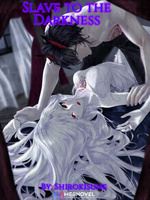
Slave to the Darkness
- Genre: Fantasy
- Author: jikanyotomare
- Translator:
- Status: Ongoing
- Rating(3.8 / 5.0) ★
Recommendation Lists
Latest Release
-
chereads C 157
-
chereads C 156
-
chereads C 155
-
chereads C 154
-
chereads C 153
-
chereads C 152
-
chereads C 151
-
chereads C 150
-
chereads C 149
-
chereads C 148
-
chereads C 147
-
chereads C 146
-
chereads C 145
-
chereads C 144
-
chereads C 143
-
chereads C 142
-
chereads C 141
-
chereads C 140
-
chereads C 139
-
chereads C 138
-
chereads C 137
-
chereads C 136
-
chereads C 135
-
chereads C 134
-
chereads C 133
-
chereads C 132
-
chereads C 131
-
chereads C 130
Just to let everyone know, the Pretear anime isn't exactly the same as its original form. I don't want anyone to be upset because they weren't warned—there are significant differences between the anime and the manga.
The manga presents a quite distinct image of Pretear compared to the anime. While the overall storylines differ, the core plot remains consistent. However, so many elements have been altered or removed that it feels almost unbelievable they were created by the same mangaka.
The art style wasn't quite what I anticipated—it bears little resemblance to the manga.
As for the characters, they were probably the most consistent aspect. Their personalities remained largely unchanged between the manga and anime. That said, some appearances were modified, particularly Hayate's and Kei's (especially Kei).
Despite these changes, the anime is my all-time favorite. I personally prefer the anime because it felt more original compared to the manga it was adapted from.
Like many others, I recommend the anime over the manga.
Thank you for taking the time to read my review. I hope it helps someone out there!
<p>
I initially encountered the anime version and assumed it was a standard magical girl show, complete with costume transformations, magical abilities, and a harem of attractive young men surrounding the protagonist.
The anime and manga versions differ somewhat in terms of characters and plot. Unlike other manga-anime adaptations I've explored recently, I prefer the anime over the manga in certain aspects, particularly regarding Sasame's storyline.
I'll leave it to you to uncover these differences, as curiosity will likely lead you to investigate further if you're genuinely interested. Despite the "Snow White" reference in the title, the story isn't entirely inspired by the classic fairy tale. Sure, there are six charming guys (missing one to make seven), the Prétear (a sort-of Snow White), an "evil" stepmother, obnoxious stepsisters, and a "kiss," but the core plot takes its own unique direction.
I appreciate that this story is character-driven, focusing on the personal challenges and experiences of the characters. Even the antagonist has a backstory explaining their motivations, though not all backstories are fully fleshed out due to the series' brevity.
For some reason, Hayate (the Wind Leafe Knight) reminds me of Tamahome (a Suzaku Seishi from Fushigi Yuugi). It might be the hair... lol. I enjoyed both reading and watching this series because some of the characters' questions and reflections resonated with thoughts I've had myself. Sasame, who I particularly admire, provided insightful answers in the manga to questions I'd pondered in the past.
Even if you're not seeking profound life lessons, Prétear makes for an engaging read or watch.
Anyway, the manga shines because it doesn't dwell on the overly romanticized aspects of Himeno Awayuki's life—it's about family and learning to trust your parents. Throughout the story, the tension between her and her family serves as the driving force, unlike in the anime, which overly focuses on Hayate and Himeno. To make their relationship work, they even turned one of the purest characters into someone evil.
The characters are exceptional, and I highly recommend giving this manga a read. It's absolutely worth it!
The manga's art style is somewhat rough, and occasionally, the thick lines make it hard to interpret the visuals clearly. Nevertheless, the innovative plot twists and well-developed characters compensate for these shortcomings. If you're looking for a story where the princess, 'Snow White,' talks to herself, surprises abound, and there are intriguing love triangles, I'm confident you'll enjoy this manga as much as I did.
<p>
Set in the contemporary world, where magic and special powers are merely fascinating components of fantasy novels, the main character, sixteen-year-old Himeno, is initially portrayed as an ordinary girl with her own set of problems. However, almost as soon as she is introduced, it becomes evident that there is more to Himeno than meets the eye.
The story starts off at a fast pace, not lingering on introductions to all the characters, complete with their backgrounds and personality overviews. The plot is largely revealed in the first few chapters, making it glaringly obvious that while a few unique aspects are present, the storyline lacks depth. A catastrophic event threatens the world, and to prevent it, seven mythical beings must find Himeno, who will fight alongside them to combat an evil force and secure the fate of the world. It's quite standard, featuring the typical 'à la Sailor Moon' transformations as Himeno physically merges with her newfound friends to harness and utilize their combined powers for battle.
While the seven magical beings, appearing as human boys of varying ages, are accustomed to their powers and the battles to preserve life in the world, Himeno is entirely new to this role and struggles to adapt. Moreover, as if daily battles against evil aren't challenging enough, she must get used to her "Seven Knights" while dealing with a new family that offers anything but warmth and comfort. Himeno's domestic conflicts significantly impact her, prompting her to question her self-worth and abilities, thus leading to a rocky journey as she strives to eradicate evil.
As the narrative progresses, it becomes overly saturated with repetitiveness, primarily concerning Himeno's emotions, making it quite irritating and burdensome to read. The brisk pace seen in the initial chapters disappears midway, only to re-emerge near the end, resulting in a rushed and unsatisfying conclusion.
The artwork is commendable but not particularly outstanding. The character designs are consistent, facial expressions are clear, and the backgrounds are solid. Given the story's focus on nature, there are numerous depictions of trees, flowers, landscapes, etc. These are averagely rendered, which is underwhelming, especially for a fantasy tale where such elements are usually exaggerated and more detailed. The most significant disappointment lies in the battle panels, which are rather difficult to interpret. However, this doesn't detract much from the story since Himeno and her Knights are usually battling seeds and vines without any sort of inventive moves or skills.
Character-wise, the princely traits displayed by the knights make them fairly likable. It's unfortunate that there's hardly any development with them. The younger boys are depicted as simply adorable, the preteen grapples with his intermediate position where he's no longer very young but not yet old enough, and the older ones are handsome, caring, skilled, and potential heartthrobs for the heroine.
Regarding the heroine, it's impossible to label her as a "kind-hearted and warm" individual because she vacillates between being selfish and seemingly understanding, then back to selfish and annoying on nearly every page. This is particularly frustrating as it's evident that the author wants her to be perceived as a kind-hearted girl who genuinely cares about others above all else. When she speaks with what is supposed to be sincerity, it's hard not to notice her selfishness. She makes every situation about herself, and it's challenging to believe that she truly learns anything from the lessons presented.
Another character that is difficult to appreciate is Himeno's younger stepsister, Mawata. The author clearly intends for readers to feel pity for Mawata, but it's hard to do so when the story doesn't demonstrate that she really "needs" to be pitied or has faced situations that warrant such an emotion.
The other characters, such as Himeno's dad, stepmother, second stepsister, and best friend, are fairly well-developed.
Overall, the story was unenjoyable. The heroine began with a positive light but came across as very flawed until the tale concluded. Each volume of the manga seemed to squander its pages, ink, and the reader's time (in this case, mine) by repeatedly recounting the union of the heroine and her knights, as well as her indecisive emotions that dominated every other page. The battles are monotonous and uninspired. To top it off, when the final—and only—confrontation with the true evil source occurs, I, for one, was disappointed because the brief moment shared between 'it' and the heroine was so utterly uneventful that it's indeed possible to overlook.
The only enjoyable aspect of Pretear is the character design for the seven knights. They are pleasing to look at, and the relationship between them is the sole highlight and intriguing element in the entire series.
My advice—watch the anime as it performs far better than its original counterpart.
<p>
Leave a Review
Part 1. Rate (click Star to vote)
Part 2. Login to account
Part 3. Write your review
Directory of Novels. where you can find Novels
Copyright novel cool © 2018–2024 — All rights reserved