
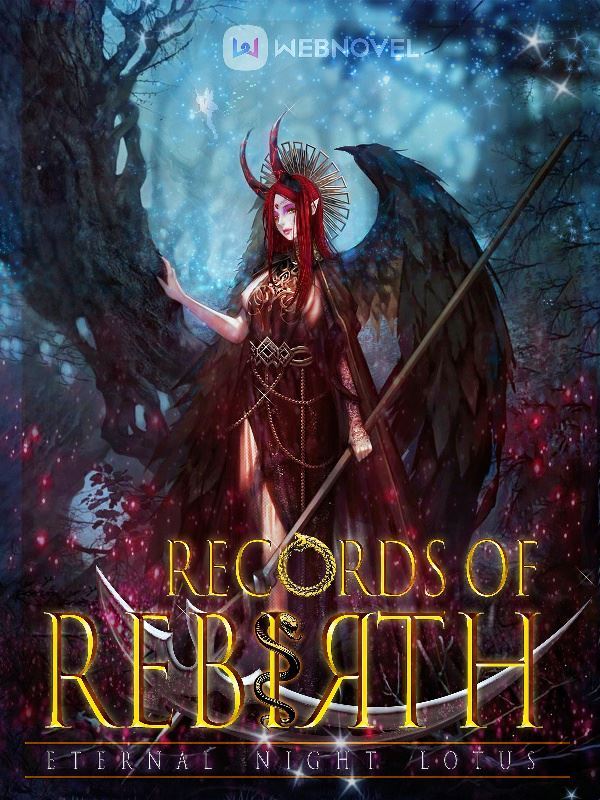
Records of Rebirth
-
Author:
EternalNightLotus
- Status: Ongoing
Rating(4.2 / 5.0, 19 votes)
5 stars
6(32%)
4 stars
10(53%)
3 stars
3(16%)
2 stars
0(0%)
1 stars
0(0%)
Popular Reviews
she essentially got killed for the teacher and his class, and now while they get to live peaceful lives as doted on children, she has to fight tooth and nails as a snake to survive and evolve.... because of a joke from the goddess. now... that's not bad, but what makes it worse is how the teacher constantly ridicules her choices... badmouths the mc, and he said something like "I don't think you're worthy of the goddess's gift" for eating too much poison to get poison resistance on a quest he gave, which makes him into a total bitch in my book. luckily the mc doesn't really takes this seriously, and she gets to live her life without feeling sorry for herself.
now. asides from that... the mc is solid. one reason I like female mcs is 'cause they tend to not go murderhobo, which is super good imo.
the mc doesn't mercilessly kills everyone to prevent having enemies... while making more enemies. instead she's smart. instead of killing she tries to use them. she finds herself with a bunch of hungry siblings that would devour each other if worse comes to worse? she doesn't eat and kill them. why not train them? she finds herself in a prison with a bunch of beasts that could become mindless drones... she doesn't eat them. why not use them to create a diversion? the mc is a good mc.
It excels at creating realistic compelling characters that are brimming with personality in an equally compelling complex plot with many things happening in the background. Sensei went from someone I disliked with a vengeance to a pretty likeable character and the change was completely natural and not forced.
Another thing is how characters aside form the mc work, they change the plot, move the plot, have genuine personalities outside of the mc. I also love how the mc's actions have consequences and also aren't 100% moral like the typical shounen protagonist. Some decisions she makes will have you questioning right from wrong. The mc also comes across as cold and calculating from the start and I didn't like that at first, but i understand it comes from the pressure of trying to survive and overtime I like how she has started to care.
The diction /wording of chapters is very unique and smooth. Not only is the author's vocabulary extensive and intriguing, its never boring and you can feel the thought process that goes into picking each word. If I was to describe the authors mastery and control over their diction, it would be using a different weapon each time when hunting a target and never missing the bullseye.
The words really craft the feel of the scene and the characters take off and don't stop going. I wish there was more to read but I have to settle for daily updates.
Translation Quality: I can read it just fine.
Updating Stability: uh um... hmmm i- 4-5 stars? I cant put 4.5 soo yeah. Its alright its not like everyday but its not that long of a wait ish...
Story development: i can see good potential like the snake pits growth, the meeting with the other people who reincarnated into the new world, or just how she is a monster(snake) in a dungeon(?) i forgot some details not the brightest mind here. Also so far so good. Oh and i cant forget that wasp arc thingy... potential ml? Ehhhh?
Writing Quality is absolutely great except for the slight punctuation mistakes here and there. One involved a comma, I didn't point out all of them since I didn't want to be nitpicky. When it comes to vocabulary, I like your choice of words. They aren't repetitive, but I would like to suggest that you keep the dialogue tags simple, and not use a thousand alternatives for "said" and "ask."
Like what Stephen King said, " I think we all agree that dialogue tags are necessary for readers to know who’s talking. But writers are divided in how we use them:
Some, including Raymond Carver, simply use “he said, she said”; others apparently invent a million different synonyms for “said”; still others try to find balance between the two extremes, sometimes even fifty-fifty.
Yesterday, yet another writer, Jack Woe, jumped into the fray:
I’ve read quite a few blogs about the evilness of dialogue tags. For example, Joe Moore wrote in The Kill Zone how new authors are overusing the alternatives of said.
They go to: exclaimed, murmured, screamed, whispered, pleaded, shrieked, demanded, ordered, cried, shouted, and my all-time favorite, muttered.
Thing is, I as a reader, don’t care. I just don’t read dialogue tags — at all.
He’s not alone. To me, modifying such a perfectly fine tag as “said” is like Pimp My Ride gone bad. (Tip: Read that sentence again in Samuel L. Jackson’s voice.) I suggest you head over to Jack’s blog to read his brief, yet succinct musing over dialogue tags—or as Stephen King puts it in “On Writing”, “dialogue attribution.”
A passionate adversary to adverbs, King warns against using adverbs in dialogue attribution, which reduce the effectiveness of the attribution verb:
I insist that you use the adverb in dialogue attribution only in the rarest and most special of occasions … and not even then, if you can avoid it. Just to make sure we all know what we’re talking about, examine these three sentences:
“Put it down!” she shouted.
“Give it back,” he pleaded, “it’s mine.”
“Don’t be such a fool, Jekyll,” Utterson said.
In these sentences, shouted, pleaded, and said are verbs of dialogue attribution. Now look at these dubious revisions:
“Put it down!” she shouted menacingly.
“Give it back,” he pleaded abjectly, “it’s mine.”
“Don’t be such a fool, Jekyll,” Utterson said contemptuously.
The three latter sentences are all weaker than the three former ones, and most readers will see why immediately.
[…]
Some writers try to evade the no-adverb rule by shooting the attribution verb full of steroids. The result is familiar to any reader of pulp fiction or paperback originals:”
“Put the gun down, Utterson!” Jekyll grated.
“Never stop kissing me!” Shayna gasped.
“You damned tease!” Bill jerked out.
The best form of dialogue attribution is said, as in he said, she said, Bill said, Monica said.
Keep things simple, but! That doesn't mean you'll only stick with said and asked. Just use them more often.
Next, I love the way you convey emotions for your characters. They're very well done. Another suggestion is that you get to the point. An example of this is the first three to four chapters I think in which you spent all those four chapters to reveal she died.
Also, during these chapters, I only noticed two things that revolved around it. Her unusual liking to kidnaps and something to do with asking herself if she really is dead. Perhaps you could cut off some unnecessary scenes there.
Next, character design. Well done! I was able to imagine the looks of the characters in a few paragraphs or so, I don't believe you're a newbie writer. When I started out writing during my high-school times, I could barely think of any synonyms. There wasn't Google back then, so I had to rely on Thesauruses and Dictionaries in which it could only be found within libraries. Sigh, the nearest library from me that time was so far.
It's also quite funny that this the countless time in a row of reading a novel that has something to do with death and being alive again. I guess that's the majority of books here. If there are any suggestions I could give, that would be getting used to using em dashes.
You're first person POV is also quite great. It's not the boring, "I went here then go here and so on and so forth" type of first person. Well, that's all I can criticize for now. I know this review isn't formal, I'm missing the front matter and the summary, but then again, I've got to return to my sleep.
That is all I can say for now.
-Dann Giovanni
Leave a Review