The author's writing style resonates with me, akin to that of "My Death Flags Show No Sign of Ending," featuring engaging first-person narrative. Despite the author's attempts to downplay it, the main character's seemingly overpowered "trash" abilities strike me as impressive. I appreciate the translator's thoughtful summaries at the end, adding a touch of charm. While the plot may not be entirely original, it keeps me entertained throughout.
Honestly, after reading this, I must say it's quite impressive. I highly recommend giving it a try. It's similar to "Demon Prince Goes to the Academy." Here's a brief summary: The main character (MC) finds himself possessing a game character with the same name in a magical world. However, his character has a unique constitution that causes mana leakage, preventing him from becoming a mage. Undeterred, he focuses on mastering a special ability called "Blink" and eventually becomes the world's only Swordmaster. Although initially weak, he gradually improves through training.
The concept is indeed appealing, but I prefer a character who relies on limited skills rather than effortlessly stealing or imitating others. The use of Flash is impressive, but the storytelling flow feels off to me. There's a minor issue in the early chapters where the gray-robed girl helps the protagonist seemingly without a clear reason, which raises questions about her motives. It would have been smoother if the class ranking test had been handled differently, instead of retaking it for an unnecessary plot twist.
The written exam becomes my breaking point. With thousands of students taking the test, it's implausible for the professor to instantly catch the MC cheating and subsequently find nothing wrong with his glasses. The abruptness of the situation feels awkward and out of place. If the exam held no significance to the story, it would have been better to skip it altogether, explaining that the combat exam would be MC's strength due to his lack of knowledge.
In summary, while the idea has potential, the execution of certain plot points doesn't quite resonate with me, especially the handling of the character's abilities and the written exam scenario.
There's a captivating tale that's unfortunately being marred by inadequate translations, including fragmented chapters, misinterpretations of multiple perspectives (POVs), and character name changes. It's unfortunate because the setting and narrative are genuinely intriguing. The main character isn't a genius, but his charm lies in his effective use of his gaming knowledge and skills. The story follows an RPG-like progression, featuring various POVs. The progression of the MC's journey, survival battles, and comedic misunderstandings make for an enjoyable read, particularly when exploring how others might perceive gaming as a real aspect of life, like my own experiences in MMOs or RPGs.
To be honest, if you're a fan of this genre, you can still dive into the machine-translated version. However, it might take some time to adjust due to the abundant use of Korean slang and expressions that don't directly translate well.
Despite its generic title, this novel turns out to be quite enjoyable. The characters are likable, the powers are intriguing, and the action sequences are well-executed. The pacing is steady, and there's no forced love confession from the female characters upon meeting the main character (MC). Supporting characters are relatable and don't cause frustration.
The MC is not one-dimensional; he's clever and occasionally mischievous. When summoned to a new world, he doesn't immediately宣称自己 as a 'try-hard' video game expert; instead, he realistically grapples with learning to control his abilities. The fight scenes, especially those involving the MC's teleportation powers, are thrilling to read.
In short, I would recommend giving this book a try. However, I must mention that my anticipation was dashed by a disappointing ending, which, in my humble opinion, falls flat.
"I am thoroughly enjoying this web novel (WN) thus far! I stumbled upon it through a recommendation on another book and decided to give it a try - and I'm so glad I did! Keep up the fantastic work!"
"I Became a Flashing Genius at the Magic Academy" is a narrative that fails to live up to its potential. The story begins with an intriguing premise, providing a positive flow initially. However, the momentum sags in the latter half, culminating in a mediocre and rushed ending.
One major issue lies in the inconsistent and unresolved plot elements. The concept of 'Flame,' for instance, remains ambiguous, shifting between interpretations like angels, constellations, and a vaguely explained world-saving mission. The Dark King, initially portrayed as a significant figure, is suddenly rendered insignificant without adequate explanation, leaving readers unsatisfied.
Characters like the divine spirit, Cheriobian, and others are introduced only to fade away, with their stories unresolved. The power scale loses coherence as the protagonist's abilities evolve rapidly and arbitrarily. The final villain lacks depth, and the romantic subplot feels forced due to the author's struggle to create meaningful connections.
Additionally, the lack of substantial villains and unresolved subplots, such as the knights and the Thirteenth Moon's message, contribute to the disappointment. The author's treatment of the 'Aether World' character, Baek Yuseol, is confusing, and the handling of time travel mechanics is convoluted, further detracting from the story.
In summary, despite its initial promise, "I Became a Flashing Genius at the Magic Academy" fails to deliver a satisfying narrative due to its inconsistent character development, poorly executed plot points, and a reliance on clichés. It leaves readers feeling disappointed, especially those drawn to the story's unique premise.
The story has its engaging moments, but I struggle with the numerous misunderstandings, particularly between the main characters Full Frame/Fureim (funny name, though). The silver-haired princess and the blue-haired girl can be quite demanding, with the latter often appearing as an unwelcome irritation who looks down on the protagonist without much knowledge beyond his problem-solving skills. The silver-haired girl, on the other hand, is more straightforward, which I appreciate.
I enjoy the supporting character, Myeong, but the story loses my interest due to excessive focus on misunderstandings among side characters, which I personally find less amusing than others. Additionally, my favorite character doesn't receive enough attention, leaving me uncertain if I'll continue reading for a re-read.
The interaction with the teacher about knighthood beliefs feels unnecessarily convoluted – why ask a question if you're going to answer it yourself, "I understand"? It's frustrating. And the constant questioning about someone's identity in a transmigration plot, while common, grates on my nerves. It would be refreshing if these characters could simply be portrayed as brilliant, given their impressive abilities to solve problems, achieve a high wand grade, and wield magic effortlessly.
In summary, the story has potential but struggles with character dynamics and repetitive plot elements that take away from the overall experience.

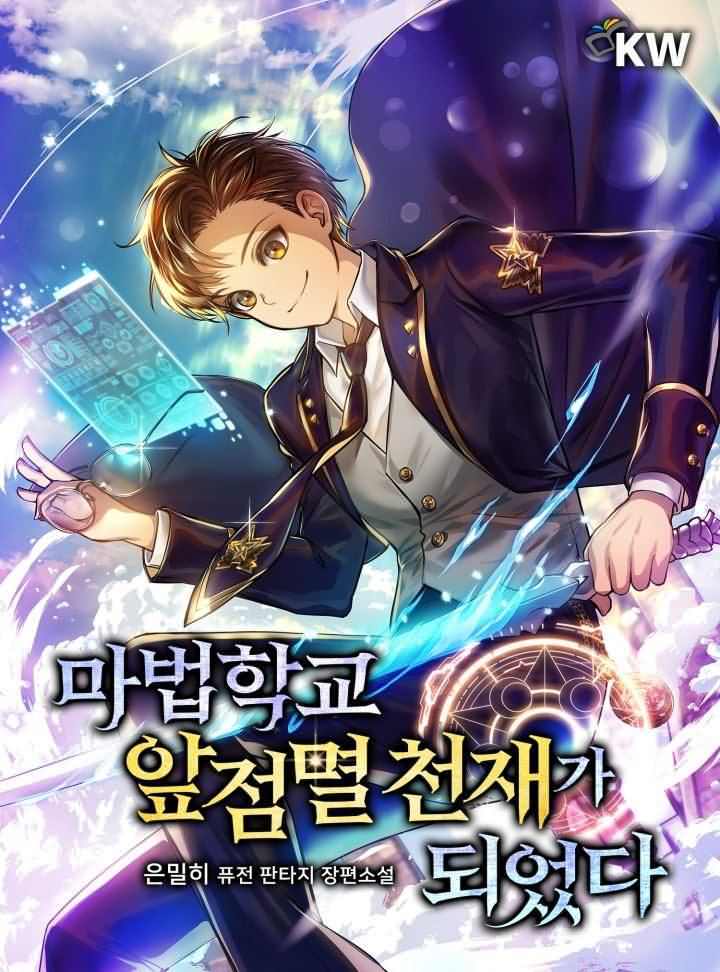
Popular Reviews
The written exam becomes my breaking point. With thousands of students taking the test, it's implausible for the professor to instantly catch the MC cheating and subsequently find nothing wrong with his glasses. The abruptness of the situation feels awkward and out of place. If the exam held no significance to the story, it would have been better to skip it altogether, explaining that the combat exam would be MC's strength due to his lack of knowledge.
In summary, while the idea has potential, the execution of certain plot points doesn't quite resonate with me, especially the handling of the character's abilities and the written exam scenario.
To be honest, if you're a fan of this genre, you can still dive into the machine-translated version. However, it might take some time to adjust due to the abundant use of Korean slang and expressions that don't directly translate well.
The MC is not one-dimensional; he's clever and occasionally mischievous. When summoned to a new world, he doesn't immediately宣称自己 as a 'try-hard' video game expert; instead, he realistically grapples with learning to control his abilities. The fight scenes, especially those involving the MC's teleportation powers, are thrilling to read.
In short, I would recommend giving this book a try. However, I must mention that my anticipation was dashed by a disappointing ending, which, in my humble opinion, falls flat.
One major issue lies in the inconsistent and unresolved plot elements. The concept of 'Flame,' for instance, remains ambiguous, shifting between interpretations like angels, constellations, and a vaguely explained world-saving mission. The Dark King, initially portrayed as a significant figure, is suddenly rendered insignificant without adequate explanation, leaving readers unsatisfied.
Characters like the divine spirit, Cheriobian, and others are introduced only to fade away, with their stories unresolved. The power scale loses coherence as the protagonist's abilities evolve rapidly and arbitrarily. The final villain lacks depth, and the romantic subplot feels forced due to the author's struggle to create meaningful connections.
Additionally, the lack of substantial villains and unresolved subplots, such as the knights and the Thirteenth Moon's message, contribute to the disappointment. The author's treatment of the 'Aether World' character, Baek Yuseol, is confusing, and the handling of time travel mechanics is convoluted, further detracting from the story.
In summary, despite its initial promise, "I Became a Flashing Genius at the Magic Academy" fails to deliver a satisfying narrative due to its inconsistent character development, poorly executed plot points, and a reliance on clichés. It leaves readers feeling disappointed, especially those drawn to the story's unique premise.
I enjoy the supporting character, Myeong, but the story loses my interest due to excessive focus on misunderstandings among side characters, which I personally find less amusing than others. Additionally, my favorite character doesn't receive enough attention, leaving me uncertain if I'll continue reading for a re-read.
The interaction with the teacher about knighthood beliefs feels unnecessarily convoluted – why ask a question if you're going to answer it yourself, "I understand"? It's frustrating. And the constant questioning about someone's identity in a transmigration plot, while common, grates on my nerves. It would be refreshing if these characters could simply be portrayed as brilliant, given their impressive abilities to solve problems, achieve a high wand grade, and wield magic effortlessly.
In summary, the story has potential but struggles with character dynamics and repetitive plot elements that take away from the overall experience.