
...
Show More
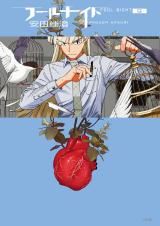
In a distant future, Earth is enveloped in dense, heavy clouds. The sun no longer casts its light upon the planet. A world where most plants have perished and oxygen levels have dwindled dangerously low. However, humanity has found a way to endure by creating technology that transforms people into plants, enabling them to generate a small amount of oxygen. To exist as a human in this unpredictable world, or to relinquish one's suffering and begin anew as a plant—people are compelled to make this choice.
Offering an alternative perspective to MondSemmel 'cos this series deserves more eyes on it. I feel that the world building makes sense for what it's doing, and its politics are extremely relevant to our current technofuedalistic clusterfuck of a reality. Fool Night is a story that takes you by shoulders and shows you what the effects of poverty are in detail. It never lets you forget that.
The premise is that for 10 million yen, a dying person can undergo "transflorination" and become a plant over the course of two years in order to produce oxygen in an oxygen deprived world. This obviously disproportionately effects poor people who are desperate and have no access to proper medical care. You could fuss about about the oxygen-to-person ratio or the 10 million yen payout being unsustainable, but as the story goes on the more details are revealed that bring more light to the world (usually to show off some gut wrenching but realistic cruelty). Not everyone goes through the usual payout method. Some are preyed on by religious organizations; some are straight up kidnapped by back alley human furniture makers; orphaned children are routinely hunted down by organized mobs to be turned into oxygen machines. You see oxygen deprived areas and the poor people who wander into them. You see a hospital of half-corpses, moaning as the plants destroy their ability to speak. It could be argued that transflorination is needlessly cruel when you could just... plant something in the ground like a normal person. But taking into account the dark smog blocking out the sun, the generally awful pollution, and especially what the upper class fellows have to gain by forcing people into such a process, it becomes apparent that cruelty is the point. In the same way that "first world" countries purposely keep underdeveloped countries in their "place" for the purpose of exploiting cheap labor and resources, the elites of Fool Night seem to have a keen interest in keeping the people in the gutter desperate.
I've made this sound endlessly dreary which it sort of is, but fear not, there is some levity to be found in the art. Yasuda's style feels particularly unique with how the expressions and features are crafted to encapsulate a person perfectly. The characters are pretty striking, some with cartoonier faces than others ( smug cat faced big boob lady comin' at ya with the Babe Ruth specialllll ) but they always tell you exactly who they are at a glance. They're both suited to sillier human moments and heartbreaking horror. Super expressive stuff. There aren't any copy-and-paste faces/bodies thanks to it, so the world feels appropriately varied. The backgrounds are stunning, the monsters are spooky, the paneling feels nice and kinetic. It's just good cartooning.
I've been singing nothing but praises but I'll try to level my head and say that there are times where the sequences are so complex and perhaps a little long that my interest wanes. There are some nice looking (and kinda brutal) action sequences and heists with a lot of moving parts, in these sections you'll be confronted with a lot of new information at once and it can be hard to keep track of things. Since the characters all look so unique you can easily assume with the introduction of a special organization/plot point that the entourage will stick around just for them to be NPCs who get their heads exploded. I've had to reread these sequences just to figure out who is doing what and when, but happily there is some juicy (tearful) something at the end that makes it all worth it. A little bit of wonky pacing in those parts but nothing that breaks the experience for me.
Keeping my rating at an 8.5 since it's (at the time of writing) ongoing and you'll never know how it'll end, but so far it's been such an experience. Good art, good story, smart writing and teeth. Fool Night uses its supernatural horror to examine real-life societal struggles in an unflinching manner. Well worth the read.
I like Fool Night's strong art, and its out-there idea of paying people to transform into plants. Unfortunately, the story also has strong political opinions about what's wrong with our current world, which would be fine except that the economics and politics of this fictional world just make no sense.
E.g. we're supposed to believe that a far-future apocalypse earth would still feature extensive credentialism; the prices and wages and income disparities and taxes don't make any consistent sense given the setting; everyone seems to be miserable for reasons one would expect to result in a revolution of the upsetting status quo; the economics of paying each dying person 10 million yen to turn into plants make no sense whatsoever, relative to alternatives like "spend those 10 million yen to produce oxygen with a cheaper method" or "just forcibly transform dying people without paying them". Besides, you can't pay 10 million yen per magic plant, but also show that individuals sometimes destroy or steal these plants and don't get caught.
And there's no end to these inconsistences. What the author depicts as a somewhat stable equilibrium is intrinsically inconsistent and inconceivable. And as such, there are no useful lessons to be drawn from the social commentary of this impossible setting.
unless this is an adaptation of an LN
if so i'd jus question who'd make a novel of this kind of thing
i'll refrain from saying more
if you get past page 5 and cant see the trainwreck before you
then this is good enough for you