

Hoping to unite their countries with an alliance, The Empress of Austria arranges for her daughter, the delightful yet spoiled Marie Antoinette, to marry the crown prince of France, Louis XVI. Upon arriving in Versailles, the Austrian princess meets Oscar François de Jarjayes, Captain of the Royal Guards—a seemingly dashing young man—but to Antoinette's astonishment, he is in fact a woman!
The youngest daughter of a noble family with a prominent lack of a male heir, Oscar was raised as a boy to continue the family's military legacy. Suffocated by the rigid rules associated with her new position and longing for companionship, Antoinette immediately takes a liking to this intriguing young woman and wastes no time befriending her. However, as the childish new queen foolishly abuses her power, Oscar is conflicted between maintaining her loyalty to the royal family and addressing the growing concern of poverty among the common people.
Despite being unjustly burdened by family expectations and forced to deny their identities at the expense of personal happiness, Antoinette and Oscar march on to become key players in the annals of history.
Versailles no Bara is set during the 1789 French Revolution. It became an instant success with millions of copies sold around the world since its appearance on May 21, 1972. With the rise in Japanese interest in French culture as a result of the series' release, the French government acknowledged the manga’s impact in promoting French history and granted Riyoko Ikeda the Legion of Honor on March 11, 2009.
In 1983, the first two volumes of the manga were translated into English by Frederik L. Schodt for the purpose of teaching English to Japanese speakers. This version was released in North America by the North American branch of Sanyusha and is the first commercially translated manga to be available in the country. It was published in English as The Rose of Versailles by Udon Entertainment as four omnibus volumes from February 4, 2020, to April 6, 2021. The series was released in French in two volumes by Kana from October 5, 2002, to December 7, 2002; both volumes were reissued on January 7, 2011. The manga was also released in Italian in five volumes by Edizioni BD on December 9, 2020.
The series has been adapted into several Takarazuka Revue musicals. These shows led to a large resurgence in the popularity of Japanese revues; it came to be known as the "Berubara Boom." The manga has also received a live-action movie adaptation titled Lady Oscar, which was released in Japan on March 3, 1979.
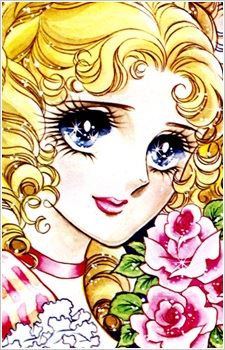
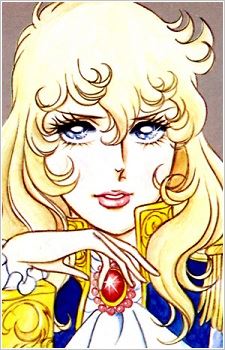
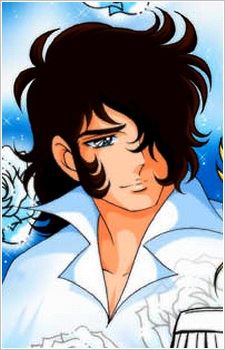
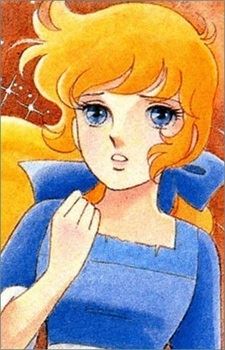




I'm finding it challenging to give this manga anything less than a 9, considering how much I adored it from start to finish. Some might argue that I'm being overly generous and that it deserves a lower score, but I hold it in high regard for its intricate weaving of various themes into a cohesive narrative. As the first manga I've read from the 1970s, it definitely altered my perspective on works from that era.
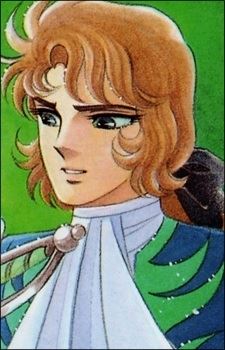
Upon encountering Oscar Francois de Jarjayes, I was instantly captivated. Everyone loves her, including the readers. Through her journey, one witnesses her exploration of sexuality and gender, along with her struggles against societal stigmas and environmental issues. She undergoes the most significant character development in the series, influencing those around her as well. You see her at her most radiant, and by the tragic end, at her most weary. If you're like me, you'll find yourself revisiting the manga just for her. But let's move on...
The standout feature of this manga is undoubtedly the writing. As you progress through the story, the prose becomes increasingly poetic and grandiose. Given the author's background in philosophy, she masterfully captures an era that feels both artistic and ruthless. While the writing style may not appeal to everyone due to its melodramatic nature, it certainly suits the tone of the story.
Complementing the writing is the artwork, which is both beautiful and whimsical. The artist skillfully blends humor with elegance at just the right moments. I particularly appreciated how some characters closely resemble their historical counterparts, such as Louis XVI and Saint-Just, enhancing the manga's historical authenticity. It has that unique charm typical of older manga and comic books, yet it remains compelling enough to explore.
There are, however, some flaws. Yet, these seem minor when compared to the anime adaptation. For instance, those familiar with French history might spot inaccuracies or missed opportunities within the narrative, potentially detracting from the storytelling depending on your expectations.
The primary issue lies with the character relationships. Some developments felt incomplete, lacking sufficient explanation for certain emotions between characters. Relationships I initially perceived as brotherly or platonic turned out to be more complex, making some characters feel like mere plot devices. Perhaps the author intended to reflect the volatile nature of love during that period, or perhaps she aimed to keep the focus on French history. Nonetheless, I would have preferred seeing romantic feelings evolve rather than simply being told they existed.
Additionally, there were instances where I struggled to connect emotionally with certain characters' deaths or emotional states, likely due to underdevelopment. This doesn't mean you won't shed tears or experience bouts of sadness; however, if you seek a manga with balanced melodrama and comprehensive character growth, you might need to think twice about this one.
Beyond that, the manga will at least pique your interest in the French Revolution. The main storyline moves briskly and directly, encouraging further exploration of the historical events mentioned. Ideally, the manga could have provided more visuals of the Parisian populace instead of focusing solely on individual stories, but the final volumes, barely touched upon in the anime, conclude the tale splendidly!
In summary, this classic is worth reading, especially if you're a history enthusiast! The author received a Legion of Honor for bringing awareness of French history to Japan, which is quite impressive. Watching the anime beforehand helped me appreciate aspects of the manga that the anime lacked (and vice versa), though it's not necessary. Currently, I'm experiencing post-Versailles no Bara sadness, so why not join me?
Today’s review focuses on Riyoko Ikeda’s Rose of Versailles, also known as Lady Oscar in Europe. This work is among the most influential and revolutionary pieces from the 1970s.
Being one of the first major manga created by a woman, it significantly contributed to establishing shōjo manga as an important genre. Its success can be attributed to its unique setting, iconic heroine Oscar, and its groundbreaking ideas for its time.
Note: Some parts of section [1.b] might contain spoilers. However, those familiar with French history may already know what's coming. Proceed cautiously.
[1. Let’s start with the story and characters...]
The narrative unfolds in 18th century France, covering events leading up to and during the French Revolution, until the Reign of Terror. It spans the life of Marie Antoinette, the titular “Rose.” Despite artistic liberties taken, this isn’t a strict biography; historical figures coexist with fictional characters.
(a.) If I were to summarize the work, I’d say it’s about the intertwined lives and fates of two main characters, akin to a bildungsroman.
Lady Oscar François de Jarjayes stands out as the uncrowned queen of this manga. Entirely fictional, she is born the same year as Antoinette (on Christmas) as the youngest daughter of the Royal Guards' Commander. Her father, desperate for a male heir, assigns her a male gender role.
----- Fun fact: Assigning girls male roles wasn't unheard of globally, not just for inheritance reasons. Look up "burrnesha" for more information. -----
Oscar completes her military training and is tasked with protecting Marie Antoinette, then the Dauphine. Initially a supporting character, reader feedback prompted Ikeda to elevate Oscar to a prominent role, even rewriting parts of the story. Many themes revolve around her personal conflicts. She struggles between loyalty to the royal family and recognizing the hardships faced by commoners. Additionally, she battles between fulfilling her duties as a male officer and her desires as a woman.
Her close relationships, like with Marie Antoinette and André Grandier, are central to her development. More details are found in section [2.].
(b.) Marie Antoinette is equally complex. Her flaws drive significant plot points, despite Oscar’s prominence.
She faces conflicts between her responsibilities as queen and her desires. In a loveless marriage to the last pre-revolution Bourbon monarch, she becomes infatuated with Axel von Fersen. A tragic love story combined with toxic influences leads her to succumb to her worst traits. Although affectionate towards close people, she displays traits of a defiant, pampered noblewoman, isolating herself into a lavish lifestyle that burdens impoverished citizens, earning her the loathing title "autrichienne." The rest is history.
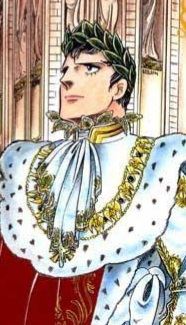
Beyond them, almost every character has vital roles, their destinies interwoven by historical events like the Day of the Tiles or the Affair of the Diamond Necklace. Historical figures relevant to French history appear, such as Maximilien de Robespierre and the infamous Comtesse de la Motte. Even Napoleon Bonaparte’s brief appearance adds context.
(c.) Before moving on, I must note: the narrative isn’t perfect.
Ikeda invested deeply in a meticulous and accurate presentation of the setting, reflecting classist inequalities and other contemporary issues. The research behind it is staggering. However, the melodrama, typical in shōjo, sometimes overwhelms, detracting from enjoyment and making characters seem theatrical. While some moments are touching, others clash with the mature storyline.
Character developments sometimes feel too sudden and forced, lacking a gradual progression. This likely stems from publishing in a shōjo magazine with different storytelling priorities.
[2. Continuing with subjects…]
I mentioned Oscar as the soul of the manga. Here’s why:
Beyond being a complex character, she represents strong-willed female leads in shōjo works, offering Japanese female readers a new role model. Related to this, Oscar embodies societal ideas connected to feminism, illustrating how fixed gender roles harm both sexes in a conservative society. Contrasted with Marie Antoinette, Oscar’s limitations highlight her conflicts due to both male and female traits. Personally, her tale symbolically bridges the "male" and "female" self for wholeness.
Love and sexuality themes are crucial. The idea of women engaging in passionate relationships without losing freedom and identity is explored. Yuri elements are evident, with Oscar often the object of lady courtiers’ infatuations. Rosalie Lamorlière openly crushes on her.
French culture and history influence the work extensively. Rose of Versailles popularized France and its culture in Japan, earning Ikeda France’s "Ordre national de la Légion d'honneur" in 2008.
[3. And concluding with the artwork section...]
The artwork, while decent, isn’t the strongest element. Most shōjo art styles aren’t my preference due to exaggerated designs.
Proportions are soft and illustrations harmonious, though overly bright eyes stand out. Backgrounds are functional but elegant at times, especially for the court of Versailles. Certain scenes are vivid and flowery, while others shockingly visceral for shōjo manga, showcasing smallpox symptoms vividly. One favorite background depicts the Women’s March on Versailles.
Hope you enjoyed my review!
I developed a keen interest in reading The Rose of Versailles manga a few years back, right after finishing the anime. To my dismay, I found out it wasn't legally available in English! Fortunately, Udon Entertainment has finally completed their (quite pricey) hardcover editions, and I've managed to finish reading through them!
I thoroughly enjoyed reading The Rose of Versailles. It comes across as a grand, romantic saga, packed with melodrama and exquisite artwork. It's easy to see the significant impact this series has had on the Shoujo genre; the characters experience their emotions intensely, and every shift in mood is accentuated by sudden beams of light and an abundance of flower petals. Although the plot can be predictable and clichéd at times, the story's presentation feels uniquely rooted in the 1970s, thanks to Riyoko Ikeda's stunning art.
While the artwork is sublime, the story and characters are far from flawless. Many characters based on real historical figures feel somewhat constrained, lacking depth. It seems Ikeda didn’t want to make any large assumptions about these figures, even if doing so would have improved the narrative flow. There are also several pacing issues towards the end, where the narrative either lingers too long on certain characters or rushes through others.
The most frustrating part of the entire story is André, Oscar’s childhood friend. I’m unsure how he was received in the 70s, but to a modern reader, he's utterly intolerable. He constantly tries to force Oscar into more feminine roles, confining her to traditional gender norms. Furthermore, despite his attempts to both rape and murder Oscar at different points in the story, their relationship is still portrayed romantically. André is an absolute jerk, and it's incredibly annoying how the narrative refuses to criticize his behavior. It feels unnatural and forced when Oscar reciprocates his feelings.
Oscar, on the other hand, is the highlight of the story. She is strong-willed, breathtaking, and highly skilled. It’s delightful to watch her defy societal expectations of womanhood and carry herself confidently. She also has the best character arc, spanning the entire story, as she comes to understand the dire living conditions of the lower class and eventually fights alongside them during the revolution. Oscar serves as the reader’s connection to everything happening in the story; she’s our gateway to 1700s France, and her adventures are endlessly entertaining.
The Rose of Versailles is far from perfect, but it excels in melodrama, feminine beauty, and historical fiction. Despite some bland characters and repetitive plot points, Ikeda’s artwork is among the most striking and beautiful I’ve ever seen, and Oscar is one of the most unique protagonists I’ve read about. While not everyone may enjoy this manga, I believe it’s absolutely worth your time! The Rose of Versailles is filled with memorable moments that will stay with me for years to come!
Versailles no Bara is a prime example of how to craft historical fiction.
The narrative remains largely faithful to known historical events, yet the author takes some creative liberties with character introductions and their interactions. She also chooses which rumors to treat as fact or fiction within her story, a decision that enhances its intrigue. If every historical ambiguity were left unresolved, the series would lose its appeal and satisfaction. Ikeda introduces new characters like Oscar and André, adding zest while seamlessly integrating them into Versailles' world of romance and political maneuvering.
The characters are the true gems of Versailles no Bara. Each one is complex, captivating, and even endearing in various degrees. The female characters are especially remarkable; Charlotte's plight will forever be etched in my memory.
The artwork is stunning, albeit heavily influenced by 1970s aesthetics, sometimes distractingly so—think bell-bottoms and flowing hair on almost everyone except those meant to appear old or unattractive. Each page layout is exquisite, and emotions are depicted lavishly. Occasionally, the drama veers into melodrama, but the reader’s emotional investment in the story and characters keeps it engaging.
I recommend Versailles no Bara to anyone who appreciates manga; this work revolutionized the medium, particularly shojo manga, making it an essential read. Content Warning: there is one rape scene (not directly depicted).
La Rose de Versailles is a stunning and emotionally rich piece, set within a genre often linked to excess and melodrama. It leverages these traits effectively, weaving a tale brimming with passion and intensity that harmonizes beautifully with its historical backdrop. However, this same emotional depth and dramatic flair might deter some viewers, particularly those less inclined towards stylized storytelling. Nonetheless, for those who embrace its grandeur, it offers an unparalleled experience.
Let’s delve into what this manga entails and the themes it conveys. We’ll examine whether the beginning might be misleading, how it tackles its key themes, and how adeptly it employs the medium's elements to tell its story.
So, what is this show about?
This manga ambitiously creates an original character reflecting her femininity alongside the ideals of the French Revolution—one of history's most contentious periods. It doesn’t stop there; every character, even those traditionally portrayed as villainous or superficial like Marie Antoinette and Robespierre, is depicted with human depth and beauty. They are not mere caricatures but living, breathing figures with motivations, flaws, and moments of vulnerability.
First things first, let’s discuss art direction.
Ikeda’s art style is uniquely vibrant and alive. Her focus centers almost entirely on the characters, with backgrounds often fading away in favor of a whirlwind of emotions. This creates an intense, deeply personal experience where the characters themselves become the scenery, embodying the emotional turmoil and historical weight of the narrative.
Her unconventional paneling might evoke comparisons to The Sandman’s stunning layouts, though Ikeda’s approach is less surreal and more emotionally charged. The visual style mirrors the revolution itself, as well as the character arcs. Early on, in the late 1770s and early 1780s, the panels are elegant and controlled, reflecting the stability of the aristocracy. As the revolution approaches in the late 1780s, the compositions grow chaotic and turbulent, culminating in the grandiose splendor of 1789 when the revolution reaches its peak.
So, how does it start?
The first volume serves as a robust introduction, giving a sense of whether you’ll enjoy the rest of the story. The melodrama and distinct art style are evident from the outset, pulsating with energy. However, the initial focus on Marie Antoinette can be somewhat misleading. If she were the central figure throughout, the tale might take a different direction. As the last queen of France, her symbolic role is well known, and audiences may initially expect a narrative centered solely on her. But don’t be discouraged—most attention shifts to original characters, bringing a fresh dynamic to the historical events.
What about the characters?
The characters in La Rose de Versailles are masterfully crafted. Ikeda captures the best qualities of historical figures without shying away from their flaws, except perhaps Robespierre. His portrayal, which seems overly sympathetic, is one of the few reasons I wouldn’t label this work a true masterpiece. Despite that, the depth given to characters like Marie Antoinette, often reduced to historical stereotypes, makes them feel fully human and elevates the narrative.
The original characters, placed within such a significant stage in human history, are elevated by their interactions with these historical figures. Their ideals and personal struggles are given thematic weight that resonates throughout the story, making them just as important as the ones with real-life counterparts.
What about the story itself?
The narrative follows the course of the French Revolution, intertwining real historical events with the stories of original characters. It adheres closely to the historical timeline, selecting the most relevant moments to create a fluid and engaging plot. The structure allows the drama of the revolution to unfold naturally while still giving space for personal stories to flourish.
Then, what did I think of it as a whole?
Despite my personal moral qualms with the portrayal of Robespierre, which might miss the broader point of the story, La Rose de Versailles is, in many ways, a masterpiece. The reading experience can be dense and overly melodramatic for some, but for those who appreciate this style and are drawn to its feminine themes and presentation, it’s an unforgettable work. Its emotional depth, combined with its historical grandeur, creates a unique and powerful experience that will leave a lasting impression on those who immerse themselves in it.
Now, this is truly a romantic tragedy. Marie Antoinette's end is widely known, yet as you delve into this historical drama, you'll frequently forget the impending dark clouds over her and Fersen. The introduction of another main character, Lady Oscar (good luck not being captivated by her), along with her own love story, serves as a parallel to the queen's life. Another soul unable to follow the desires of the heart, but unlike the queen, she enjoys more freedom, having been raised as a man, and ultimately experiencing the revolution from a different perspective.
I used to watch the anime with my mum when I was very young; it was one of those late evening series. Yes, the drama can become repetitive, but for me, it was genuinely moving to finally read Rose of Versailles and immerse myself in such an emotional tale. It's a poignant reminder of the sacrifices made and the lives altered by the relentless march of history.
In 1971, shoujo manga began gaining popularity, with numerous new mangaka, many of them women, revolutionizing the Japanese comic industry by crafting narratives targeted at female audiences. The landscape shifted dramatically, but none more so than with Riyoko Ikeda's masterpiece, The Rose of Versailles. Featuring lush artwork and an expansive storyline spanning several decades, it depicted the rise and fall of French queen Marie Antoinette leading up to the French Revolution. With a strong, charismatic, fearless yet human female lead in Oscar, The Rose of Versailles achieved worldwide fame, hailed as one of the finest manga ever created. Its influence persists, inspiring countless anime and manga, such as Revolutionary Girl Utena, for its boundary-pushing content and proving that serious, action-oriented stories can thrive in the shoujo genre. To this day, it remains a classic.
Surprisingly, despite global popularity, the manga didn't reach North America until 2020, nearly fifty years after its initial publication. Only the first two volumes were translated, used solely for teaching English to Japanese readers. Even the anime struggled to find a US release. One reason was reportedly Ikeda's insistence on a specific licensing fee, considered prohibitively high for American publishers. Licensing manga isn't a quick profit venture, contrary to popular belief fueled by long-running shounen series. Eventually, both the anime and manga found their way to the US: the former released by Nozomi Entertainment in 2013, followed by Discotek Media's Blu-Ray set. Against all odds, Udon Entertainment licensed the manga in 2015, planning to translate and release the entire series in hardback omnibus collections. Initially slated for a 2016 release, the project's scale and importance delayed it until 2020, further impacted by COVID-19. The complete English release is monumental for fans, showcasing how even the seemingly impossible can become possible.
The story revolves around infamous French queen Marie Antoinette, her ascent to power, and eventual downfall leading to the French Revolution. It also follows Oscar Francois de Jarjayes, commander of Marie Antoinette's royal guard. Oscar’s father, desperate for a son, raised his youngest child as a boy despite being female. The narrative explores Marie Antoinette's detrimental decisions, Oscar's observations of France's governance and poverty, and key events culminating in the French Revolution, interspersed with fictional elements.
The artwork needs little introduction: characters have distinct designs, page layouts are outstanding, backgrounds and costumes lavishly detailed. Ikeda's research ensures historical accuracy, even with some fictional or exaggerated characters. My sole critique is occasional difficulty distinguishing characters due to similar hairstyles, a minor issue. However, the English translation occasionally uses awkward phrasing like "must needs," which feels jarring given the meticulous translation process over several years.
This series thrives on its characters, and here, it excels. Each character, from main to minor, advances the plot uniquely. Over 24 years, you witness their growth and change, some for better, others worse. Marie Antoinette emerges sympathetically while retaining her flaws, and Oscar embodies strength, independence, charisma, with relatable flaws. Modern beliefs wrongly equate female strength with stoicism, dismissing vulnerability, but flawed characters are compelling when showing their struggles.
Beyond characters, Ikeda meticulously developed the setting and story. Initially appearing as traditional shoujo fare, it darkens as the French Revolution approaches, transcending genres. Minor flaws include unclear scene transitions and occasional out-of-place humor. Some side stories feel tonally dissonant, like Countess In Black's supernatural elements clashing with historical fiction.
Despite these issues, the series' greatness prevails. Having experienced both the anime and manga, I confidently declare The Rose of Versailles a cornerstone of anime/manga history. Its uniqueness reshaped the industry. Don't dismiss '70s anime as mere toy-selling fodder; read The Rose of Versailles, revered as a pinnacle of shoujo manga. Though now fully released, stock shortages due to production delays make it challenging to acquire. If you manage to find it, definitely check it out!
This review covers both the anime and manga versions of "The Rose of Versailles," noting that there are some differences between them. The first episode of the anime was entirely unique, diverging from its manga counterpart, which slightly alters Oscar's motivations despite being well-received by most viewers.
The story introduces us to Oscar, a beautiful, charming, elegant yet strong young girl living in France. She is the daughter of a general who had hoped for a son but instead got a daughter whom he then trained rigorously to compete in the male-dominated military field.
"The Rose of Versailles" is character-driven, showcasing diverse and unique psyches. Characters face challenges posed by societal norms and traditions of their time. Marie Antoinette, initially depicted as a spoiled brat and the archduchess of Austria, experiences dramatic life changes after her proposal to become the Queen of France. Initially ambitious, she struggles under the weight of royal responsibilities. Her growth intrigues viewers, much like other characters such as Oscar, whose journey involves preparing mentally for male-dominated battles. Oscar’s bravery and struggles due to her physical limitations make her story compelling. Side characters like Andre, Oscar's comrade and love interest, and Fersen, Marie's true love, also have well-developed arcs with clear motivations.
While the story isn't as intricate as the characters, it remains effective. It explores how incompetent rulers lacking emotional intelligence can lead to tragedy, exacerbated by internal power conflicts, an indecisive king, and naive decisions that erode public trust. The reign of King Louis XVI and Marie Antoinette is marred by greed and lust, leading to their infamous "reign of terror." Despite this, the characters remain relatable, making it hard to completely hate them. The story, though less dynamic than its characters, delivers impactful tragedies enhanced by Shinji Ueda's outstanding soundtrack and beautifully crafted opening and ending songs.
Characters: 9/10
Story: 7/10 (limited by historical accuracy but could be better)
Art: 9/10 (simply beautiful)
(Music for anime: 8/10)
Overall, I would rate this a 9/10. It's truly worth experiencing.