

The year is 1921, and in this version of Tokyo, monstrous steam-powered robots crash a flower-viewing party, only to be cut down by a young girl dressed in a kimono and traditional hakama pants, wielding her sword with samurai precision.
Eight years have passed since the devastating Demon War, and Japan enjoys peace and prosperity. Meet Ensign Ogami Ichiro, fresh from graduating the Naval Academy. He's assigned to a base in Tokyo, but upon arrival, he discovers his headquarters is none other than the Imperial Theater, and his first mission involves collecting tickets at the gate. Despite the menial tasks, he diligently carries out his duties, surrounded by beautiful girls who seem far more clued in to what’s really happening. Little does he know, he's about to be thrust into a whirlwind world filled with robots, demons, and attractive girls in uniform.
(Source: Tokyopop)
Sakura Taisen had seven volumes published in English by Tokyopop from December 13, 2005, to May 1, 2008, before the publisher ceased operations.
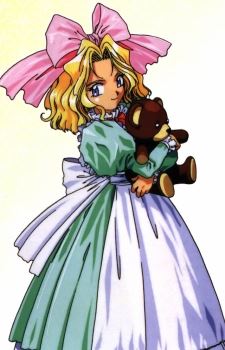


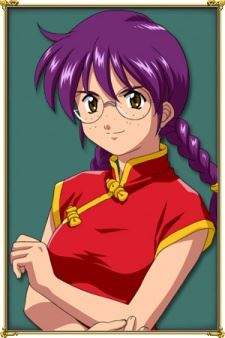


I've gone through several volumes of this series. One thing that stands out is how much the Sakura Wars series hinges on its characters. Most of the narrative revolves around their growth and development. The setting itself is quite distinctive, taking place in the 1910s or 20s with a heavy emphasis on steam-powered machinery, including the mechs, which gives it a completely different vibe from Gundam series.
The overall story is intriguing, well-crafted, and unique. When it comes to the artwork, I'd describe it as basic but not lacking in detail. The drawings are clean and light, which adds to the charm.
The real strength of this series, as with all other Sakura Wars entries, lies in its characters. Kosuke Fujishima, the character designer, excels at creating female characters—he's the mastermind behind Ah My Goddess and has designed characters for both the Sakura Wars series and some Tales of games, like Tales of Symphonia. In this particular series, the main heroine is beautifully designed, though some of the other heroines' designs feel less creative. However, this didn't bother me too much because their character development is excellently written. Despite his prowess with female designs, Fujishima’s male characters often come off as plain, and this series is no exception. Beyond design, the characterization of all characters—male or female—is very strong.
Though the plot and setting are highly unique, there are moments when it feels like just another harem series.
All in all, it's not a bad series. It's quite likable, and there were points where I found myself thoroughly hooked.
First off, I've only gone through the first volume of Sakura Taisen. If there's anything I've missed, feel free to reach out via PM or comment on my profile.
Story: The narrative presents a unique twist while still holding familiar elements from other manga. It follows Ensign Ichiro Ogami, originally in Japan's navy, who suddenly finds himself working as a ticket taker at the Grand Imperial Theater. Quite an intriguing turn of events, isn't it? Rating: 9/10.
Art: One of Sakura Taisen's standout features is undoubtedly its impressive artwork. Despite not having watched the anime, played the game, or delved into Sakura Wars beyond hearing one epic song, I can confidently say the art here is spectacular. Rating: 10/10. Excellent.
Characters: At the start, the characters were engaging, especially with the inclusion of women wielding swords. There was some character development, like realizing their powers and Ichiro's unexpected demotion on graduation day. However, it felt somewhat lacking overall. Rating: 4/10.
Enjoyment: Finding enjoyment in this manga wasn't challenging. It offered moments of spontaneous laughter and appreciation for the artist's work. Some humorous scenes brought smiles, and others were surprisingly unpredictable. Rating: 8/10.
Overall: 5/10
Recommended for: Fans of sword-wielding heroines, sci-fi enthusiasts, and those who enjoy comedy.
Not recommended for: Those seeking a genuinely calm and relaxing read.