
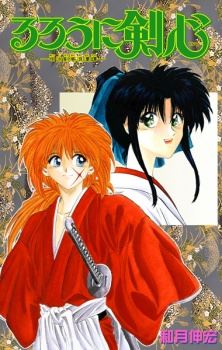
Rurouni Kenshin: Meiji Kenkaku Romantan
- Genre: action drama
- Author: watsuki nobuhiro
- Artist(s):
- Year: Apr 12, 1994 to Sep 21, 1999
- Original Publisher:
- Status: Finished
Rating(4.1 / 5.0, 33 votes)
5 stars
11(33%)
4 stars
13(39%)
3 stars
9(27%)
2 stars
0(0%)
1 stars
0(0%)
Popular Reviews
A story that views Japanese history, particularly the Meiji era, in a fun, exciting, and entertaining way. As anime and manga fans, we often think of Japan as a dreamy land, but this manga shows some of the darker sides of the country back in the 19th century. Although it has a historical background that non-Japanese readers might not fully understand, it doesn't mean you won't enjoy reading it.
Rurouni Kenshin began and ended in the golden decade of the '90s, so those around my age will likely enjoy this manga. The anime and manga world is vast today, but it's good to look back at the "g"old times, even if the art isn't as delicate as modern works.
Story: The beginning was excellent, with an exciting and entertaining plot about how the main characters meet (Himura Kenshin, Kamiya Kaoru, Myoujin Yahiko, and Sagara Sanosuke). There are many funny moments, though some characters lack development, and some antagonists aren't worthy opponents for Kenshin initially. However, the Kyoto arc is the best part of the story, showcasing the protagonist in real trouble and complicated situations. Supporting characters play more decisive roles, and strong foes make for worthy opponents. Everything in the Kyoto arc, from start to finish, is really good.
The last arc, which I call the "Jinchuu" arc, starts interestingly, thanks partly to the flashbacks. However, the ending somewhat disappointed me. It's not bad, but it lacks the balance needed to create a compelling storyline, like playing both white and black keys on a piano to create a melody.
Art: The settings, such as buildings, trees, and landscapes, are well-suited for the historical background. Sometimes, I take time to admire the art rather than focus on the context. Character designs are mostly good, but some antagonist characters are exaggerated or off-putting. Despite being a fantasy-genre manga, some character designs can be distracting.
Character: I liked the personalities and ideals of the main characters, especially Kenshin. Supporting characters develop well throughout the story, though some lack development once their role is over. Antagonists worth mentioning are Shishio Makoto and Yukishiro Enishi. Some characters mentioned but never appearing in the story are disappointing.
Enjoyment: Even without a background in Japanese history, I enjoyed reading this manga. It's not all about history, and I learned some valuable lessons along the way. Enjoyment rate: 7 out of 10.
Overall: Everything above was rated 7 out of 10, making the overall rating the same. If you're interested in an old shounen manga with a good story, Rurouni Kenshin is a great choice. I believe you'll enjoy it if you decide to read it.
Thanks for reading :) Sorry for any linguistic mistakes.
My top 2 because FMA is top 1.
The script leads us to a personal drama of each character. They really grow during the story. All of them.
RK introduces us to several charismatic characters, each with their own past. Each one seeking their future. And every new moment puts them in trouble; they need to think (I learned a lot about screenwriting from this manga, including a hallway/alley fight scene)!
The design changes over time. For me, Shishio's phase was when the design was at its peak.
With this manga, I met the Shinsengumi in about three pages. After that, I googled them. Then, I fell in love with this group. In fact, I’m a fan of Shinsengumi (and I’ve even cosplayed as a Shinsengumi soldier).
The system of techniques is well explained. Character creation is excellent, and you can read more about it in the extras.
I literally could write so much more. This manga changed my life; I read it in 2001.
10/10 for me.
Buruburu Kenshin! As a Battle Shonen, it delivers exactly what you'd expect from the genre... HA HA. It features the typical shonen clichés found in every other shonen I've read. Naturally, since the primary audience for shonen is children and teenagers, especially early teens, there are comedic elements that you'll recognize from any shonen series, and I found myself laughing at some of them too. Of course, being a Battle Shonen, it's packed with non-stop action. I particularly enjoyed the characters of Shinamori Aoshi, Saito Hajime, and Hiko Seijiro; I have a soft spot for charismatic, respectable older brother-type characters. I believe anyone who enjoys shonen will find this manga entertaining.
I don't know, it's somewhere in the middle.
It has its good parts, but something is definitely missing. Maybe it lacks compelling characters because I don't really care about almost anyone.
Also, there's no sense of danger. Everyone seems immortal, man.
But as I said, it does have its good points.
Start it if you have nothing else to do and maybe want to feel like dying. The first 100 chapters were decent.
Blah blah blah blah blah blah blah blah blah blah blah blah blah blah blah blah blah blah blah blah blah blah blah blah blah blah blah blah blah blah blah blah blah blah blah blah blah blah blah blah blah blah blah blah blah blah blah blah blah blah blah blah blah blah blah blah blah blah blah blah blah blah blah blah blah blah blah blah blah blah blah blah blah blah blah blah blah blah blah blah blah blah blah blah blah blah blah blah blah blah blah blah blah blah blah blah blah blah blah blah blah blah blah blah blah blah blah blah blah blah blah blah blah blah blah blah blah blah blah blah blah blah blah blah blah blah blah blah
5/10
This manga is a masterpiece, no doubt about it. Watsuki-sensei has crafted an epic rollercoaster of emotions as the main conflicts and story arcs intertwine and evolve. No other manga boasts such a cast of loyal and honorable characters as Rurouni Kenshin. You empathize with these characters; they are human, with flaws and imperfections, yet they stand tall and rise above their challenges, inspiring you to be a better person. The Kyoto Arc is the greatest story arc in any shonen manga ever, and the arc that follows is equally impressive!
The series starts a bit slowly, but this is intentional, allowing you to become intimate with the characters—to truly understand them. Their pasts, motivations, attitudes, personalities, values, and flaws are all meticulously explored. This is achieved through short, introductory storylines that span just a few chapters. But once this beast gains momentum, there's no stopping it! It transitions seamlessly from one awe-inspiring chapter to the next.
If you enjoy shonen manga, do yourself a favor and read Rurouni Kenshin. Note that this isn't your typical superpower-driven manga; the characters here are flawed humans, but you will inevitably grow to love them.
Rurouni Kenshin is simply the #1 manga!
Story (8): I loved how the story focused entirely on Kenshin's redemption and his personal struggle with his past. It also provided enough time to highlight other characters' moments and backgrounds without losing focus. However, I wish there had been more time dedicated to character interactions outside of high-tension plot events or battles. This lack made some romantic elements feel forced and unnatural.
Art (7): The action scenes were drawn very fluidly, and overall, the art was good. A large portion of the characters had spiky hair, though. While nothing stands out as particularly bad, it wasn't my favorite art style, especially regarding the faces. This is purely my opinion, so I give it a 7.
Character (8): There is only one character I had an issue with, and that was Kaoru. All the other characters had significant growth and strong morals driving their actions, but Kaoru came off as annoying with no redeeming traits. Without her, I would have scored this as a 10. Nonetheless, everyone else had an amazing aura that I really enjoyed!
Enjoyment (7): I managed to binge through this series, but it did take me some time to get fully invested. I definitely enjoyed it, but it was the second half where I became truly engaged. Personally, it took a little while for me to become fully immersed.
Overall (7): I really enjoyed this manga, and a 7 is actually quite good in my ratings. I didn't outright dislike anything except for Kaoru's character. It’s more about my preference for seeing more character interactions rather than almost all the plot being centered around fighting or planning to fight. This lack of interaction made some aspects, like the romance, seem unnatural. But if you enjoy classic shounen with epic fights, this might be a 10 for you!
I absolutely adore this series; it strikes the perfect balance of action, comedy, and romance! My sentiments echo those of others who have praised this series for its kickass and likable main character, fantastic fight scenes, and an engaging story. The artwork is simply stunning. I don't have much to add to the chorus of praise already out there.
However, I must also mention how incredibly quotable this series is! I have a dedicated manga notebook filled with quotes from this series, such as "People are so vulnerable to suggestion. If we believe we are sick, our bodies also fail. If we believe we can't breathe, we suffocate"; "The will to live is the heart of existence"; "What point is fear for a game piece? Especially a pawn. A pawn can only move forward! GO!" and many more.
The ending was truly satisfying :'). This is an exceptionally awesome series, and it's no wonder it comes so highly recommended.
RuroKen is the story of a samurai who, after a brutal past, vows never to kill again and instead fights for peace alongside a group of ordinary people. Well, "ordinary" might be stretching it, as everyone around him seems intent on pushing him back into his old ways, making his internal struggle all the more compelling.
The setting exudes authenticity, capturing a pivotal moment in Japanese history when the country was transitioning out of a long period of conservatism and civil strife. New ideas and technologies were flooding in, rapidly transforming traditional lifestyles. Many warriors from this era felt displaced, clinging to the old ways, which created a poignant emotional resonance for viewers. This era's transformation can be described as "elegiac," evoking a sense of loss and nostalgia as cherished traditions and childhood innocence fade under the relentless march of change and uncertainty.
The overarching narrative centers on a formidable swordsman striving for a peaceful life while constantly being drawn back into conflicts with remnants of his violent past. These adversaries resist the new order they view as weak and foreign. Despite the clear antagonists, the story isn't about good versus evil but rather a clash of civilizations and ideologies. It’s hard to fault someone trained their whole life in swordsmanship for feeling lost when asked to abandon their skills for farming.
The plot builds steadily, with Kenshin facing increasingly grim aspects of his past while protecting those he loves. The series is divided into three arcs, with the second one standing out as the best due to its intense samurai action. The first arc introduces numerous minor villains who pose little challenge to Kenshin, while the third introduces superhuman characters and bizarre elements like giant robots and rocket launchers, which feel out of place. However, despite these oddities, the finale is satisfying, making the overall story complete and enjoyable.
Kenshin is the heart of the story, and most character development revolves around him. His journey from a deadly assassin to a pacifist hero is deeply sympathetic, showcasing both his past sins and his efforts to atone for them. His "never kill" philosophy has been copied in other shows, notably Trigun's Vash, but it often feels less impactful. After all, how much quicker would battles be if Kenshin just went for the kill? Nonetheless, his charm lies in his lighthearted demeanor and occasional clownish behavior during peaceful times, making him endearing despite his tragic past.
The supporting cast primarily serves to highlight different facets of Kenshin's personality. Characters like Kaoru, Yahiko, and Sano have their own goals, but they ultimately function as extensions of Kenshin's story. They are not mere cardboard cutouts, though, and each brings something unique to the table. The main antagonists—Aoshi, Saito, and Shishio—are more developed, serving as leaders with distinct personalities and motivations. While the rest of the cast may not shine individually, they collectively add color and depth to the narrative, making the ensemble memorable and likable.
The artwork is solid, though the creator's feminine style occasionally overshadows the action-oriented nature of the story. Characters often look somewhat girly, and Kenshin himself wears pink, which may not align perfectly with historical accuracy. Despite these quirks, the visual depiction of period-appropriate clothing and architecture adds realism. Battle scenes against minor villains can feel dull, but the major confrontations are cinematic masterpieces. Every slash or eye contact is imbued with tension and excitement through clever use of camera angles, shading, and dramatic expressions. This makes the fight sequences genuinely thrilling, capturing the essence of true samurai action. The only downside is the tendency to shout attack names, some of which are absurdly long, but this is easily overlooked given the overall quality of the action.
In summary, RuroKen is an excellent show marred only by occasional dull moments and out-of-context elements. Nevertheless, it stands out as a great blend of samurai action, comedy, and drama. Highly recommended.
Rurouni Kenshin is a well-paced, high-quality shounen series with a rich array of intriguing themes and organically developed characters, making it one of the best in its genre.
The story is set in Japan during the early Meiji period in the late 1800s. It follows Kenshin, a wandering swordsman (rurouni), and his time at Kaoru's dojo, where he assists her. Initially, the story is engaging but episodic, focusing on the growing cast and their battles against individual threats. While the first quarter isn't as impactful as what follows, it does an excellent job establishing and developing the characters. This section is historically astute, referencing relevant conflicts like racism towards Europeans and the use of opium, giving the series a grounded and realistic vibe compared to typical action shounen series. When Kenshin and friends head to Kyoto, the plot becomes more intense, layered, and expansive, with the conflict between Kenshin and Makoto Shishio being the most action-packed part of the manga. Despite this intensity, it retains the charm of the earlier segments.
The final third of the series doesn't feel as well-realized as the first two parts, with some unusual pacing and a lack of tension despite high stakes. Kenshin’s backstory and development here solidified him as a favorite character for many, though some side characters' developments seem redundant after the Kyoto arc. The finale, featuring a great backstory for Kenshin (adapted into the acclaimed "Rurouni Kenshin: Trust and Betrayal") and a final boss figure, stands alongside its predecessors, though it lacks their consistency. Overall, despite its length, Rurouni Kenshin is easy to read, rarely boring, and proves that shounen series can be more than just fan service, explosions, and childish philosophy.
The characters are where Rurouni Kenshin truly shines. Kenshin himself is the standout, winning every popularity contest within the manga and complementing the rest of the cast excellently. He’s kind and fair, with strong moral obligations, yet never comes across as annoying or naive. His struggle with self-acceptance, moral incapability to kill, and desire to protect his new family sell the less consistent third of the story. Other main characters include Kaoru, who serves mainly as a foil for Kenshin; Sanosuke, who matures and becomes more willing to make sacrifices; and Yahiko, who grows from a brat into a fine warrior. Sanosuke and Yahiko receive abundant development in the second third, while Kaoru reaches a satisfying conclusion with her character arc.
The supporting characters are also interesting, varying significantly in their input to the story. Saito is a stone-cold professional serving as a great foil for Kenshin, while Aoshi, though not as dynamic, remains a walking sword after his emotional resolution in the Kyoto section. Megumi is strong and likeable, grounding the series effectively. The villains towards the beginning are fairly generic, but Shishio and Enishi are exceptional. Shishio is a megalomaniac, fierce and power-hungry, adding urgency to the later sections. Enishi, while misguided, serves as a good final boss for Kenshin, though not quite reaching Shishio's heights. Overall, Rurouni Kenshin’s cast is strong, with no dreadful characters and many great ones.
The art for Rurouni Kenshin isn’t as polished as other shounens, but it has a strong Eastern flavor and distinctive character designs. The characters' eyes are more shoujo-like in the earlier parts, fitting the laid-back tone. The backgrounds are plain but detailed when necessary, true to Japanese culture. The sword designs stand out, each given a sense of identity through curvature, length, and weight. Character outfits are detailed and characteristic, reflecting formality or militaristic qualities. The action scenes are strong, with each blow having a sense of weight and direction, capturing complex emotions effectively.
On the whole, Rurouni Kenshin is a narrative and artistic success that exceeds the quality of most shounens that followed it. Kenshin and the other characters serve their purpose well, even if some development feels repetitive, and the story is deliberately paced, rarely feeling rushed or drawn out. Rurouni Kenshin is a must-read manga that stands high among shounen titles.
From a series similar to Inuyasha, I grew quite fond of this one. Set in feudal Japan, it excels in its genre with a perfect blend of action and humor, without overloading on romance. Each character has a distinct personality and plays a crucial role in the story.
Rurouni Kenshin is far from boring; it will make you eager to read more after every chapter. The constant action and excitement keep you hooked, always wondering what will happen next.
The plot shares similarities with Inuyasha's storyline—losing loved ones, finding new love, making new friends, and engaging in numerous battles. The narrative is compelling and memorable, never losing its impact.
I wasn't surprised by the art style. Given that it's a series from the early 90s, the drawing technique may be dated, but it still deserves high praise. Everything is well-drawn, and the details are impressive.
I thoroughly enjoyed reading this series. There's nothing to complain about.
Overall, it earns a perfect score of 10. Its outstanding storyline, character personalities, and overall execution blew me away. This is a prime example of excellent manga.
Leave a Review