Shinji: **exists**
Gendo: Get in the manga, Shinji
Shinji: Can I cum inside?
Gendo: No…that’ll make the pages sticky.
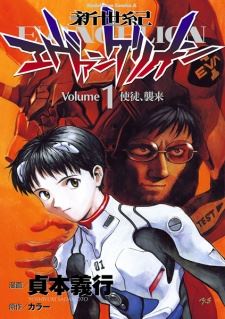
The 1995 Neon Genesis Evangelion anime, directed by Hideaki Anno, captivated fans with its exploration of esoteric concepts that were seldom considered by the average viewer. The series offered minimal clarification on these symbolic allusions; moreover, the creators intentionally misled viewers into believing that the religious elements were inconsequential to the thematic content and character arcs, which is far from accurate. This becomes evident when reading the 1994 manga by Yoshiyuki Sadamoto.
It's important to note that Mr. Sadamoto played a crucial role in the original series, The End of Evangelion (EoE), and the Rebuild movies. His interpretation of the ambiguous concepts introduced by Anno can be regarded as authoritative. Concepts such as integrating one’s 'shadow' (unexpressed half) through externalizing Dionysian/animalistic desires, understanding angels/gods as manifestations of one's inner psyche, and identifying/rectifying imbalances within one's internal world are essential aspects of the Evangelion mythos. However, could this elucidation be more of a hindrance than a help? Artistic works thrive on enigma—especially Evangelion—as they allow individuals to discover facets about themselves while comprehending the series.
While Mr. Sadamoto’s approach was more direct, it did not detract from the primary aims of the story. Elaborating on Kaji’s backstory added value to the narrative, providing context about the post-Second Impact world and offering insights into his motivations. Seele’s Gnostic/Kabbalistic beliefs were more transparent but remained intriguing as a clandestine organization. Some may view these additional details as superfluous, taking away from what should have been inaccessible. Art possesses an infinite aspect through its boundless interpretations, and by crystallizing core concepts, Mr. Sadamoto somewhat undermined Anno’s organic, psychological catharsis.
In other words, Sadamoto provided the Apollonian interpretation to Anno’s Dionysian eruption. It’s a different means of achieving the same ends. One is an artistic tour de force attempting to stimulate the 'dark' energies of the abyss, while the other guides you like a psychologist, offering a roadmap for how to proceed. In this sense, the manga might be seen as less 'deep,' but is depth the criterion for 'greatness'…or is execution the standard of standards? Miyazaki’s films are by no means convoluted, yet 'My Neighbor Totoro' stands among the select few that evoke one's most inner feelings. Complexity is not a precursor for success. Sadamoto’s execution of Anno’s themes is what matters, and in this regard, he succeeded admirably.
Regarding the artwork, it is exceptional-to-great. Sadamoto’s character designs are distinct yet feel ubiquitous. Many Japanese teenagers likely see themselves in Shinji, allowing them to vicariously experience his turmoil and apply his lessons to their own lives. Depression, after all, is a pervasive element for humanity, something we all experience either transiently or chronically. Like Anno, Sadamoto captures the introverted tendencies of the depressed individual and offers male/female solutions for confronting this condition. Perhaps 'solution' is not the correct term, as depression is more of a 'call-to-action,' an internal demand to become who we truly are!
So I decided to give this highly acclaimed manga a try. While I'm aware the anime has received mixed reviews, I had no clue about its plot and went in completely blind. Here's what I thought:
Story: The story began impressively — straightforward and engaging. I was hoping for gradual, meticulous character development. However, it felt like the author rushed through it. It almost seemed like a summary of an anime or manga. Every other chapter introduced a new character. By the halfway point, I started losing interest because things became overly complicated. To sum up, the ending didn't resonate with me.
Art: The artwork is distinctive, and I understand it's an older manga, but the big fight scenes were quite hard to follow. About 30% of the time, I couldn't figure out what I was looking at. This was one of the worst aspects of the manga for me.
Characters: They weren't terrible, but they weren't great either.
In the end, I think this manga really needed to be longer. The ideas could have been better developed, and I would have cared more. In my opinion, it's overrated. I know it's probably an inspirational work that has influenced other mangas, but it just didn't click with me.
Story: A true masterpiece. The writing is incredibly cohesive and easy to understand. This manga stands out whether you loved or hated the anime adaptation. I recommend watching the anime first, then reading the manga, and finally revisiting the anime. This sequence creates a full circle experience that every good anime should deliver. I regret not discovering this manga earlier; if I had, it would undoubtedly be my all-time favorite series. It answers all your questions while simultaneously sparking new ones, driven by pure curiosity rather than plot holes. The concept is fresh and intriguing, initially presenting itself as just another mecha series but revealing deeper layers. Beyond its surface, the story explores the impacts of various upbringings like neglect, loss, and abuse. At its core, it's more psychological drama than mecha action.
Art: There's something nostalgic about the art style, familiar yet unique. The angels are depicted with both heavenly and hellish elements. Characters have iconic designs that are instantly recognizable, from Asuka Langley and Rei Ayanami to the Evangelions themselves. New and old anime fans alike can identify these characters, showcasing the manga's excellent character design.
Character: Initially, you might find Shinji Ikari frustrating, but over time, he grows on you. All the characters are compelling due to their complex psyches. Shinji and Asuka both crave love but struggle to express it differently. Shinji is timid and unsure of his feelings, while Asuka embodies the tsundere archetype. Misato Katsuragi grapples with her decisions, and Rei Ayanami, a kuudere, begins to develop and question her emotions. Each character invites you to delve deeper into their psyche.
Enjoyment: I thoroughly enjoyed this manga. On my first read, I rushed through it too quickly, wishing it was longer. Although everything must come to an end, I'm glad this series hasn't been tarnished by unnecessary continuations.
Overall: If you're into psychological thrillers, definitely give this a read. While there's action, romance, and mecha elements, they aren't the main focus. These aspects are well-executed but don't expect them to dominate the narrative. Dive in for the rich psychological depth and intricate storytelling.
Has decided to make the review of this manga as it has strongly hooked me. Firstly, I have always been fond of themes related to psychology, oddities, etc. (and I consider Evangelion as the best psychological anime/manga, proven by numerous inquiries), and secondly, I wanted to learn more about manga history. And I haven't regretted it. Even those moments, characters, story outcomes, story incomprehensibility, incomplete storylines, "not fully disclosed" characters, and other aspects that initially didn't appeal to me in TV or movies changed completely after reading the manga (and only grew on me).
As for the manga itself, it is the best manga from those I've read or watched so far. Besides being interesting and captivating, it is also the most "readable" compared to other "creative" mangas.
Story: 9 (because the manga is still being released)
Art: 10 (besides the fact that the art itself is excellent, it's done in such a way that all the actions occurring in the manga are absolutely clear)
Character: 10 (compared to TV or Movie, any character in the manga is much better and more clearly presented to the reader.)
Enjoyment: 10 (for people whom the theme of psychology simply isn't interesting, they might not give it a "10", especially considering legends like Evangelion.)
Overall: 10 (*refer to the above-listed items))))))
The art is beautiful, nothing too extravagant but it carries a certain charm. However, when it comes to the fight scenes, I find them utterly incomprehensible. The script is so convoluted and dull that even after watching the anime and reading the manga, I still struggle to grasp what's happening. Why is this? A good work should be straightforward and clear. The characters are disappointingly one-dimensional. Rei comes across as an empty shell devoid of emotions, Asuka is tedious and spoiled, and her father is notably absent. The sole reason for my five-point rating for this manga was Shinji. I believe he stands out as one of the best characters in anime because he’s the only teenager who acts his age. Despite having more flaws than virtues, he feels very human. His journey focuses on personal growth rather than gaining power, unlike typical shounen series. Additionally, he's endearing and has chemistry with Kaworu, his only potential romantic interest amidst uninteresting and hysterical women. One character is much older, another is immature, and the third is like a mother figure. It seems this anime had grand ambitions but failed to deliver; evident by the need for internet enthusiasts to create theories and movies to fill in the gaps left by the manga. This might be the most overrated work I've ever read. Yet, I can see why it's popular: themes like depression, adolescence, attractive girls, and family issues resonate easily with many, particularly those with depression. If you're struggling with such feelings, consuming this content might make you feel like a failure.
At first, I wasn't sure if this manga was worth my time since it closely follows the anime's storyline. However, the translator's notes at the end of each volume offered fascinating insights and context that I wouldn't have known otherwise, which kept me engaged.
There are significant differences in the manga that delve deeper into the characters' backgrounds, altering some aspects of the story while preserving the main events. Even though it occasionally felt repetitive, the manga delivered a powerful conclusion in its final volume. The ending was genuinely moving, even more so than the Rebuild movies. The expanded backstories and thematic depth of the finale made the entire reading experience worthwhile. As a result, I believe this manga is an excellent addition to the Evangelion canon.
tl;dr: A manga companion to Evangelion that doesn’t fully capture the magic but comes close and even excels in some areas.
This manga is an adaptation of the anime with the same name, but it’s not meant as a replacement or alternative. It’s designed to be read after watching the anime. Several reasons exist for this, the most obvious being the commentary inserts between chapters and at the end of volumes by the manga author and anime staff. Not only does one need prior knowledge to appreciate these insights, but these inserts also contain spoilers for the story beyond their placement. Hence, this review assumes readers have watched the anime and will include minor spoilers.
The plot closely mirrors the anime's, skipping many elements but following the same general path. The storytelling method is less unconventional compared to the anime, especially concerning the ending. Generally, I find written stories easier to follow than visual ones. Thus, the manga clarifies aspects that might confuse viewers in the anime. However, since the focus remains on atmosphere over logic, this doesn't significantly alter practical understanding but does change the overall feel.
Despite the similar plot, the characters differ surprisingly. Characters like Asuka, Misato, and Kaji give different impressions due to skipped or altered scenes that fleshed out their personalities in the anime. This seems more a result of their changed surroundings than inherent character differences. Shinji and Kaworu notably differ from their anime counterparts. Regarding Kaworu, his plot remains the same, but the relationship with Shinji differs fundamentally, leading to an odd, poorly executed feeling.
Shinji’s differences outside of this work better. Deconstructing Shinji’s psyche is central to Evangelion. With a more positive psyche in the manga, the resulting work feels very different. The events are the same, but how manga Shinji progresses through them contrasts sharply with anime Shinji, making for an interesting comparison. The manga skips certain difficult-to-adapt anime events, which is somewhat disappointing but understandable given the issues with the Kaworu arc. Overall, though, the changes resulted in a distinct final impression that I personally prefer.
The manga’s art is excellent. The design matches the anime perfectly, and I was surprised by how well the art captured the anime’s style and key shots. Naturally, it doesn’t match everything precisely, but considering the source material, its success was unexpected. The manga also features many well-executed color illustrations that impressed me greatly.
For fans of the series who were let down by the budget constraints and original ending (before End of Eva), this manga is for you.
It largely stays true to the original series, which is fantastic because A) The original remains exceptional and is preserved and respected here, and B) It introduces a wealth of new content and additional details about the characters and scenarios. Even minor additions make it feel completely fresh and develop the characters far beyond what the original series achieved.
The most notable enhancements are the characters. Though subtly different from the series, they now have more personality, enhanced particularly by the art. More time is spent developing each character, with increased interactions among them. The manga's ability to convey what every character is thinking adds depth to their interactions, a key feature not present in the series. Kaworu, who I felt was underdeveloped due to his late introduction in the series, receives much more development and screen time, as do all other characters.
The art is flawless. It effortlessly captures the original imagery and scale of Evangelion while adding new visuals and ideas that are iconic in their own right. The manga retains the same level of care and character as the original series but adds more depth and fun, taking advantage of small details on every page.
Just like the original, the manga is also very entertaining while tackling serious topics. The character chemistry is consistently interesting and often hilarious. The fights are engaging with some incredible imagery (Kaworu in Unit 03 wields a chainsaw at one point). The story takes unexpected turns even if you've seen the original, managing to remain entertaining with both humor and personal issues, balancing both perfectly.
If you enjoyed the series, you will adore the manga. Every issue I had with the series was addressed by the manga, and additional content was added on top. In my mind, this is the definitive Evangelion experience.
This review is for both newcomers and veterans of NGE who have yet to read the manga.
Story:
You're diving into a narrative laden with intense character drama. Even if you're only here for giant robots and monsters, it's more compelling when each robot has a well-developed pilot and each monster poses a genuine threat. The ensemble cast is impressive, and their intertwined histories weave an inclusive story that demands a satisfying conclusion.
However, the ending is its biggest flaw. It's not complex; rather, it ends abruptly. This might seem natural at first, but the flow is off. Near the end, characters lose depth and become placeholders. Shinji, in particular, reacts unreasonably to a certain event. While I acknowledge changes from the anime, most were improvements until this point. The shift felt forced and out of place within the established world.
Art:
The art is pretty great! There are moments where motion blends with the background, but overall, characters look fantastic and settings are detailed. The use of blacks in the final sequences could be better, though. The climax is epic, but some scenes could use more refinement. Comparing it to Miura's Berserk shows room for improvement.
Character:
Some of the best-written characters ever. Their detailed histories expand the world and create believable motives. All ties together beautifully for the finale. However, there's an event that makes no sense—a pointless change from the original work.
Enjoyment:
Absolutely enjoyed it. The manga explains aspects not covered elsewhere in NGE. Reading it blind can be nice, but experiencing the anime and End of Evangelion first enhances enjoyment. You'll appreciate both mediums more without spoiling certain elements.
Final Thoughts (personal, non-critical opinion):
I'm disappointed every NGE iteration has flaws. The anime has boring parts but maintains sci-fi charm. The Rebuilds are enjoyable but lack depth in places. The only flawless piece is End of Evangelion, albeit eccentric. Maybe Anno will one day combine the best of anime and manga, reanimate the series, and give EoE a facelift. One can dream!
((If you liked this review, friend me for new reviews on other works, both manga and anime!))
If you haven't watched the anime, watch the anime first, the series, and then come back.
Although it's my personal opinion, this is much better than the anime. It's cleaned up, brings all of the characters together in a good manner, and the character development is much more enjoyable.
The psychological scenes have more meaning and aren't thousands of random pictures and images being thrown into your face.
I haven't read a lot of mangas, but I couldn't stop reading this. It's funny, has lots of emotions, and brings to the table everything I love about NGE, and even more.
A nice change is that Shinji isn't such a whiner. He's more rebellious than anything, yet maintains his identity. (Thank the Gods)
It sticks more to the Series than anything, yet it takes its own path which was incredible. It also has a smooth transition to now-a-days Rebuild Movies. Which gives it an "oh hot diggity dayum" moment in the final chapters.
It definitely goes into more detail about characters that were never truly explained.
Example:
Kaji's past
Yui's past
Gendo's past
And even dives deeper into Asuka's past
Well, just about everyone's...
(And clears up a lot of what was not explained in the Series)
And Rei talks, and there's romance, and feels, and ugh!! It's great!!
I'm approaching this as a huge fan of the original anime series, having never seen the Rebuilds, just for reference.
Long story short: The manga adaptation is adequate.
There are some elements that are executed exceptionally well, even better than in the anime. This includes additional character development for many characters, making them more nuanced and relatable. There's also greater emphasis on Shinji's canonically bisexual nature, offering readers more opportunities to connect with him in the way Anno intended viewers (or in this case, readers) to engage with him.
However, some elements are somewhat mishandled. A significant relationship from the latter part of the anime gets even less attention in the manga adaptation, which is quite disappointing. If you're looking for positive gay romance representation in your manga, don't invest too heavily here. While the characters spend more time together compared to the anime, it can be frustrating at times to see how Sadamoto handled their connection, especially given the various versions of this relationship that were shelved due to censorship concerns that the manga was supposed to address.
This issue persists across several Evangelion manga adaptations; Angelic Days might be an exception, but I haven't read it myself, so I can't confirm or deny.
If this is your first encounter with Evangelion, watch the anime first. Please.
If you're curious about seeing Evangelion in manga form, this version will suffice and offers a unique enough experience from the original to make it worth reading.
"Don't think you can try to understand me. For some reason, humans try hard to understand others. But remember this: people will never completely understand each other." (Gendo Ikari to Shinji in ch. 29)
Understanding oneself is already a daunting task. Amidst the chaos of war and unsettling truths about his role within it, Shinji must summon the bravery not only to pilot the Eva but also to attempt understanding those around him, despite the potential pain. The journey towards self-discovery is captivating—at least for me, who enjoys watching monstrous robots battling alien creatures.
I recommend reading this if you wish to delve deeper into the world of Evangelion, especially since it clarifies characters' motivations that remain ambiguous in the animated series and films. Additionally, it offers yet another alternate ending to Shinji's tale and those of numerous other characters—many relationships differ significantly from their animated counterparts! The Evangelion universe is intricate, with much to explore, making it worthwhile to learn more. The artwork is stunning, the narrative impacted me differently than its animated versions, and personally, I found this rendition most satisfying. The story’s themes are examined more profoundly, offering a clearer insight into Hideaki Anno’s intentions.
Just like the animated versions, each read of this manga will likely leave you with varied impressions or different aspects resonating each time. While the original series might feel tedious at times, reading this was an enjoyable experience.

Popular Reviews
Shinji: **exists**
Gendo: Get in the manga, Shinji
Shinji: Can I cum inside?
Gendo: No…that’ll make the pages sticky.
The 1995 Neon Genesis Evangelion anime, directed by Hideaki Anno, captivated fans with its exploration of esoteric concepts that were seldom considered by the average viewer. The series offered minimal clarification on these symbolic allusions; moreover, the creators intentionally misled viewers into believing that the religious elements were inconsequential to the thematic content and character arcs, which is far from accurate. This becomes evident when reading the 1994 manga by Yoshiyuki Sadamoto.
It's important to note that Mr. Sadamoto played a crucial role in the original series, The End of Evangelion (EoE), and the Rebuild movies. His interpretation of the ambiguous concepts introduced by Anno can be regarded as authoritative. Concepts such as integrating one’s 'shadow' (unexpressed half) through externalizing Dionysian/animalistic desires, understanding angels/gods as manifestations of one's inner psyche, and identifying/rectifying imbalances within one's internal world are essential aspects of the Evangelion mythos. However, could this elucidation be more of a hindrance than a help? Artistic works thrive on enigma—especially Evangelion—as they allow individuals to discover facets about themselves while comprehending the series.
While Mr. Sadamoto’s approach was more direct, it did not detract from the primary aims of the story. Elaborating on Kaji’s backstory added value to the narrative, providing context about the post-Second Impact world and offering insights into his motivations. Seele’s Gnostic/Kabbalistic beliefs were more transparent but remained intriguing as a clandestine organization. Some may view these additional details as superfluous, taking away from what should have been inaccessible. Art possesses an infinite aspect through its boundless interpretations, and by crystallizing core concepts, Mr. Sadamoto somewhat undermined Anno’s organic, psychological catharsis.
In other words, Sadamoto provided the Apollonian interpretation to Anno’s Dionysian eruption. It’s a different means of achieving the same ends. One is an artistic tour de force attempting to stimulate the 'dark' energies of the abyss, while the other guides you like a psychologist, offering a roadmap for how to proceed. In this sense, the manga might be seen as less 'deep,' but is depth the criterion for 'greatness'…or is execution the standard of standards? Miyazaki’s films are by no means convoluted, yet 'My Neighbor Totoro' stands among the select few that evoke one's most inner feelings. Complexity is not a precursor for success. Sadamoto’s execution of Anno’s themes is what matters, and in this regard, he succeeded admirably.
Regarding the artwork, it is exceptional-to-great. Sadamoto’s character designs are distinct yet feel ubiquitous. Many Japanese teenagers likely see themselves in Shinji, allowing them to vicariously experience his turmoil and apply his lessons to their own lives. Depression, after all, is a pervasive element for humanity, something we all experience either transiently or chronically. Like Anno, Sadamoto captures the introverted tendencies of the depressed individual and offers male/female solutions for confronting this condition. Perhaps 'solution' is not the correct term, as depression is more of a 'call-to-action,' an internal demand to become who we truly are!
So I decided to give this highly acclaimed manga a try. While I'm aware the anime has received mixed reviews, I had no clue about its plot and went in completely blind. Here's what I thought:
Story: The story began impressively — straightforward and engaging. I was hoping for gradual, meticulous character development. However, it felt like the author rushed through it. It almost seemed like a summary of an anime or manga. Every other chapter introduced a new character. By the halfway point, I started losing interest because things became overly complicated. To sum up, the ending didn't resonate with me.
Art: The artwork is distinctive, and I understand it's an older manga, but the big fight scenes were quite hard to follow. About 30% of the time, I couldn't figure out what I was looking at. This was one of the worst aspects of the manga for me.
Characters: They weren't terrible, but they weren't great either.
In the end, I think this manga really needed to be longer. The ideas could have been better developed, and I would have cared more. In my opinion, it's overrated. I know it's probably an inspirational work that has influenced other mangas, but it just didn't click with me.
Story: A true masterpiece. The writing is incredibly cohesive and easy to understand. This manga stands out whether you loved or hated the anime adaptation. I recommend watching the anime first, then reading the manga, and finally revisiting the anime. This sequence creates a full circle experience that every good anime should deliver. I regret not discovering this manga earlier; if I had, it would undoubtedly be my all-time favorite series. It answers all your questions while simultaneously sparking new ones, driven by pure curiosity rather than plot holes. The concept is fresh and intriguing, initially presenting itself as just another mecha series but revealing deeper layers. Beyond its surface, the story explores the impacts of various upbringings like neglect, loss, and abuse. At its core, it's more psychological drama than mecha action.
Art: There's something nostalgic about the art style, familiar yet unique. The angels are depicted with both heavenly and hellish elements. Characters have iconic designs that are instantly recognizable, from Asuka Langley and Rei Ayanami to the Evangelions themselves. New and old anime fans alike can identify these characters, showcasing the manga's excellent character design.
Character: Initially, you might find Shinji Ikari frustrating, but over time, he grows on you. All the characters are compelling due to their complex psyches. Shinji and Asuka both crave love but struggle to express it differently. Shinji is timid and unsure of his feelings, while Asuka embodies the tsundere archetype. Misato Katsuragi grapples with her decisions, and Rei Ayanami, a kuudere, begins to develop and question her emotions. Each character invites you to delve deeper into their psyche.
Enjoyment: I thoroughly enjoyed this manga. On my first read, I rushed through it too quickly, wishing it was longer. Although everything must come to an end, I'm glad this series hasn't been tarnished by unnecessary continuations.
Overall: If you're into psychological thrillers, definitely give this a read. While there's action, romance, and mecha elements, they aren't the main focus. These aspects are well-executed but don't expect them to dominate the narrative. Dive in for the rich psychological depth and intricate storytelling.
Has decided to make the review of this manga as it has strongly hooked me. Firstly, I have always been fond of themes related to psychology, oddities, etc. (and I consider Evangelion as the best psychological anime/manga, proven by numerous inquiries), and secondly, I wanted to learn more about manga history. And I haven't regretted it. Even those moments, characters, story outcomes, story incomprehensibility, incomplete storylines, "not fully disclosed" characters, and other aspects that initially didn't appeal to me in TV or movies changed completely after reading the manga (and only grew on me).
As for the manga itself, it is the best manga from those I've read or watched so far. Besides being interesting and captivating, it is also the most "readable" compared to other "creative" mangas.
Story: 9 (because the manga is still being released)
Art: 10 (besides the fact that the art itself is excellent, it's done in such a way that all the actions occurring in the manga are absolutely clear)
Character: 10 (compared to TV or Movie, any character in the manga is much better and more clearly presented to the reader.)
Enjoyment: 10 (for people whom the theme of psychology simply isn't interesting, they might not give it a "10", especially considering legends like Evangelion.)
Overall: 10 (*refer to the above-listed items))))))
The art is beautiful, nothing too extravagant but it carries a certain charm. However, when it comes to the fight scenes, I find them utterly incomprehensible. The script is so convoluted and dull that even after watching the anime and reading the manga, I still struggle to grasp what's happening. Why is this? A good work should be straightforward and clear. The characters are disappointingly one-dimensional. Rei comes across as an empty shell devoid of emotions, Asuka is tedious and spoiled, and her father is notably absent. The sole reason for my five-point rating for this manga was Shinji. I believe he stands out as one of the best characters in anime because he’s the only teenager who acts his age. Despite having more flaws than virtues, he feels very human. His journey focuses on personal growth rather than gaining power, unlike typical shounen series. Additionally, he's endearing and has chemistry with Kaworu, his only potential romantic interest amidst uninteresting and hysterical women. One character is much older, another is immature, and the third is like a mother figure. It seems this anime had grand ambitions but failed to deliver; evident by the need for internet enthusiasts to create theories and movies to fill in the gaps left by the manga. This might be the most overrated work I've ever read. Yet, I can see why it's popular: themes like depression, adolescence, attractive girls, and family issues resonate easily with many, particularly those with depression. If you're struggling with such feelings, consuming this content might make you feel like a failure.
At first, I wasn't sure if this manga was worth my time since it closely follows the anime's storyline. However, the translator's notes at the end of each volume offered fascinating insights and context that I wouldn't have known otherwise, which kept me engaged.
There are significant differences in the manga that delve deeper into the characters' backgrounds, altering some aspects of the story while preserving the main events. Even though it occasionally felt repetitive, the manga delivered a powerful conclusion in its final volume. The ending was genuinely moving, even more so than the Rebuild movies. The expanded backstories and thematic depth of the finale made the entire reading experience worthwhile. As a result, I believe this manga is an excellent addition to the Evangelion canon.
tl;dr: A manga companion to Evangelion that doesn’t fully capture the magic but comes close and even excels in some areas.
This manga is an adaptation of the anime with the same name, but it’s not meant as a replacement or alternative. It’s designed to be read after watching the anime. Several reasons exist for this, the most obvious being the commentary inserts between chapters and at the end of volumes by the manga author and anime staff. Not only does one need prior knowledge to appreciate these insights, but these inserts also contain spoilers for the story beyond their placement. Hence, this review assumes readers have watched the anime and will include minor spoilers.
The plot closely mirrors the anime's, skipping many elements but following the same general path. The storytelling method is less unconventional compared to the anime, especially concerning the ending. Generally, I find written stories easier to follow than visual ones. Thus, the manga clarifies aspects that might confuse viewers in the anime. However, since the focus remains on atmosphere over logic, this doesn't significantly alter practical understanding but does change the overall feel.
Despite the similar plot, the characters differ surprisingly. Characters like Asuka, Misato, and Kaji give different impressions due to skipped or altered scenes that fleshed out their personalities in the anime. This seems more a result of their changed surroundings than inherent character differences. Shinji and Kaworu notably differ from their anime counterparts. Regarding Kaworu, his plot remains the same, but the relationship with Shinji differs fundamentally, leading to an odd, poorly executed feeling.
Shinji’s differences outside of this work better. Deconstructing Shinji’s psyche is central to Evangelion. With a more positive psyche in the manga, the resulting work feels very different. The events are the same, but how manga Shinji progresses through them contrasts sharply with anime Shinji, making for an interesting comparison. The manga skips certain difficult-to-adapt anime events, which is somewhat disappointing but understandable given the issues with the Kaworu arc. Overall, though, the changes resulted in a distinct final impression that I personally prefer.
The manga’s art is excellent. The design matches the anime perfectly, and I was surprised by how well the art captured the anime’s style and key shots. Naturally, it doesn’t match everything precisely, but considering the source material, its success was unexpected. The manga also features many well-executed color illustrations that impressed me greatly.
For fans of the series who were let down by the budget constraints and original ending (before End of Eva), this manga is for you.
It largely stays true to the original series, which is fantastic because A) The original remains exceptional and is preserved and respected here, and B) It introduces a wealth of new content and additional details about the characters and scenarios. Even minor additions make it feel completely fresh and develop the characters far beyond what the original series achieved.
The most notable enhancements are the characters. Though subtly different from the series, they now have more personality, enhanced particularly by the art. More time is spent developing each character, with increased interactions among them. The manga's ability to convey what every character is thinking adds depth to their interactions, a key feature not present in the series. Kaworu, who I felt was underdeveloped due to his late introduction in the series, receives much more development and screen time, as do all other characters.
The art is flawless. It effortlessly captures the original imagery and scale of Evangelion while adding new visuals and ideas that are iconic in their own right. The manga retains the same level of care and character as the original series but adds more depth and fun, taking advantage of small details on every page.
Just like the original, the manga is also very entertaining while tackling serious topics. The character chemistry is consistently interesting and often hilarious. The fights are engaging with some incredible imagery (Kaworu in Unit 03 wields a chainsaw at one point). The story takes unexpected turns even if you've seen the original, managing to remain entertaining with both humor and personal issues, balancing both perfectly.
If you enjoyed the series, you will adore the manga. Every issue I had with the series was addressed by the manga, and additional content was added on top. In my mind, this is the definitive Evangelion experience.
This review is for both newcomers and veterans of NGE who have yet to read the manga.
Story:
You're diving into a narrative laden with intense character drama. Even if you're only here for giant robots and monsters, it's more compelling when each robot has a well-developed pilot and each monster poses a genuine threat. The ensemble cast is impressive, and their intertwined histories weave an inclusive story that demands a satisfying conclusion.
However, the ending is its biggest flaw. It's not complex; rather, it ends abruptly. This might seem natural at first, but the flow is off. Near the end, characters lose depth and become placeholders. Shinji, in particular, reacts unreasonably to a certain event. While I acknowledge changes from the anime, most were improvements until this point. The shift felt forced and out of place within the established world.
Art:
The art is pretty great! There are moments where motion blends with the background, but overall, characters look fantastic and settings are detailed. The use of blacks in the final sequences could be better, though. The climax is epic, but some scenes could use more refinement. Comparing it to Miura's Berserk shows room for improvement.
Character:
Some of the best-written characters ever. Their detailed histories expand the world and create believable motives. All ties together beautifully for the finale. However, there's an event that makes no sense—a pointless change from the original work.
Enjoyment:
Absolutely enjoyed it. The manga explains aspects not covered elsewhere in NGE. Reading it blind can be nice, but experiencing the anime and End of Evangelion first enhances enjoyment. You'll appreciate both mediums more without spoiling certain elements.
Final Thoughts (personal, non-critical opinion):
I'm disappointed every NGE iteration has flaws. The anime has boring parts but maintains sci-fi charm. The Rebuilds are enjoyable but lack depth in places. The only flawless piece is End of Evangelion, albeit eccentric. Maybe Anno will one day combine the best of anime and manga, reanimate the series, and give EoE a facelift. One can dream!
((If you liked this review, friend me for new reviews on other works, both manga and anime!))
Don't hesitate. Read it.
If you loved the anime, this will be great.
If you hated the anime, this is redemption.
Well...
If you haven't watched the anime, watch the anime first, the series, and then come back.
Although it's my personal opinion, this is much better than the anime. It's cleaned up, brings all of the characters together in a good manner, and the character development is much more enjoyable.
The psychological scenes have more meaning and aren't thousands of random pictures and images being thrown into your face.
I haven't read a lot of mangas, but I couldn't stop reading this. It's funny, has lots of emotions, and brings to the table everything I love about NGE, and even more.
A nice change is that Shinji isn't such a whiner. He's more rebellious than anything, yet maintains his identity. (Thank the Gods)
It sticks more to the Series than anything, yet it takes its own path which was incredible. It also has a smooth transition to now-a-days Rebuild Movies. Which gives it an "oh hot diggity dayum" moment in the final chapters.
It definitely goes into more detail about characters that were never truly explained.
Example:
Kaji's past
Yui's past
Gendo's past
And even dives deeper into Asuka's past
Well, just about everyone's...
(And clears up a lot of what was not explained in the Series)
And Rei talks, and there's romance, and feels, and ugh!! It's great!!
I'm approaching this as a huge fan of the original anime series, having never seen the Rebuilds, just for reference.
Long story short: The manga adaptation is adequate.
There are some elements that are executed exceptionally well, even better than in the anime. This includes additional character development for many characters, making them more nuanced and relatable. There's also greater emphasis on Shinji's canonically bisexual nature, offering readers more opportunities to connect with him in the way Anno intended viewers (or in this case, readers) to engage with him.
However, some elements are somewhat mishandled. A significant relationship from the latter part of the anime gets even less attention in the manga adaptation, which is quite disappointing. If you're looking for positive gay romance representation in your manga, don't invest too heavily here. While the characters spend more time together compared to the anime, it can be frustrating at times to see how Sadamoto handled their connection, especially given the various versions of this relationship that were shelved due to censorship concerns that the manga was supposed to address.
This issue persists across several Evangelion manga adaptations; Angelic Days might be an exception, but I haven't read it myself, so I can't confirm or deny.
If this is your first encounter with Evangelion, watch the anime first. Please.
If you're curious about seeing Evangelion in manga form, this version will suffice and offers a unique enough experience from the original to make it worth reading.
"Don't think you can try to understand me. For some reason, humans try hard to understand others. But remember this: people will never completely understand each other." (Gendo Ikari to Shinji in ch. 29)
Understanding oneself is already a daunting task. Amidst the chaos of war and unsettling truths about his role within it, Shinji must summon the bravery not only to pilot the Eva but also to attempt understanding those around him, despite the potential pain. The journey towards self-discovery is captivating—at least for me, who enjoys watching monstrous robots battling alien creatures.
I recommend reading this if you wish to delve deeper into the world of Evangelion, especially since it clarifies characters' motivations that remain ambiguous in the animated series and films. Additionally, it offers yet another alternate ending to Shinji's tale and those of numerous other characters—many relationships differ significantly from their animated counterparts! The Evangelion universe is intricate, with much to explore, making it worthwhile to learn more. The artwork is stunning, the narrative impacted me differently than its animated versions, and personally, I found this rendition most satisfying. The story’s themes are examined more profoundly, offering a clearer insight into Hideaki Anno’s intentions.
Just like the animated versions, each read of this manga will likely leave you with varied impressions or different aspects resonating each time. While the original series might feel tedious at times, reading this was an enjoyable experience.
Leave a Review