
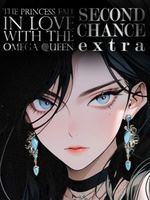
The Princess Fall In Love With the Omega Queen
- Genre: LGBT+
- Author: Neptunus_97
- Translator:
- Status: Ongoing
- Rating(4.3 / 5.0) ★
Recommendation Lists
Latest Release
-
chereads C 333
-
chereads C 332
-
chereads C 331
-
chereads C 330
-
chereads C 329
-
chereads C 328
-
chereads C 327
-
chereads C 326
-
chereads C 325
-
chereads C 324
-
chereads C 323
-
chereads C 322
-
chereads C 321
-
chereads C 320
-
chereads C 319
-
chereads C 318
-
chereads C 317
-
chereads C 316
-
chereads C 315
-
chereads C 314
-
chereads C 313
-
chereads C 312
-
chereads C 311
-
chereads C 310
-
chereads C 309
-
chereads C 308
-
chereads C 307
-
chereads C 306
Moral Content and Target Audience
Firstly, Gokinjo was published in the Shoujo magazine Ribon, which, according to Wikipedia, targets girls aged 9-13. Titles in Ribon typically shimmer with innocence, such as Full Moon wo Sagashite, Mint na Bokura, Ultra Maniac, Gals!, and Fancy Lala. It makes me wonder if Ribon has very strict guidelines regarding the content allowed in their magazines, as Gokinjo frequently includes remarks like "We can't do that! It'd give bad ideas to the readers!" or "We can't show that! This is a shoujo manga!"
Conversely, Paradise Kiss was published in the magazine Zipper, which is primarily a fashion magazine. In Paradise Kiss, Yazawa-sensei no longer mentions what she can and cannot show the readers, and instead shows us much more than she did in Gokinjo.
Interestingly, while Yazawa wrote over ten titles for Ribon, it seems she has experienced growing pains. Perhaps her writing tastes have matured beyond Ribon's moral standards. With the exception of her short three-volume series "Kagen no Tsuki," (which, by the way, is easily the best manga I've ever read) she hasn't returned to Ribon since Gokinjo.
As a result, Paradise Kiss is correctly classified as a "josei" manga, a manga for young women, whereas Gokinjo is undoubtedly a shoujo manga.
Art
To me, Yazawa-sensei excels in two areas more than anyone else: Drawing and character creation. Her art is fresh, fun, and stands out among other titles targeted at girls and women. Gokinjo certainly meets the high artistic standard seen in Paradise Kiss.
The character designs are beautiful and diverse, and the characters stand out from each other.
One character design that particularly impressed me was Mikako's father. Unlike many shoujo manga, where characters are either beautiful and young or old and ugly with little variation, the father is clearly older yet still handsome.
Character
Her characters are incredibly lovable and realistic, standing out from the stereotypical princes, bad boys, and mary sues of shoujo manga. These characters possess an air of reality and may remind you of someone you know in real life.
Her characters, just like humans, have their fair share of flaws. Sometimes this can be annoying, but I prefer a character with a sense of reality over one who is perfect any day.
However, Gokinjo seems to have too many interesting characters. One of the major flaws of Gokinjo is that there are many characters who seem to only stand on the sidelines and trade banter. I'm thinking there are at least four characters who hang around with the main cast but remain undeveloped and uninvolved in the plot.
Another issue I see with the characters is that sometimes they spring character development out of nowhere. For example, (excuse some slight spoilers) in the beginning, Tsutomu doesn't want to go out with his long-time childhood friend and neighbor because he feels like he needs to do more than what seemed to be pre-ordained in his birth. However, this attitude vanishes after one conversation, and later, he seems to suddenly suffer from the exact opposite problem, that he lacks ambition.
Frankly, it seems that his weak character development is injected to add drama into his otherwise perfect relationship with the heroine.
Story
Gokinjo doesn't seem to have a coherent story. After the initial arc ends and the problem presented at the onset of the story is resolved, the rest of the story seems to be... non-existent. Rather, it's more like a slice-of-life story that focuses mostly on the development of and relationships between certain main characters.
However, as I mentioned, certain characters get more development than others, and the development of certain characters, especially Tsutomu, seems rushed.
The story also seems to end without a real climax or resolution.
But there are arcs and side plots that are fantastic. For example, Ayumi's love for Yuusuke is a good story, despite the lack of resolution. How Mikako met her father is also a pretty touching story, and it's very well done! However, it also suffers from a rushed, though enjoyable, resolution.
Overall
Gokinjo is different enough from Paradise Kiss that it needs to be treated as its own entity. Liking Paradise Kiss is not enough to guarantee that you'll love Gokinjo.
It is not the perfect manga and has a fair share of flaws. However, its amazing art and enjoyable characters will make it worth the read.
As expected, the story unfolds in an Art Institute where Mikako Kouda, our quirky protagonist, indulges in fashion design to her heart's content. While it's known that Mikako hasn't had the best childhood imaginable, what has supported her along the way is the backing from her childhood friend Tsutomu. This brief summary might seem like it was pulled out of the "anime cliché" filing cabinet, as a romance story about childhood friends is quite common. On the other hand, the artistic aspects are well-executed, allowing even those not into art & fashion design to appreciate it. Even if the story feels clichéd, it takes some unexpected turns that readers wouldn't anticipate.
This mainly relates to the characters, each having their appealing and unappealing traits. Like this story's heroine, the reader is meant to empathize with (Mikako), who is cute but personally I didn't care for her self-centered personality. The positive aspect is that she, along with all the other characters around her, evolves as they learn more about life's challenges; and what makes this manga truly exceptional is how it shifts focus from the two main characters to spend a fair amount of time developing some of the side characters, giving them their own narratives.
The artistic design adeptly captures these moments, including the eccentric style typical of the early 90s. Regrettably, since this is one of Ai's earlier works, the artwork lacks detail, making it hard to distinguish similar-looking characters, and inconsistencies in character designs don't help matters.
Overall, Gokinjo Monogatari is an interesting blend of romance, comedy, and drama that has been somewhat clumsily stitched together. I say this because although each element of the manga was individually well-crafted, in the end, they couldn't coalesce as a whole, and I believe the comedy is to blame. Sure, there's plenty of laughable comedy here, but the mangaka really turned it into a running gag to mock her own work (just for laughs) and after a while, it became excessive. Thankfully, the overall "dependency" theme was handled more subtly and didn't detract from the more prominent "artistic" theme of the story. So if you've seen and enjoyed anything by Ai Yazawa, then give this a try. It may not be as good as her newer works, but it's a great read for anyone who enjoys a good shoujo/romance.<p>
Haven’t read it yet. Bout to begin now.
Leave a Review
Part 1. Rate (click Star to vote)
Part 2. Login to account
Part 3. Write your review