
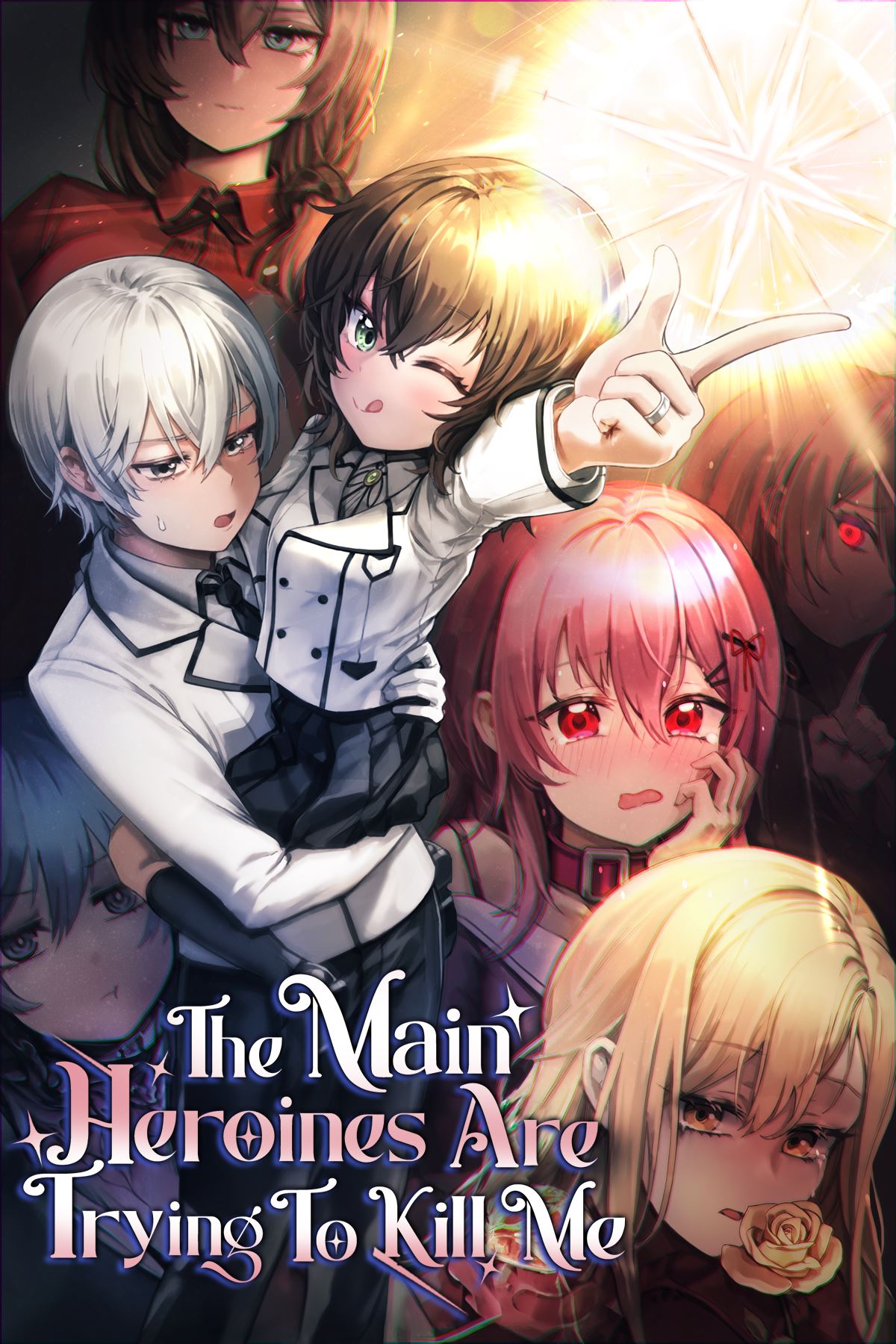
The Main Heroines are Trying to Kill Me
-
Author:
Kim Mamo,김마모,
- Status: Completed
Rating(4.2 / 5.0, 136 votes)
5 stars
54(40%)
4 stars
49(36%)
3 stars
33(24%)
2 stars
0(0%)
1 stars
0(0%)
Popular Reviews
As someone who followed the series from its inception and reached the conclusion, I'll provide my perspective. The protagonist, Frey Raon Starlight, is the descendant of the First Hero, who played a crucial role in saving the world in a game called "Dark Tale Fantasy." However, there's a sequel where the protagonist must prevent the Demon King's heir from destroying the world, a challenging task.
The story involves a hidden route called the "Path of False Evil," which requires the protagonist to commit seemingly evil acts, deceive heroines, and ultimately betray the Demon King to gain a system that offers a true happy ending. Unexpectedly, five main heroines also remember the previous timeline.
Frey, aware of the consequences, takes on this path to save his loved ones despite the moral ambiguity. He earns points through "false evil" acts, and his true hero identity is at odds with his villainous facade due to the system's penalties.
The protagonist ranks highly in character rankings, demonstrating his popularity. Although he endures immense scrutiny, his selflessness and emotional depth are commendable. Critics argue he appears weak, but his crying is contextualized by his difficult choices.
The novel features a complex dynamic between the protagonist and heroines, with love and hate intertwining. Side characters are well-developed, though the male character count is low. Despite this, the plot focuses on the protagonist's journey and overcoming the system, culminating in a powerful ending that earned the novel accolades.
Some reviewers misunderstand the story, assuming it's solely about facing the Demon King, but that's not the case. The novel's true strength lies in its character growth and the story's progression.
In conclusion, while the author's writing style was criticized initially, the novel shines through with its relatable characters, intricate world-building, and engaging plot twists. Despite the limited translation, it stands as a masterpiece, delivering a satisfying experience for readers.
The protagonist is initially cast as a villain, but his heart remains kind and reasonable. Each heroine possesses distinct traits and personalities, defying the usual damsel-in-distress stereotype. They are not just helpless; their unique abilities and backstories propel the narrative forward.
The plot deviates from the typical "save the world" formula with unexpected twists and the protagonist's own trials. It's not a straightforward victory over evil.
Positive aspects include:
1. No two-dimensional characters.
2. Memorable character, Serena, as a standout.
3. Well-developed romances.
4. A non-Obsessive Main Character.
5. Villains and other characters have agency.
However, there are a few drawbacks:
1. Some descriptions can be unclear.
2. The reading experience has moments of boredom or annoyance, with occasional instances where the reader might doze off.
3. There's an uneven balance between engaging and less captivating sections.
In summary, the novel offers strong points, but it also has its dull and frustrating moments, making for an overall mixed reading experience.
The writing itself is decent, but it retains a light novel feel, falling short of being a literary masterpiece, in my estimation. A minor gripe I have is that the protagonist's character arc feels overly contrived – he becomes increasingly harsh for angst-related purposes, but to balance that, the narrative repeatedly subjects him to setbacks, leading to a relentless string of tragic events. And then there's the selflessness angle, which is supposed to tug at your heartstrings. Overall, while it's not terrible, it doesn't quite hit the mark for me.
Instead of a captivating tale of secrecy, the author opts for an easy route, turning the story into a clichéd misunderstanding plot. What's worse, the story lacks humor, focusing on the MC's heavy-handed desire to bear the world's burdens without the accompanying drama. Since the heroines will inevitably uncover his secret, the system's supposed punishments hold no weight, as no real consequences seem likely.
Adding to the disappointment, the MC has a system that meteors out punishments – a recipe for disaster in system fiction. Who wants to read a character whose actions are completely controlled? Not me.
This is an abysmal read. It baffles me how it garners such high ratings. People have questionable taste. At the very least, they could pick a generic cliche novel that offers better climaxes.
Rating: 1.5/5
当然,即使我给予它五星级评价,这部小说并非完美无瑕。阅读过程中,尤其是在跟新较慢时,可能会有些许挫折感,毕竟这是这类故事的特性。然而,最终的收获总能弥补前期的等待,让人感到满足。你可以选择一口气读完,也可以慢慢品味。每个人的阅读体验不同,我无法左右你的决定。
虽然可能不是每个人都喜欢,但到目前为止,我非常喜欢这部作品,期待未来能继续阅读。
A spoiler follows:
I became so engrossed in the story that witnessing Frey's struggles due to the game mechanics and the characters' missteps almost broke my heart. It's disheartening to see such a noble and self-sacrificing character endure such hardships. And I couldn't agree more with Frey; Dark Tale Fantasy 2 is indeed a flawed game.
The main character, Frey, is a standout with his proactive nature, protective instincts, and excellent writing. He reminds me of Otaru Mamiya from Saber Marionette and Aijo Rentaro from 100 Girls, and Frey has exceeded my expectations. Despite the girls' treatment, he consistently shows kindness and affection, even when they treat him poorly, and works tirelessly to bring happiness to them, even at great personal cost.
Spoilers end here.
In the narrative, there are two types of female characters: the main heroines and supporting ones. While the main heroines initially have valid reasons to be upset with Frey, their redemption arcs showcase their softer and caring sides. The author skillfully handles their character development, ensuring that Frey's happiness with Kania, Irina, Clana, Ferloche, and Serena is the priority.
The secondary characters felt unnecessary at first, but their treatment of Frey and subsequent events justified his distancing. Despite their flaws, they too have their redemption, making it a more nuanced story.
The primary antagonists are reminiscent of those in Mushoku Tensei, Anti-Magic, and Arifureta, with well-developed quirks that create a frustrating yet engaging dynamic with the protagonist. If you enjoyed the darker, psychological aspects of Mushoku Tensei's later volumes, this novel might resonate with you.
In summary, if you appreciated the emotional depth and solitary journey of the protagonist in Mushoku Tensei from Volume 15 onward, seeking a story filled with melancholy, psychological exploration, and a desire for everyone's happiness, then this web novel is definitely worth your time.
Despite the emotional climax, the ending left me somewhat unsatisfied, though it did shed light on some underappreciated characters. Although the machine-translated versions are still readable, for the most accurate and enjoyable experience, I recommend reading directly on Genesis. They provide an excellent translation for this novel and others, with new releases typically coming out once or twice a week.
Although labeled as "psychological," I believe the story will also delve into tragedy and drama, given how the characters reveal more than meets the eye. However, my understanding of their backgrounds is limited due to the ongoing translation from Korean to English.
Nonetheless, I highly recommend giving this story a chance. The plot progresses steadily, and the dynamic main character, along with the intriguing heroines, initially piqued my interest. So, give it a go – you won't be disappointed!
Pros:
- The writing and translation are commendable.
Cons:
- Everything else is disappointing. The central storyline crumbles and doesn't make logical sense. Despite not being an unreadable machine translation, the issues with the plot are too significant.
- I haven't been this frustrated with a story's plot in a long time. The premise revolves around the main character (MC) faking evilness to travel back in time, with a system assisting him to achieve a hidden "good" ending, based on an ancient prophecy from his isekai grandfather. I expected some engaging twists involving the MC outsmarting other characters while pretending to be evil.
- However, the story is so poorly executed that it's unfixable. The core premise, where the MC pretends to be evil to use a system for defeating the demon king, quickly falls apart because the MC doesn't actually need the system to kill the demon king. In fact, the system actively hinders him instead.
- The MC defeated the demon king alone during the first attempt, without relying on the system. When he traveled back, he retained all his abilities. The demon king's defeat relies solely on the hero's equipment, which the MC initially sought to activate. Yet, he could have done it without the system in the first place.
- The system offers no tangible benefits throughout the story. Up to chapter 86, there's no instance where the system aids the MC. The few system items used are only for self-defense, not advancing the hero's goals.
- The system becomes a hindrance, as revealing the MC's true nature leads to severe punishments – his life force halves every time he's exposed. This limits his capabilities and makes him a glass cannon with reduced defenses.
- Healing, another potential solution, is inexplicably ineffective for the MC. His condition worsens, leaving him permanently injured and unable to fully recover.
- The MC's struggle to obtain a reward he doesn't actually need from a system that does nothing for him is baffling. The story's focus on the system feels forced and illogical.
In conclusion, I strongly dislike the novel due to its convoluted premise, a system that fails to provide any meaningful assistance, and a protagonist who sacrifices greatly for a reward he doesn't require. The logic behind the story's setup is hard to comprehend.
Leave a Review