
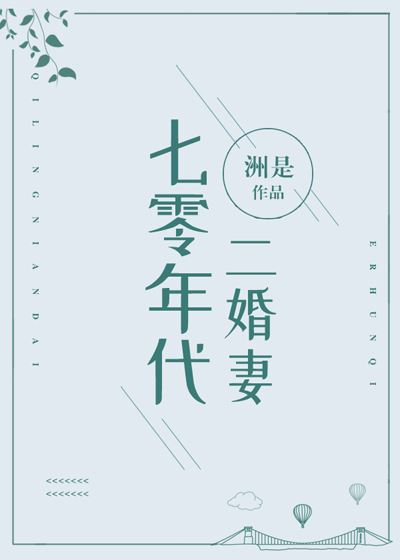
Second Marriage in the 1970s
-
Author:
洲是,
- Status: Completed
...
Show More
Fantasy Historical Romance Slice of Life Business Management Childcare Clever Protagonist Cooking Cute Children Devoted Love Interests Divorce Doting Love Interests Familial Love Family Female Protagonist First-time Interc**rse Hard-Working Protagonist Love Interest Falls in Love First Marriage Military
Rating(4 / 5.0, 53 votes)
5 stars
21(40%)
4 stars
12(23%)
3 stars
20(38%)
2 stars
0(0%)
1 stars
0(0%)
Popular Reviews
(Spoiler)
The child that the main character (MC) had wasn't because the male lead (ML) wanted to stop her dreams or anything. The MC mentioned that she was using a less effective method of birth control, which led to her becoming pregnant a few months into their marriage. The ML fully supported the MC, even encouraging her to leave a steady job to pursue her studies and continue her future. By the end of the novel, they decided not to have more children because the ML didn't want the MC to go through the pain of another pregnancy. I don't understand which novel the person who left the comment below read, but considering I read the entire thing and saw nothing like what they described, I think we must have read different novels.
---
Similar to other Chinese novels of this type, it is solid. The -1 score really comes from the fact that it was a bit hard to read at the beginning (maybe just me). There wasn't anything new, as is typical with these stories—there are a million similar ones in Chinese literature. However, I can’t recall any particularly annoying elements except, perhaps, the ending, which, as usual for these types of novels, felt lackluster. But at least there is an ending.
So, a rating of 4 from this random reader.
Here’s a breakdown of what I liked and disliked about the novel:
**What I Liked:**
1. **The Premise:** The novel had a compelling setup. I’m particularly fond of the "transmigrate to the 60s, 70s, 80s and get rich" trope, and the inclusion of children added an extra layer of interest for me, as I love stories involving kids.
2. **The Male Lead (ML):** He was understanding and affectionate towards the Female Lead (FL) and lacked the overbearing traits often found in Chinese novels. His character was a refreshing change.
3. **The Female Lead (FL):** She was intelligent, clear about her goals, and stood her ground firmly. Despite facing challenges, her moral integrity remained unshaken. Her capacity for love was evident in how she treated her stepchildren as if they were her own, and her kindness extended to both her in-laws and maternal family, ensuring no one was left behind in her journey to success.
4. **Her In-Laws:** Unlike many novels where in-laws complicate the protagonist’s life, the Zhao family, especially Grandma and Meixing, left a positive impression. They were supportive and respectful.
5. **Meixing and Zhenfeng’s Relationship:** Their relationship was a highlight of the novel. Zhenfeng’s charm and their believable courtship made their story more engaging than the main couple’s. The emotional depth in their interactions was more satisfying.
**What I Didn’t Like:**
1. **Handling of the Kids’ Storyline:** The development of Yingbao and Heidan’s characters felt rushed. While the novel often praised the FL for her excellent treatment of the children, these moments were rarely shown in detail. I wanted to see more of how she helped Heidan with her studies or cared for Yingbao, but such scenes were scarce. The lack of depth in their relationships with the FL was frustrating.
2. **The Main Couple’s Relationship:** While their interactions were respectful and loving, the relationship lacked the emotional depth and excitement that could have made it more engaging. Compared to Meixing and Zhenfeng, who had only 12 chapters of screen time, the main couple’s story felt bland and uninteresting.
3. **The University Arc:** This part of the story seemed to focus too much on highlighting the perfection of the FL and ML without contributing significantly to the overall plot. It felt unnecessary and dragged the narrative.
4. **Lack of Business Ventures:** Given the FL’s skills and the ML’s background in economics, I expected them to enter the business world. The brief foray into the cinema project hinted at potential, but they ultimately chose less ambitious paths. The FL became a translator, and the ML returned to the commune, which felt anticlimactic compared to the success of other characters.
5. **Living Separately:** The novel concluded with the FL and ML living apart due to her job, with the ML returning to the village and the FL staying in the county. This ending left me unsatisfied, as it didn’t align with the strong bond they had built.
, the novel started promisingly but ended up leaving me somewhat disappointed. These are just my personal thoughts, and others might find the story enjoyable, but I felt it was a bit of a waste of time.
The main character (MC) and the male lead (ML) have decent personalities and settings. Both families are good, but they come across as too passive. All the progress seems to depend on the MC, making the other characters feel like NPCs who can't act without instructions from a player.
The characters’ thinking is somewhat traditional, but you can't expect people from the 1970s to have the same mindset as today, especially in China during that era.
The ML fully supports the MC’s career and education and respects her. He was initially afraid due to his past, but I can understand his feelings, and he never stopped her or held her back from her dreams.
Regarding the second sister-in-law, I understand that a hero needs a villain to make the story more interesting, but this doesn’t mean that everyone must either get along with the MC or become a vicious villain. Her initial setting as somewhat selfish was fine, and she got along well with her husband. However, later, she was turned into a brainless, vicious cannon fodder to make the MC look better. A truly successful person doesn’t need others to fail to appear successful; great people are compared to other great people, not losers.
The same issue occurred with her younger sister-in-law, Mixiang. Luo Siwen, the older sister-in-law of Mixiang, was portrayed as a brainless, vicious character who sowed discord among family members and said harmful things to children. This felt forced and unnecessary.
This is a heartwarming tale about a remarkable woman who leads a fulfilling life after being reincarnated into the 1970s. She becomes a woman whose husband's family had returned her to her natal home because she hadn't conceived within three years. But how could she have? Her husband, due to a "malfunction," never consummated their marriage!
She remarries, this time to a man who can't keep his hands off her. Every night, all night long—haha, he truly adores her.
Both her family and her new husband's family are absolutely wonderful. She is the epitome of a perfect Chinese wife, daughter-in-law, and mother to her husband's children. She sews, embroiders, cooks, and is fantastic with kids, in-laws, and godparents. Her entire family flourishes, goes to university, and becomes incredibly successful, all thanks to the tireless efforts of our protagonist, who is like an Energizer Bunny, always busy and caring.
Throughout the novel, there are perhaps only two or three characters who speak maliciously, all young women, and they are swiftly dealt with.
The writing isn't the best, and the last twenty chapters are almost skippable, but it's still a good read. I turn to this story when I want something simple and positive, with the message that people are good, life is good, and that life and family will only continue to improve if we all work together.
I really appreciated the extra chapters where Heidan finally mustered the courage to call her mother. Every time I read about how he wanted to call her but couldn't, it broke my heart. It was really touching to see her contribute to the prosperity of both her family and her in-laws.
there was a notable lack of real conflict. Everything seemed too smooth. The ex-wife, the ex-husband, the narrow-minded sister-in-law, and the annoying neighbor—all these characters came and went within a chapter. There was no significant drama, making the story feel incredibly boring and monotonous.
I waited over 50 chapters for the ex-wife to appear, only for her to be dismissed in just three paragraphs.
The characters’ arcs felt flat, resolved in a few lines, and the MC faced no real challenges. She also comes across as a bit of a Mary Sue; everything she touches turns to gold effortlessly.
She single-handedly elevates her entire family, and not a single member faces any setbacks. They all magically transform from farmers into wealthy tycoons. It’s hard to believe.
There was a lot of lost potential and plot holes. , it was extremely boring.
---
So this is a lot like "Back to the Sixties: Farm, Get Wealthy & Raise the Cubs," but it’s shorter and has fewer scheming characters. It follows a similar plot where a rural family with a military husband/father goes to college and then makes money by opening businesses, but this one feels more realistic.
The main character (MC) is transmigrated, but this is more to explain her personality rather than give her a significant advantage. She does have some knowledge of future events, such as the return of college admissions and changes in the communes. The male lead (ML) is a military man who has been supporting his family but returns after his first wife divorces him. They both fall for each other quickly, but the ML falls first and very hard.
Initially, the ML chose the MC because she was already divorced and seemed like a good stepmother. He didn’t mind that she was divorced due to infertility and was in her twenties. However, he gets more than he bargained for.
**Spoiler**
It turns out the MC isn’t sterile and is actually a virgin. Her previous husband couldn’t perform, and the original host of the MC’s body took the blame, leading to her suicide. The ML is thrilled and becomes quite possessive but never forces the MC to do anything she doesn’t want to, aside from the typical bedroom activities. He is very supportive and even enforces a rule that his sons cannot make their mother angry or sad. The two have a strong and healthy relationship.
Storyline-wise, I prefer this to "Raise the Cubs" because it doesn’t repeat the same arc over and over. The fact that they don’t go crazy with opening businesses makes it feel more grounded and better-paced. However, the ending is a bit bland, making them about evenly matched in that aspect.
That said, the translation is a bit rough. Missing quotations, incorrect pronouns, and some direct translations make it somewhat awkward to read. At times, it feels like a machine translation (MTL).
---
Leave a Review