
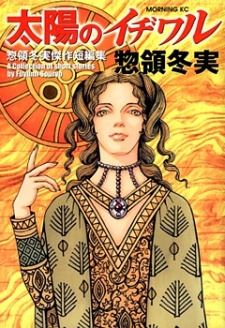
Taiyou no Ijiwaru
- Genre: drama slice of life
- Author: souryo fuyumi
- Artist(s):
- Year: Jan 6, 2000 to Aug 20, 2001
- Original Publisher:
- Status: Finished
Rating(3.9 / 5.0, 8 votes)
5 stars
4(50%)
4 stars
1(13%)
3 stars
1(13%)
2 stars
2(25%)
1 stars
0(0%)
Popular Reviews
The first story in Fuyumi Souryo's collection, Taiyou no Ichiwaru, traces an artist's journey from childhood to adulthood, constantly buffeted by Japan's attitude towards individuality. It encapsulates not only this anthology but also Souryo's own sensibilities: to convey meaningful ideas responsibly and creatively to a primarily young audience.
The Rainbow Fish follows Sari from her school days, where teachers insist she conform to conventional norms in art, which confounds the child who simply wants to color a fish with all the hues of the rainbow. As she matures, the pressure to stay within bounds intensifies, leading to a timid acceptance as she avoids venturing into uncharted territories professionally, opting instead for what pleases others merely to make ends meet.
This narrative serves as a response to Japan’s general conformity culture, highlighted by another character's quip that conforming is akin to prostitution. The protagonist reflects on her situation through monologues, emphasizing her plight humorously through a subplot involving her slacker boyfriend who sees no boundaries in his art and does whatever he likes, regardless of consequences. The Rainbow Fish is a compelling bittersweet tale that might be autobiographical, self-deprecating, or therapeutic for the author, yet remains fascinating nonetheless.
While the first story centers on conformity, the second, Damned Sun, delves into morality. Maki's day in Tokyo involves witnessing random people falling down stairs or even killing themselves, observing various public reactions. Her own reaction is muted; rather than shock, she's numbed to others' struggles. She meets another character, introducing Souryo's trademark humorous commentary on Japanese attitudes towards death and empathy. Though the ending leans towards melodrama, it retains emotional depth.
"Well, I think human beings are similar to groceries. Everyone has a certain...durability," remarks a novelist in the third story, Strange Trait. A publisher interviews Ryoko, the author, interspersed with flashbacks of the real inspiration behind her novel’s main character, a girl Ryoko knew during school. Souryo explores the power of subjective memory and keen observation, unbeknownst to the author herself who idolizes her childhood friend.
In the final story, A Strange Gene, Ayano, a marketing manager, is obsessed with her appearance—not out of vanity, but efficiency, believing 90% of people’s opinions are based on looks. First impressions matter greatly to her. Her decisive thought-process leads her to conclude that between two equally capable individuals, the better-looking one will prevail. Her assistant Saegusa is influenced by her, prompting him to question society's preoccupation with others’ perceptions. This story aptly concludes the collection's commentary on various aspects of Japanese attitudes, initially predictable yet delivering a twist without losing coherence.
A fantastic collection from Fuyumi Souryo, rich in engaging art and substantive depth.