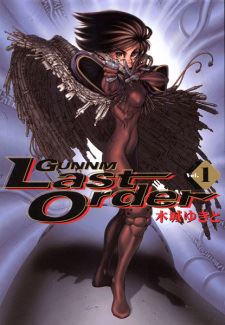
Sequels are notoriously challenging endeavors. When attempting to follow up an exceptional piece of work, it becomes incredibly difficult to surpass the original with a subsequent installment. Following up a masterpiece like Battle Angel Alita—one of the greatest science fiction stories ever told—would require an extraordinary amount of talent. Unfortunately, and perhaps unsurprisingly, that level of talent was not present in Last Order, the follow-up.
Last Order retcons the ending of BAA, rendering the events of the last 130 pages redundant. Many argue that the original ending was weak and needed more closure, but I disagree. The story begins with Alita waking up in a lab within the floating city of Tiphares. A considerable amount of time has passed since she seemingly died. Events have changed, and once again, Alita is thrust into battles for survival and the protection of others. Her primary goal throughout the series is to search for her missing friend, Lou. While this forms the crux of the plot, events spiral out in all directions, leading the story on numerous tangents.
The original story maintained a restrained approach, featuring a more down-to-earth setting (mostly literally). In contrast, the sequel takes Alita on a journey deep into space, where a host of over-the-top craziness unfolds. Initially, events are compelling, and several interesting new characters are introduced, some of whom become friends and enemies of Alita—often both. It quickly becomes evident that there's a greater focus on battles this time around, especially exposition-heavy ones. Battles have always played a significant role in the series, but here, they take center stage. This isn't problematic at first; the battles are entertaining, and the characters carry the story well for a while. However, after about the halfway point, events start to lose focus, abandoning the tight pacing and compact storyline of the original.
Around this point, we're presented with a backstory involving one of the newly introduced characters. It's a story involving vampires—a significant departure from the previously established supernatural elements. Despite being quite compelling, the backstory breaks the momentum of the plot and feels out of place. The mangaka clearly wanted to take a break from the main story, but it would have been better if these chapters were released as a separate manga entirely.
After this, the focus shifts back to Alita—or so you'd think. For most of the manga, Alita is relegated to a supporting character while others steal the spotlight. Fortunately, most of the characters are engaging, including her male-bodied clone. In fact, there's not a single wasted character in the story; they are multidimensional and complex. Little has changed since its predecessor, but this doesn't excuse the poor story structure and terrible pacing. The characters save the manga, but they don't excuse its problems.
Most of the second half is devoted to a fighting tournament, transforming the manga into a battle shounen series filled with drawn-out fights and copious amounts of exposition. The excellent themes explored in the original occasionally resurface, but they're mostly drowned out by battles and long-winded speeches about "sci-fi karate" and uninteresting philosophies.
Another issue is the increased element of "magic" in the battles. Characters manage to escape dire situations too easily and too frequently, sometimes returning to life or producing overly powerful attacks out of nowhere. Some explanations are given, but they aren't particularly convincing, and they cheapen the concept of death. This was never a problem in Battle Angel Alita, where battles remained tense and Alita felt much more vulnerable. She's very OP for much of Last Order. Although Alita remains one of my favorite characters in all of manga and anime, she didn't grow through the events of Last Order. She suffers several identity crises, issues already explored in the original and supposedly resolved.
Things pick up again in the last few chapters as events become more grounded, and some old characters reappear. However, there's no conclusive ending, and the story continues in another follow-up manga called Mars Chronicle. It's amusing in a way that all these chapters continue to be produced because fans weren't satisfied with the original ending.
In spite of its problems, Last Order is still a solid manga and certainly not any worse than most battle shounen manga. But the original was so much more.

Popular Reviews
Sequels are notoriously challenging endeavors. When attempting to follow up an exceptional piece of work, it becomes incredibly difficult to surpass the original with a subsequent installment. Following up a masterpiece like Battle Angel Alita—one of the greatest science fiction stories ever told—would require an extraordinary amount of talent. Unfortunately, and perhaps unsurprisingly, that level of talent was not present in Last Order, the follow-up.
Last Order retcons the ending of BAA, rendering the events of the last 130 pages redundant. Many argue that the original ending was weak and needed more closure, but I disagree. The story begins with Alita waking up in a lab within the floating city of Tiphares. A considerable amount of time has passed since she seemingly died. Events have changed, and once again, Alita is thrust into battles for survival and the protection of others. Her primary goal throughout the series is to search for her missing friend, Lou. While this forms the crux of the plot, events spiral out in all directions, leading the story on numerous tangents.
The original story maintained a restrained approach, featuring a more down-to-earth setting (mostly literally). In contrast, the sequel takes Alita on a journey deep into space, where a host of over-the-top craziness unfolds. Initially, events are compelling, and several interesting new characters are introduced, some of whom become friends and enemies of Alita—often both. It quickly becomes evident that there's a greater focus on battles this time around, especially exposition-heavy ones. Battles have always played a significant role in the series, but here, they take center stage. This isn't problematic at first; the battles are entertaining, and the characters carry the story well for a while. However, after about the halfway point, events start to lose focus, abandoning the tight pacing and compact storyline of the original.
Around this point, we're presented with a backstory involving one of the newly introduced characters. It's a story involving vampires—a significant departure from the previously established supernatural elements. Despite being quite compelling, the backstory breaks the momentum of the plot and feels out of place. The mangaka clearly wanted to take a break from the main story, but it would have been better if these chapters were released as a separate manga entirely.
After this, the focus shifts back to Alita—or so you'd think. For most of the manga, Alita is relegated to a supporting character while others steal the spotlight. Fortunately, most of the characters are engaging, including her male-bodied clone. In fact, there's not a single wasted character in the story; they are multidimensional and complex. Little has changed since its predecessor, but this doesn't excuse the poor story structure and terrible pacing. The characters save the manga, but they don't excuse its problems.
Most of the second half is devoted to a fighting tournament, transforming the manga into a battle shounen series filled with drawn-out fights and copious amounts of exposition. The excellent themes explored in the original occasionally resurface, but they're mostly drowned out by battles and long-winded speeches about "sci-fi karate" and uninteresting philosophies.
Another issue is the increased element of "magic" in the battles. Characters manage to escape dire situations too easily and too frequently, sometimes returning to life or producing overly powerful attacks out of nowhere. Some explanations are given, but they aren't particularly convincing, and they cheapen the concept of death. This was never a problem in Battle Angel Alita, where battles remained tense and Alita felt much more vulnerable. She's very OP for much of Last Order. Although Alita remains one of my favorite characters in all of manga and anime, she didn't grow through the events of Last Order. She suffers several identity crises, issues already explored in the original and supposedly resolved.
Things pick up again in the last few chapters as events become more grounded, and some old characters reappear. However, there's no conclusive ending, and the story continues in another follow-up manga called Mars Chronicle. It's amusing in a way that all these chapters continue to be produced because fans weren't satisfied with the original ending.
In spite of its problems, Last Order is still a solid manga and certainly not any worse than most battle shounen manga. But the original was so much more.
Leave a Review