
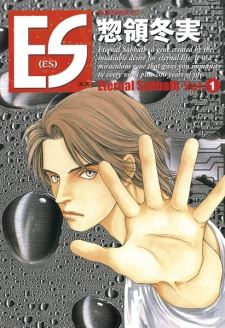
ES: Eternal Sabbath
- Genre: drama sci-fi supernatural
- Author: souryo fuyumi
- Artist(s):
- Year: Aug 23, 2001 to Oct 7, 2004
- Original Publisher:
- Status: Finished
...
Show More
Rating(4.2 / 5.0, 13 votes)
5 stars
7(54%)
4 stars
2(15%)
3 stars
4(31%)
2 stars
0(0%)
1 stars
0(0%)
Popular Reviews
To possess the ability to take over someone's thoughts and delve into their minds is an extraordinary power, one we can experience through this story. In discussions, I admire the analytical insights about love, growing up, and self-understanding. The narrative also touches on the morality of scientists and humanity itself, prompting us to reconsider our perspectives.
I enjoyed ES for its intriguing exploration of a man with such abilities and Dr. Mine Kujyou’s thoughts. The story felt realistic, although personally, I dislike overly dramatic scenes and would prefer more positive outcomes. I also appreciated the development of romantic relationships between characters.
After watching, I had some reflections—DON'T read if you want to avoid potential spoilers (though you might not understand much anyway, and I may not consider it a spoiler): It's a good manga, but I wished fewer characters died. Why couldn't there be a happy ending where the girl's mother gets along with her daughter? I suppose it shows how dangerous ES was, leaving me uncertain whether that's a good or bad thing. I also wonder if Shuro will control the baby's mind or if it will become a new person. Either way, it's a good manga with great ideas, and I even made copies of some pages with profound thoughts.
Story and Characters
The narrative revolves around Akiba Rouysuke, a human clone experiment endowed with the ES gene. This gene provides immunity to all diseases and extends life up to 200 years. Additionally, it bestows the ability to enter other people's minds, observe their inner thoughts, and manipulate them. There are special humans who can resist this power to some extent, though their uniqueness remains unexplained. One such individual is Mine Kujo, a neurological specialist from a U.S.-based physiology research institute. Extremely intelligent, she stands out as one of the most down-to-earth smart characters in manga I've read. Her analytical nature applies to everything and everyone, contributing to her struggles in human relationships. Together with another person, Akiba and Mine initiate a war against another ES clone, who unlike Akiba, is malevolent and seeks destruction. The characters are intricately developed, offering profound insights into societal issues, raising intriguing questions about humanity. These include: What is love? How does it differ from liking or spoiling someone? What defines motherhood? Does giving birth automatically make you a mother? Is it possible not to love your child? In a hypothetical scenario where clones with dangerous powers threaten humanity, how would society respond?
It provokes thought, inspires curiosity, and leaves you pondering long after finishing.
Art:
The artwork is exceptional, emphasizing detailed illustrations that I greatly appreciate in manga.
Enjoyment:
This depends on one's interest in psychological themes. The manga delves deeply into scientific discussions, which might be exhausting for those unfamiliar with these topics. It also touches on metaphysical concepts. Personally, I found it highly engaging.
Overall:
This manga is a gem on this planet, nearly achieving masterpiece status but falling just short in my opinion. Nonetheless, it is absolutely essential reading.
By Julian Caushi
This is actually the first time I've ever felt compelled to write something about a manga. Why? Because it grabbed me from the very first page, held my attention captive, and didn't let go until I had read all 82 chapters in one sitting. Moreover, it's one of only two manga that have ever brought me to tears.
What struck me as most significant in the story was its focus on morals. The distinction between right and wrong plays a major role here, and you get the sense that the author wants you to determine for yourself where you stand. Naturally, this led me to ponder the value of fundamental aspects like humanity, life, justice, and love, as well as the controversial subject of biotechnology. Is it justifiable to freely alter the human body, a product of millions of years of evolution? To play God, so to speak?
The characters are portrayed with great complexity yet remain realistic, fitting perfectly within the narrative while each possessing their own strengths and weaknesses.
If you're interested in exploring these themes alongside an engrossing storyline, some romance, and a few shounen-style action sequences, then this manga is perfect for you. In fact, it's nearly impossible to categorize this masterpiece into just one or even three genres; it's highly recommended for everyone. A must-read.
Really intriguing concept, but I believe it could have been executed far more effectively. There are numerous issues I have with the manga. It's fascinating that some other reviewers regard this as a masterpiece despite its obvious flaws.
STORY - [5.5/10]
You follow the journey of two individuals developed in a specialized lab. They were engineered to possess psychic abilities; one was taught morality while the other wasn't. By psychic powers, I mean they can read minds, control people, and even harm others through mental manipulation. Throughout the series, it seems like it aimed for a philosophical approach, yet I don't think it succeeded. It never delved deeply into anything it presented and likely couldn't. Every topic introduced was somewhat simplistic. Maybe it's because I binge-read such content, but the ideas and questions raised weren't complex or engaging enough. At times, the two characters question their existence, but the story simplifies these explorations. Some drama, especially early on, wasn't very captivating either. The story does pick up eventually, but the first 20 chapters are quite tough to get through.
Sometimes, the plot felt outright silly. An overly convenient and disappointing weakness is introduced for the antagonist, which feels lazy. There are multiple instances where the antagonist should have died but didn't, probably because the series wasn't long enough. Plot holes and general issues abound.
ART - [6/10]
I have mixed feelings about the artwork.
On one hand, the author excels at drawing scenery and background details. The panels' backgrounds always look nice. On the other hand, character drawings are subpar. This doesn't apply to every character, but some faces seem like they're based on a template with minor tweaks. I dislike how some faces are drawn, often bearing alarming similarities. However, the scenery and objects are nicely rendered.
CHARACTERS - [5/10]
In my opinion, none of the characters were particularly memorable. As mentioned, it centers around two lab-created individuals with different mindsets. The focus is on their development as they venture into the "real world." Their growth is predictable and, given the manga's simplicity, also boring. It's somewhat heartwarming to see Shuro, the main experiment, connect with humanity as the story progresses, but Izaku's arc is dull—predictable and increasingly destructive behavior.
A romantic subplot is introduced seemingly just to amplify the ending's impact. Side characters aren't interesting either. Not much else to say.
OVERALL ENJOYMENT - [5/10]
Honestly, I can't recommend this series. It reminded me a lot of Kiseijuu, and if you haven't read that, I'd suggest doing so instead. Each aspect has concerning issues, leading me to believe your time would be better spent reading something else.
For me, this series strikes a fantastic balance between science fiction and drama, masterfully incorporating elements of love, human psychology, and philosophy—or the "dark side" of human nature.
Characters
I found Souryo's characters to be distinct and unique. Each character had their own personality and attitude that shone through in their dialogue, body language, and style of dress. I appreciate when a writer (and illustrator) creates strong characters who are individualistic. Here, the term "strong" doesn't imply physical or mental strength but rather indicates that the characters have been meticulously crafted and well-developed.
Illustration
Given the somewhat somber plot, I appreciated how the illustration style harmonized with the theme. The central characters became dear to me as I empathized with their varied experiences and emotions. While the illustrations might not be conventionally "pretty," they were aesthetically pleasing to me. A mere glance at the cover art compelled me to learn more about the characters and their story.
Plot
The plot blends various elements: science fiction, drama, love, death, psychology, and philosophy. There are undoubtedly other underlying themes that could be identified without listing them here—the ones mentioned are the most prominent in my view. Overall, I classify the series under the drama genre, but it is also a science-fictional and psychological drama with a subtle yet beautiful emphasis on the love between two central characters. If you're seeking action, this series may disappoint; for me, that wasn't an issue. And if you're looking for romance, you'll find it lacking. When I speak of love, I don't mean romance—there's a difference. Series like Fruits Basket or La Corda de Oro exemplify romance, whereas this one is quite different.
The eight-volume length felt just right—not too long, not too short. It allowed sufficient time and space to get acquainted with the characters and their experiences, feel their emotions, and conclude the story memorably. Even when not reading, I experienced a sense of nostalgia due to my attachment to the characters and their relationships.
I recommend this to any manga reader, although I acknowledge it won't suit everyone's taste. It certainly resonated with me. I hope this review provides some clarity about the series if you haven't read it yet.
To be honest, I stumbled upon this mangaka by chance while searching for something enjoyable to spend my free time. The result was more than expected.
The first manga of hers that I read was Mars, which is quite similar to Eternal Sabbath—a blend of romance, slice of life, and psychological issues. But don't expect some sweet and innocent stories.
Her work is a plethora of feelings and situations that make you ponder. What really caught my eye was her inclination towards psychology and her desire to reveal the deep thoughts of humans. In fact, this goes beyond psychology. It's science, philosophy, religion. It's the struggle of humans to find the meaning of their lives, to understand each other, to cover their weakest selves, and to continue living despite the problems around them.
So yes, as you might guess, I'm fond of happy endings, but that's not why I love this manga—not at all.
Overall, the most important aspects of this manga are the emotions it evokes.
Someone might describe ES as a straightforward sci-fi manga centered on human experimentation and the essence of humanity, the value of human life, the morality of murder and judgment, and tragic love amidst world-saving scenarios. The ending could seem predictable as a logical conclusion. It may also evoke fear akin to "The Astronaut's Wife" or the finale of "Transcendence," where you realize the story is entirely complete, yet it might also mark the beginning of something new... Hold on! Isn't this the hallmark of perfect sci-fi?
ES - Eternal Sabbath stands as a remarkable piece, crafted for mature minds rather than mere entertainment: there's little humor or absurdity, no hope for a happy ending because in the real world, some people simply aren't happy, and nothing can change that fact. The plot and characters are meticulously constructed, much like in a graphic novel. ES is the first manga I've enjoyed as a genuine book, making it exceptional in my eyes.
Despite its abundance of action and drama, the work leans more towards philosophy than any other genre, with psychology seamlessly integrated into the plot. In truly great novels, the Plot unfolds through the characters' own actions and decisions.
WORK AND AUTHOR
ES: Eternal Sabbath is a drama, science fiction, and supernatural manga written and illustrated by Fuyumi Souryo. It was published from 2001 to 2004, comprising eighty-three chapters. The author has worked across various genres including Shoujo and Seinen. Notably, Souryo is a veteran mangaka who began publishing in the 80s and remains active today, with her latest work, Cesare: Hakai no Souzousha, concluding in 2021.
PLOT AND CONTEXT
In this manga, Souryo challenges both characters and readers by exploring profound questions about the value of life, a recurring theme in her works. In Eternal Sabbath, these inquiries are presented explicitly and unsettlingly, intertwining with the inherent evil within human nature. Human hypocrisy becomes evident: while we claim to cherish life, do we secretly wish for our neighbor's demise? This desire to conquer illness and transcend death, to assume a godlike role in deciding who lives or dies—what gives us the right?
The title "Eternal Sabbath" carries significant meaning:
Sabbath, a holy day in Judaism, references Isaac's name, which alludes to the biblical tale of Abraham and Isaac. Conversely, Witches' Sabbath evokes a dark, macabre setting where witches supposedly convened with the devil, engaging in orgies and cannibalism. An "Eternal Sabbath" aligns well with the story's ominous atmosphere. Additionally, there might be nods to the British heavy metal band Black Sabbath, formed in 1968, particularly their song "Paranoid," reminiscent of the character Shuro. This is speculative on my part.
I also observed clear parallels with the film The Matrix (1999), especially regarding reality questioning, surreal events, and leather attire, which I found remarkable.
CHARACTERS
The characters in Eternal Sabbath are unique and captivating, contributing significantly to the heavy and dark ambiance of this horror narrative. Despite its imperfections, the manga is highly engaging and worth reading.
08 September 2023, Friday